Testone Giulio, Sobolev Anatoly Petrovich, Mele Giovanni, Nicolodi Chiara, Gonnella Maria, Arnesi Giuseppe, Biancari Tiziano, Giannino Donato
Institute for Biological Systems, National Research Council (CNR), Via Salaria Km 29,300 - 00015 Monterotondo, Rome, Italy.
Institute of Sciences of Food Production, CNR. Via G. Amendola 122/O - 70126, Bari, Italy.
Hortic Res. 2021 May 1;8(1):92. doi: 10.1038/s41438-021-00513-2.
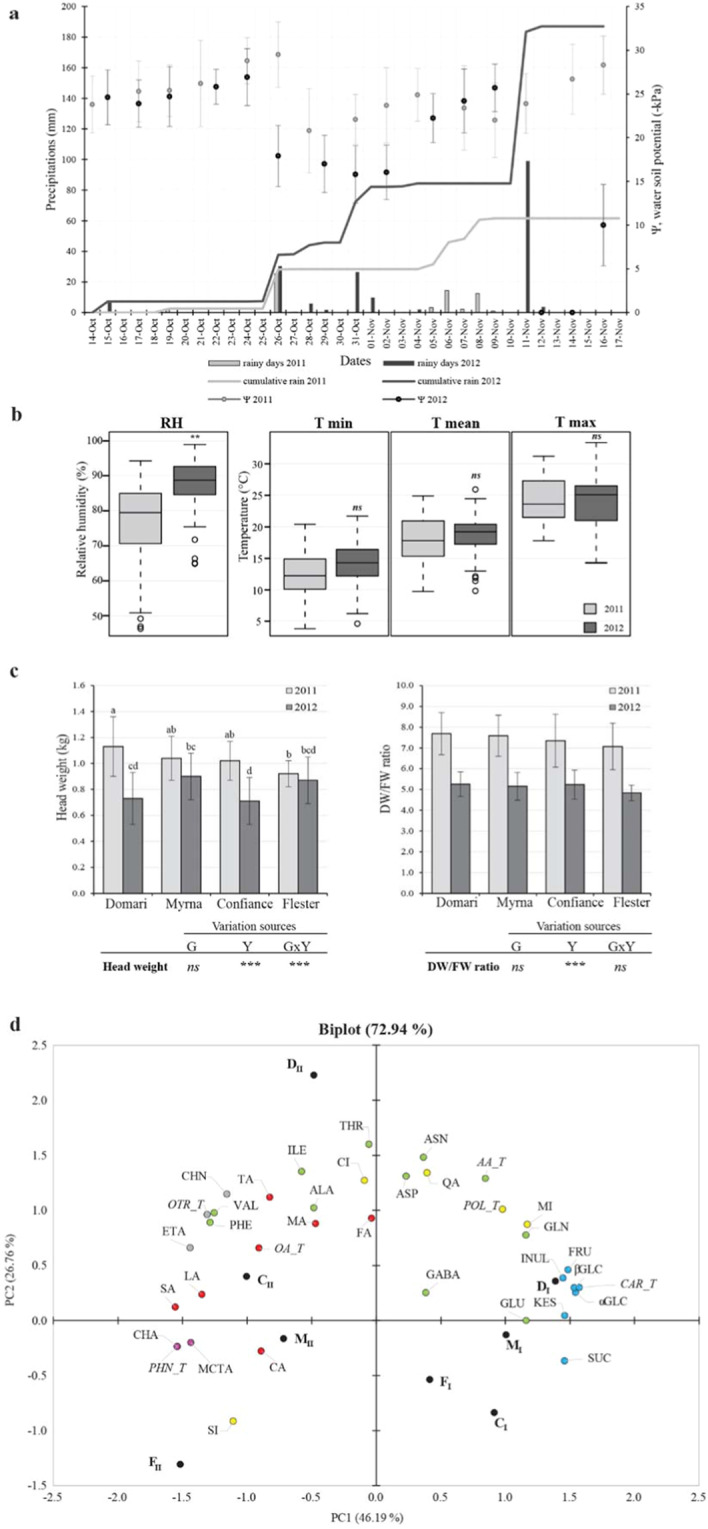
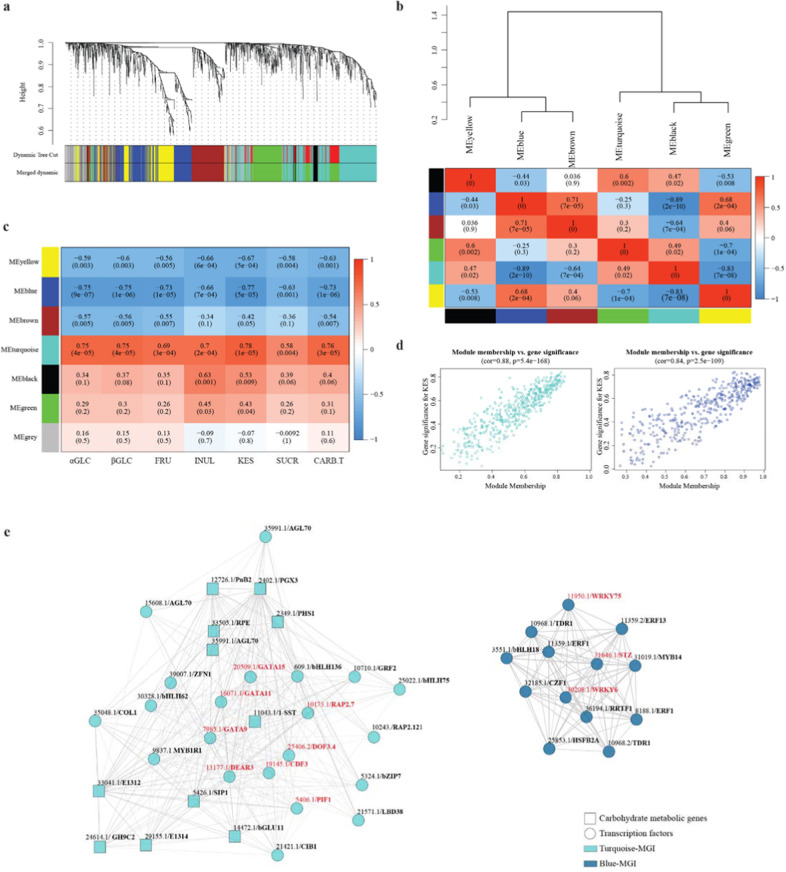
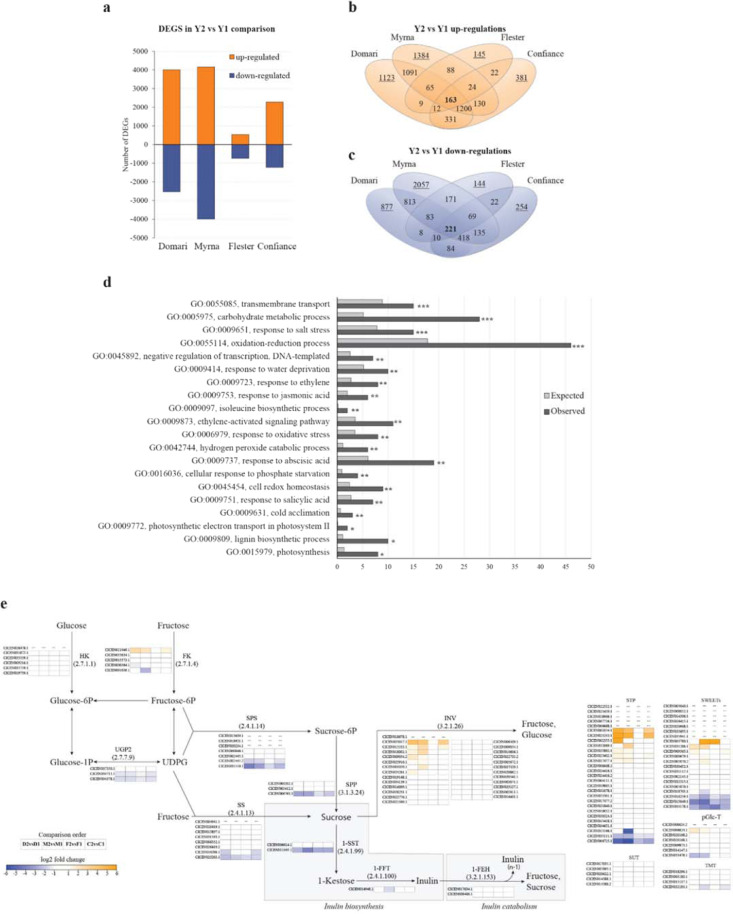
Endive (Cichorium endivia L.), a vegetable consumed as fresh or packaged salads, is mostly cultivated outdoors and known to be sensitive to waterlogging in terms of yield and quality. Phenotypic, metabolic and transcriptomic analyses were used to study variations in curly- ('Domari', 'Myrna') and smooth-leafed ('Flester', 'Confiance') cultivars grown in short-term waterlog due to rainfall excess before harvest. After recording loss of head weights in all cultivars (6-35%), which was minimal in 'Flester', NMR untargeted profiling revealed variations as influenced by genotype, environment and interactions, and included drop of total carbohydrates (6-50%) and polyols (3-37%), gain of organic acids (2-30%) and phenylpropanoids (98-560%), and cultivar-specific fluctuations of amino acids (-37 to +15%). The analysis of differentially expressed genes showed GO term enrichment consistent with waterlog stress and included the carbohydrate metabolic process. The loss of sucrose, kestose and inulin recurred in all cultivars and the sucrose-inulin route was investigated by covering over 50 genes of sucrose branch and key inulin synthesis (fructosyltransferases) and catabolism (fructan exohydrolases) genes. The lowered expression of a sucrose gene subset together with that of SUCROSE:SUCROSE-1-FRUCTOSYLTRANSFERASE (1-SST) may have accounted for sucrose and kestose contents drop in the leaves of waterlogged plants. Two anti-correlated modules harbouring candidate hub-genes, including 1-SST, were identified by weighted gene correlation network analysis, and proposed to control positively and negatively kestose levels. In silico analysis further pointed at transcription factors of GATA, DOF, WRKY types as putative regulators of 1-SST.
菊苣(Cichorium endivia L.)是一种可鲜食或用于包装沙拉的蔬菜,大多在户外种植,已知其产量和品质对涝害敏感。采用表型、代谢组和转录组分析方法,研究了收获前因降雨过多导致短期受涝情况下,卷曲叶品种(‘Domari’、‘Myrna’)和平叶品种(‘Flester’、‘Confiance’)的变异情况。记录所有品种的头重损失(6%-35%)后发现,‘Flester’的损失最小。核磁共振非靶向代谢谱分析揭示了受基因型、环境及其相互作用影响的变异,包括总碳水化合物(6%-50%)和多元醇(3%-37%)含量下降,有机酸(2%-30%)和苯丙烷类化合物(98%-560%)含量增加,以及氨基酸的品种特异性波动(-37%至+15%)。差异表达基因分析显示,基因本体(GO)术语富集与涝害胁迫一致,包括碳水化合物代谢过程。所有品种均出现蔗糖、蔗果三糖和菊粉含量下降的情况,并通过涵盖蔗糖分支的50多个基因以及关键菊粉合成(果糖基转移酶)和分解代谢(果聚糖外切水解酶)基因,对蔗糖-菊粉途径进行了研究。蔗糖基因亚群以及蔗糖:蔗糖-1-果糖基转移酶(1-SST)表达降低,可能是导致受涝植物叶片中蔗糖和蔗果三糖含量下降的原因。通过加权基因共表达网络分析,鉴定出两个包含候选枢纽基因(包括1-SST)的反相关模块,并提出这些模块分别正向和负向调控蔗果三糖水平。计算机模拟分析进一步指出,GATA、DOF、WRKY类型的转录因子可能是1-SST的潜在调控因子。