Department of Internal Medicine, University of Texas Medical Branch, Galveston, Texas, USA.
Department of Chemistry and Biochemistry, University of California, San Diego, La Jolla, California, USA.
J Biol Chem. 2021 Jan-Jun;296:100723. doi: 10.1016/j.jbc.2021.100723. Epub 2021 Apr 28.
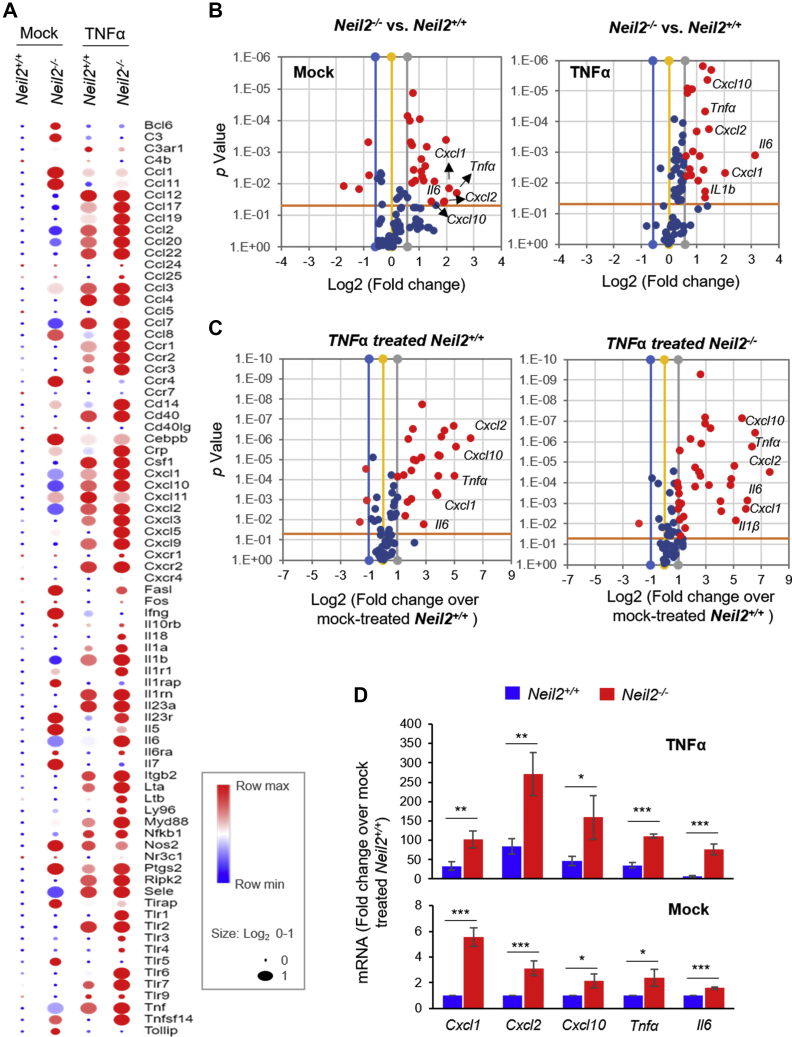
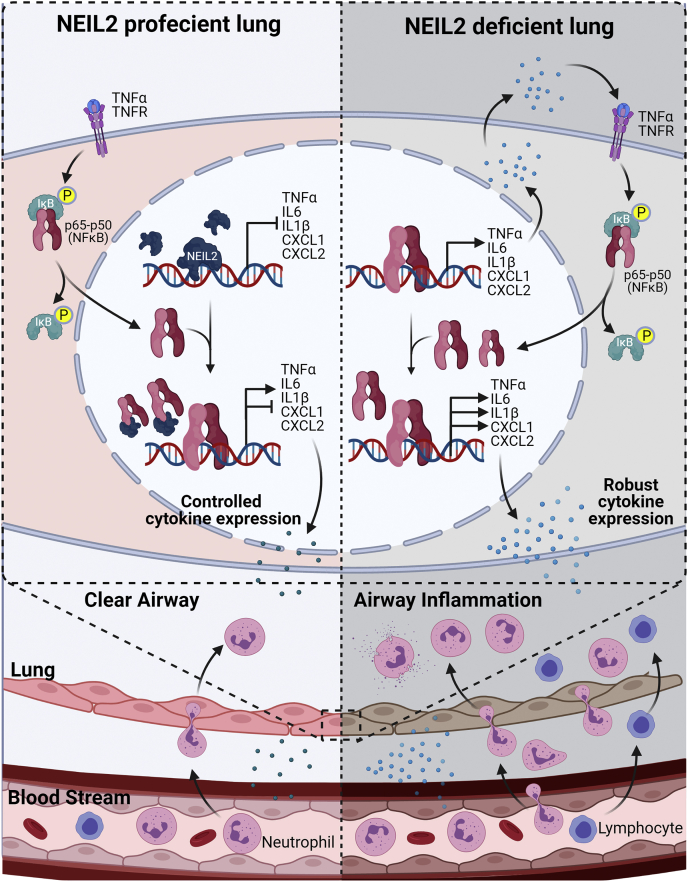
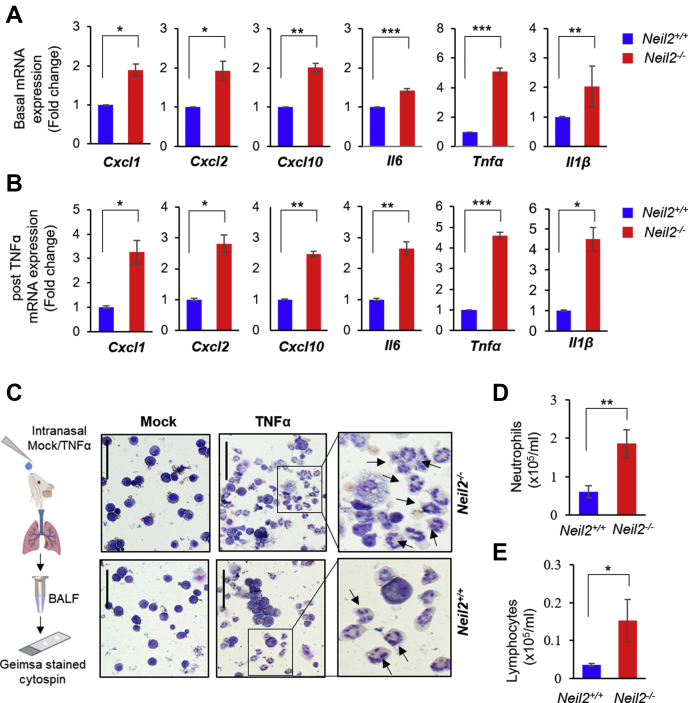
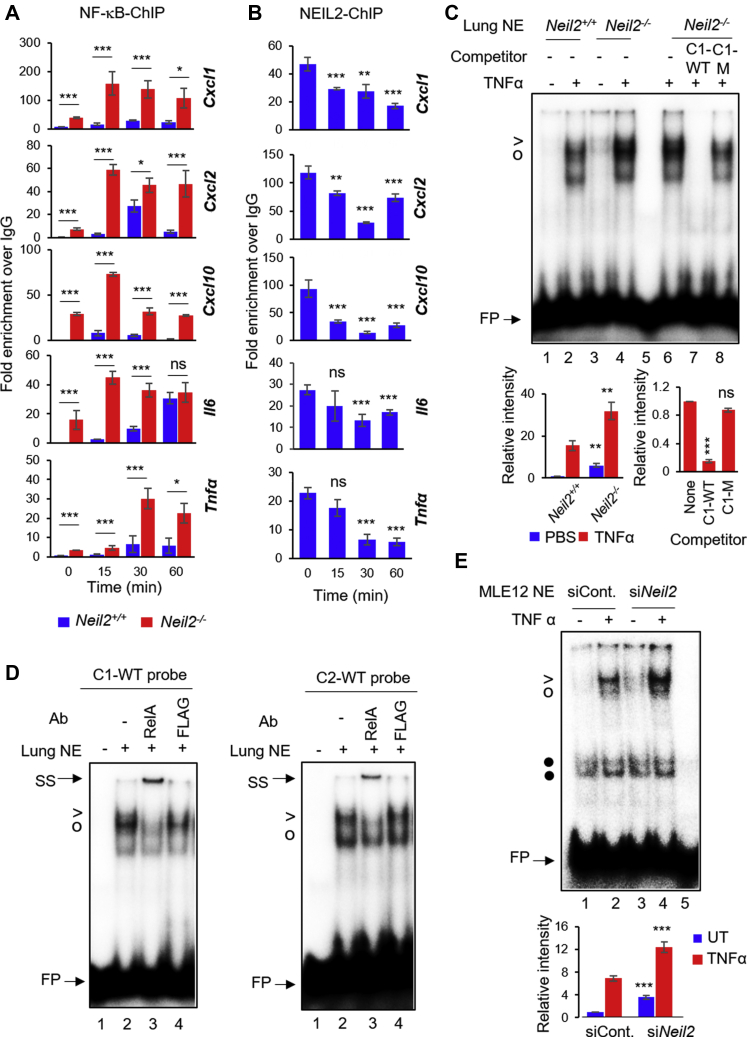
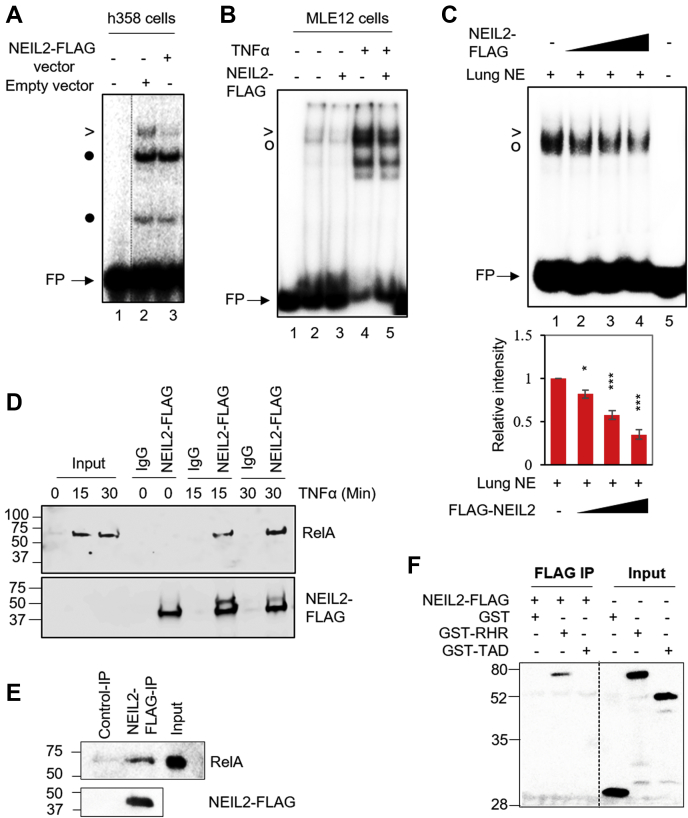
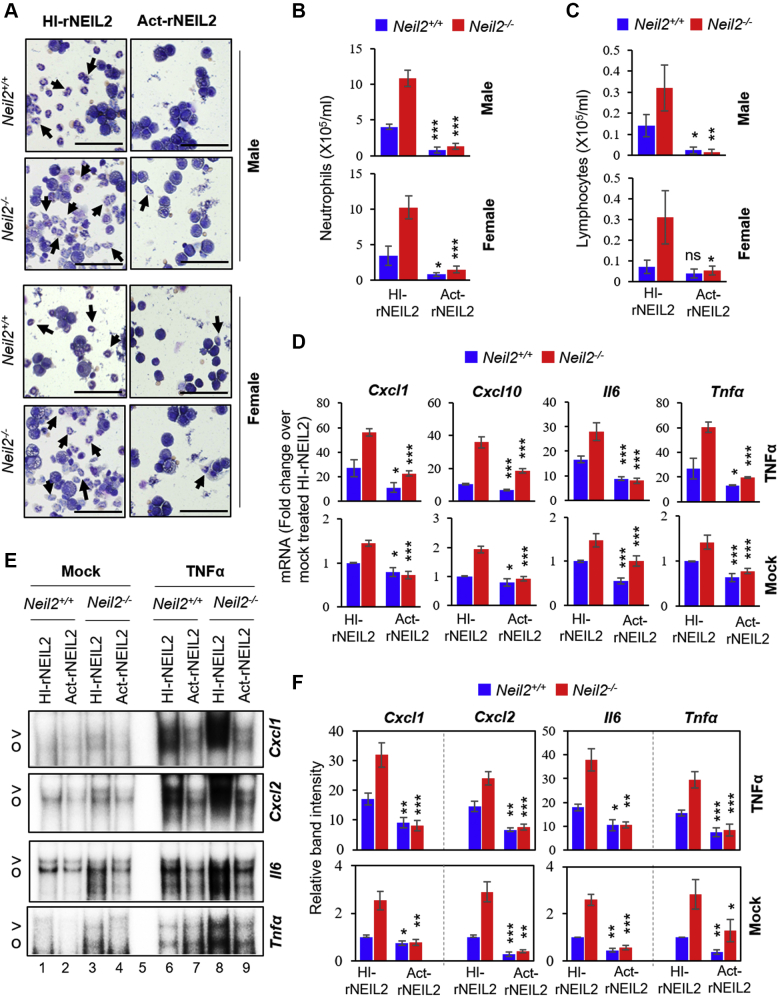
Aberrant or constitutive activation of nuclear factor kappa B (NF-κB) contributes to various human inflammatory diseases and malignancies via the upregulation of genes involved in cell proliferation, survival, angiogenesis, inflammation, and metastasis. Thus, inhibition of NF-κB signaling has potential for therapeutic applications in cancer and inflammatory diseases. We reported previously that Nei-like DNA glycosylase 2 (NEIL2), a mammalian DNA glycosylase, is involved in the preferential repair of oxidized DNA bases from the transcriptionally active sequences via the transcription-coupled base excision repair pathway. We have further shown that Neil2-null mice are highly sensitive to tumor necrosis factor α (TNFα)- and lipopolysaccharide-induced inflammation. Both TNFα and lipopolysaccharide are potent activators of NF-κB. However, the underlying mechanism of NEIL2's role in the NF-κB-mediated inflammation remains elusive. Here, we have documented a noncanonical function of NEIL2 and demonstrated that the expression of genes, such as Cxcl1, Cxcl2, Cxcl10, Il6, and Tnfα, involved in inflammation and immune cell migration was significantly higher in both mock- and TNFα-treated Neil2-null mice compared with that in the WT mice. NEIL2 blocks NF-κB's binding to target gene promoters by directly interacting with the Rel homology region of RelA and represses proinflammatory gene expression as determined by co-immunoprecipitation, chromatin immunoprecipitation, and electrophoretic mobility-shift assays. Remarkably, intrapulmonary administration of purified NEIL2 via a noninvasive nasal route significantly abrogated binding of NF-κB to cognate DNA, leading to decreased expression of proinflammatory genes and neutrophil recruitment in Neil2-null as well as WT mouse lungs. Our findings thus highlight the potential of NEIL2 as a biologic for inflammation-associated human diseases.
核因子 kappa B(NF-κB)的异常或组成性激活通过上调参与细胞增殖、存活、血管生成、炎症和转移的基因,导致各种人类炎症性疾病和恶性肿瘤。因此,抑制 NF-κB 信号转导在癌症和炎症性疾病的治疗应用中具有潜力。我们之前报道过,Nei 样 DNA 糖基化酶 2(NEIL2),一种哺乳动物 DNA 糖基化酶,通过转录偶联碱基切除修复途径,参与从转录活跃序列中优先修复氧化的 DNA 碱基。我们进一步表明,Neil2 敲除小鼠对肿瘤坏死因子α(TNFα)和脂多糖诱导的炎症高度敏感。TNFα 和脂多糖都是 NF-κB 的有效激活剂。然而,NEIL2 在 NF-κB 介导的炎症中的作用的潜在机制仍不清楚。在这里,我们记录了 NEIL2 的一种非典型功能,并证明了涉及炎症和免疫细胞迁移的基因(如 Cxcl1、Cxcl2、Cxcl10、Il6 和 Tnfα)的表达在模拟和 TNFα 处理的 Neil2 敲除小鼠中均明显高于 WT 小鼠。NEIL2 通过直接与 RelA 的 REL 同源区相互作用,阻止 NF-κB 与靶基因启动子结合,并通过共免疫沉淀、染色质免疫沉淀和电泳迁移率变动分析抑制促炎基因表达。值得注意的是,通过非侵入性鼻途径肺部内给予纯化的 NEIL2 可显著阻止 NF-κB 与同源 DNA 的结合,导致 Neil2 敲除和 WT 小鼠肺部中促炎基因的表达降低和中性粒细胞募集。我们的研究结果因此强调了 NEIL2 作为一种生物制剂在与炎症相关的人类疾病中的潜力。