Center for Molecular Cancer Research, Korea Research Institute of Bioscience and Biotechnology, Ochang, Chungbuk, Republic of Korea.
PLoS One. 2012;7(6):e40355. doi: 10.1371/journal.pone.0040355. Epub 2012 Jun 29.
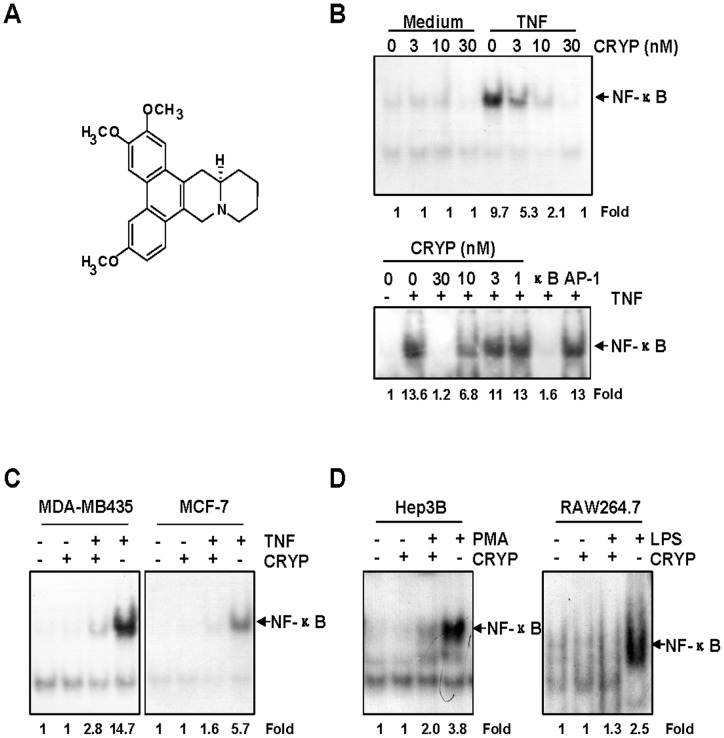
Cryptopleurine, a phenanthroquinolizidine alkaloid, was known to exhibit anticancer activity; however, the underlying mechanism is poorly understood. Because the nuclear factor-κB (NF-κB) transcription factors control many physiological processes including inflammation, immunity, and development and progression of cancer, we investigated the effects of cryptopleurine on tumor necrosis factor alpha (TNF-α)-induced NF-κB activation pathway and on the expression of NF-κB-regulated gene products associated with many pathophysiological processes.
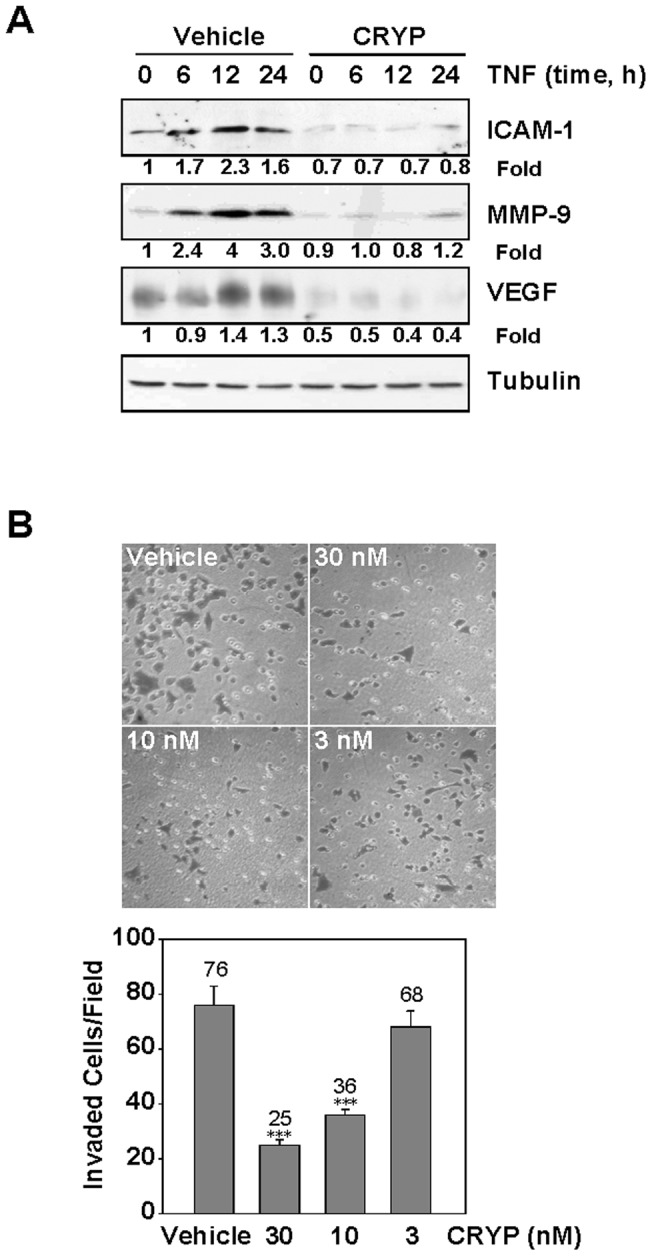
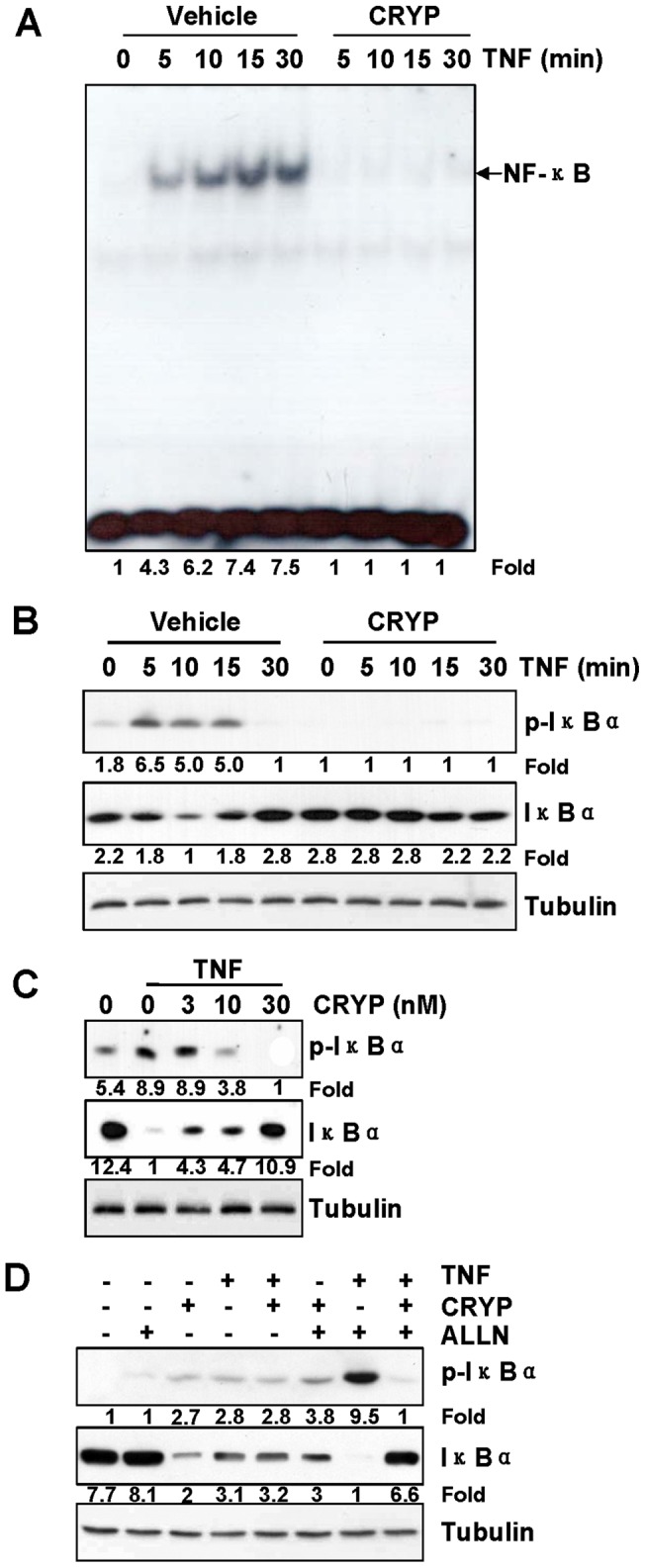
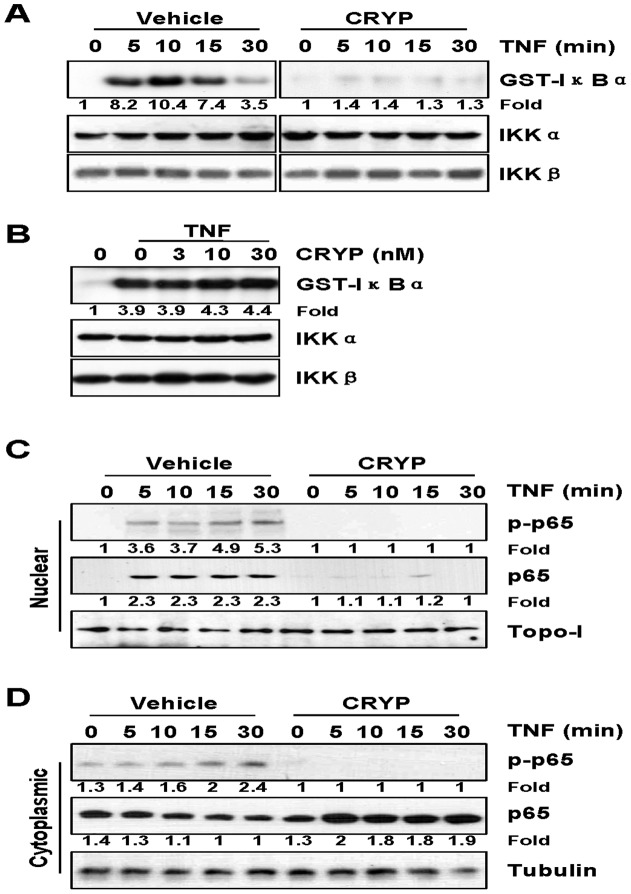
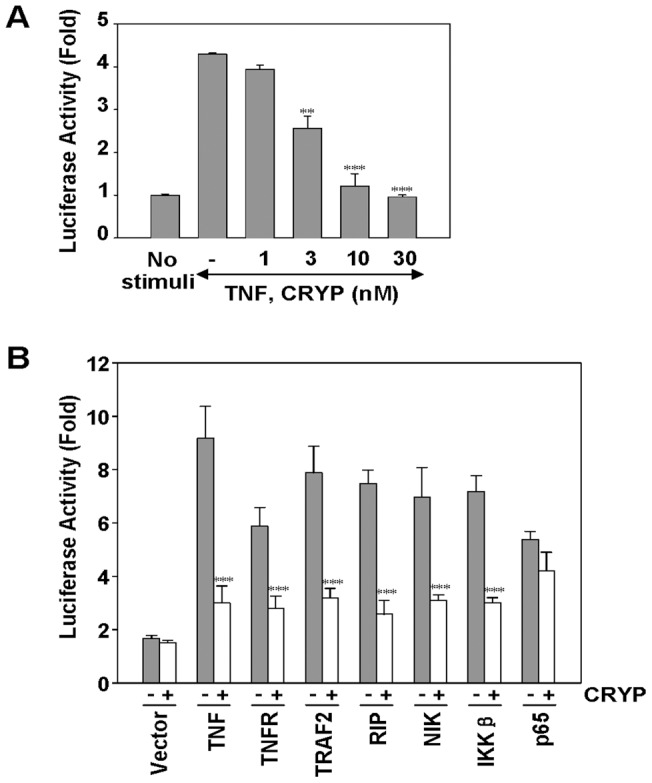
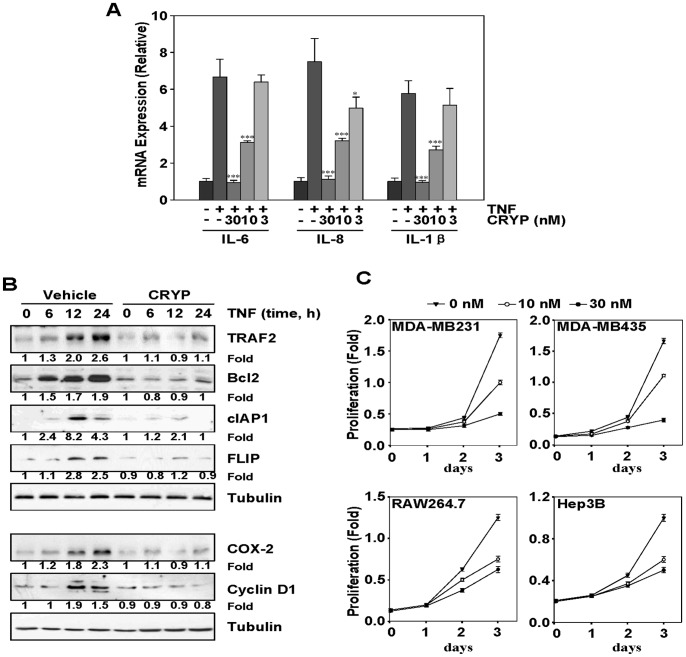
MDA-MB231, MDA-MB435, MCF-7, HEK293, RAW264.7 and Hep3B cells were used to examine cryptopleurine's effect on the NF-κB activation pathway. Major assays were promoter-reporter gene assay, electrophoretic mobility shift assay (EMSA), in vitro immune complex kinase assay, real-time PCR, Western blot analysis, and Matrigel invasion assay. Experiments documenting cell proliferation and apoptosis were analyzed by MTT method and flow cytometry, respectively. The results indicated that cryptopleurine suppressed the NF-κB activation through the inhibition of IκB kinase (IKK) activation, thereby blocking the phosphorylation and degradation of the inhibitor of NF-κB alpha (IκBα) and the nuclear translocation and DNA-binding activity of p65. The suppression of NF-κB by cryptopleurine led to the down-regulation of gene products involved in inflammation, cell survival, proliferation, invasion, and angiogenesis.
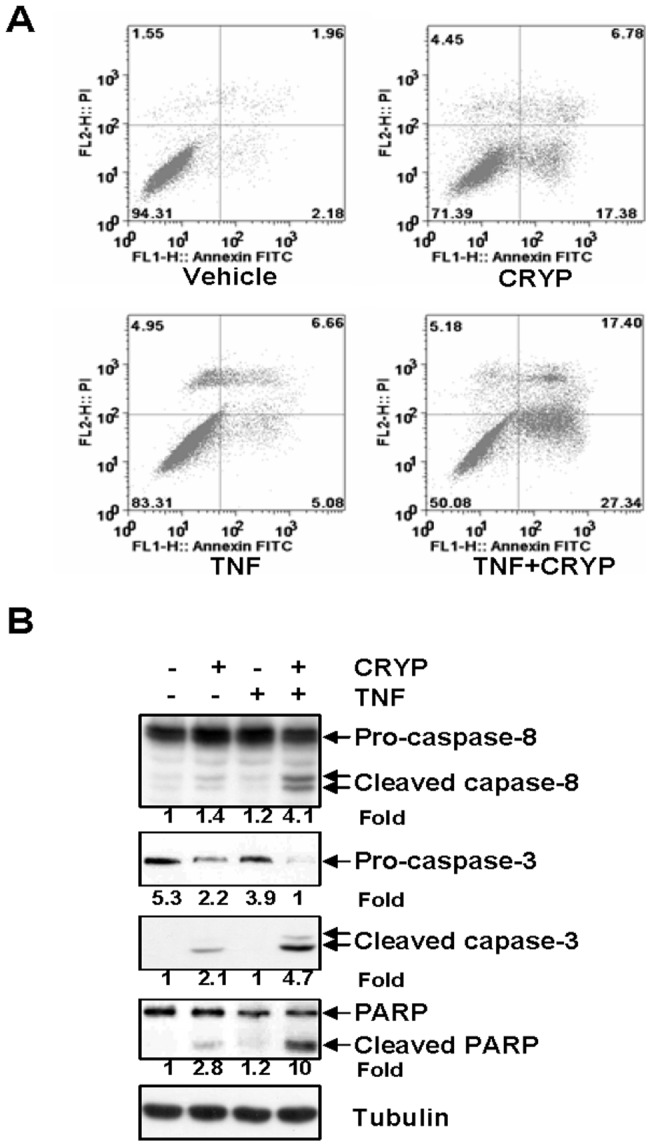
Our results show that cryptopleurine inhibited NF-κB activation pathway, which leads to inhibition of inflammation, proliferation, and invasion, as well as potentiation of apoptosis. Our findings provide a new insight into the molecular mechanisms and a potential application of cryptopleurine for inflammatory diseases as well as certain cancers associated with abnormal NF-κB activation.
隐石松堿,一种菲并喹啉里西啶生物碱,具有抗癌活性;然而,其作用机制尚不清楚。由于核因子-κB(NF-κB)转录因子控制着许多生理过程,包括炎症、免疫以及癌症的发生和发展,我们研究了隐石松堿对肿瘤坏死因子-α(TNF-α)诱导的 NF-κB 激活途径以及 NF-κB 调节的与许多病理生理过程相关基因产物表达的影响。
我们使用 MDA-MB231、MDA-MB435、MCF-7、HEK293、RAW264.7 和 Hep3B 细胞来检测隐石松堿对 NF-κB 激活途径的影响。主要的检测方法包括启动子报告基因检测、电泳迁移率变动分析(EMSA)、体外免疫复合物激酶分析、实时 PCR、Western blot 分析和 Matrigel 侵袭分析。记录细胞增殖和凋亡的实验分别通过 MTT 法和流式细胞术进行分析。结果表明,隐石松堿通过抑制 IκB 激酶(IKK)的激活来抑制 NF-κB 的激活,从而阻断 NF-κBα(IκBα)的磷酸化和降解以及 p65 的核转位和 DNA 结合活性。隐石松堿对 NF-κB 的抑制导致参与炎症、细胞存活、增殖、侵袭和血管生成的基因产物下调。
我们的结果表明,隐石松堿抑制 NF-κB 激活途径,从而抑制炎症、增殖和侵袭,并增强凋亡。我们的研究结果为隐石松堿在炎症性疾病以及与异常 NF-κB 激活相关的某些癌症中的分子机制和潜在应用提供了新的见解。