Institute of Hepatology, The Affiliated Hospital of Jiaxing University, Jiaxing, 314001, Zhejiang, People's Republic of China.
Institute of Hepatology, The First Hospital of Jiaxing, Jiaxing, 314001, Zhejiang, People's Republic of China.
Parasit Vectors. 2021 May 1;14(1):232. doi: 10.1186/s13071-021-04734-1.
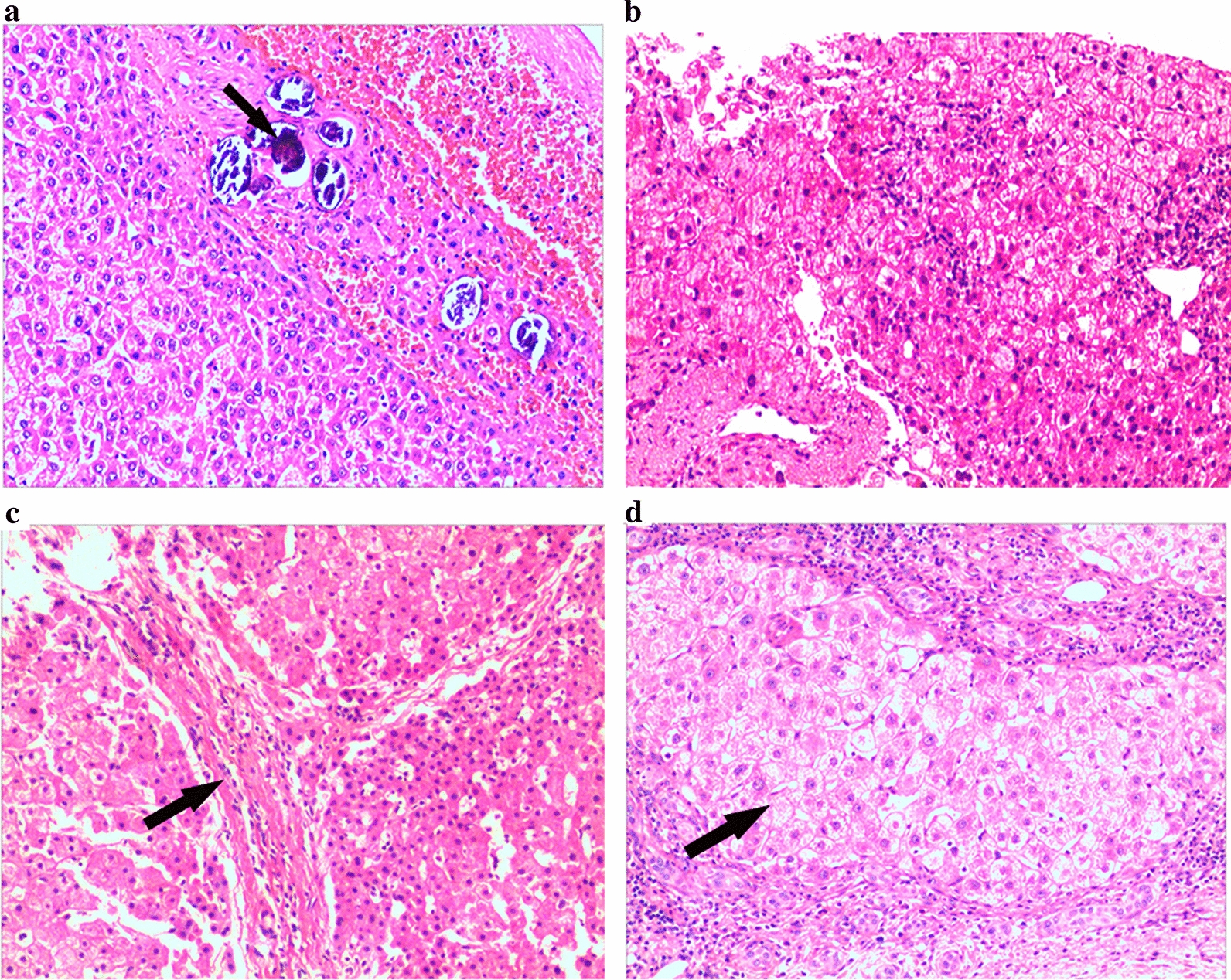
Schistosoma japonicum is a parasitic flatworm that is the aetiological agent of human schistosomiasis, an important cause of hepatic fibrosis. Schistosomiasis-induced hepatic fibrosis is a consequence of the highly fibrogenic nature of egg-induced granulomatous lesions, which are the main pathogenic features of schistosomiasis. Although global awareness of the association between schistosomiasis-induced hepatic fibrosis and S. japonicum infection is increasing, little is known about the molecular differences associated with rapid progression to schistosomiasis in cirrhotic patients.
We systematically used data-independent acquisition (DIA)-based liquid chromatography-mass spectrometry to identify differentially expressed proteins in serum samples from patients with advanced S. japonicum-induced hepatic fibrosis.
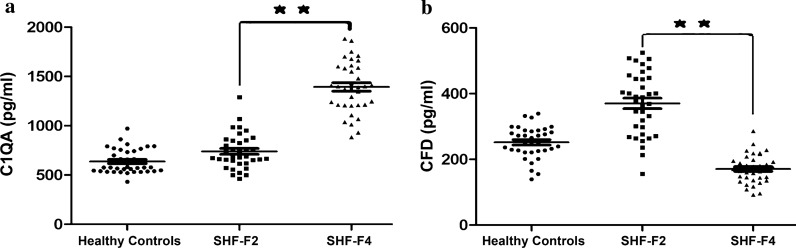
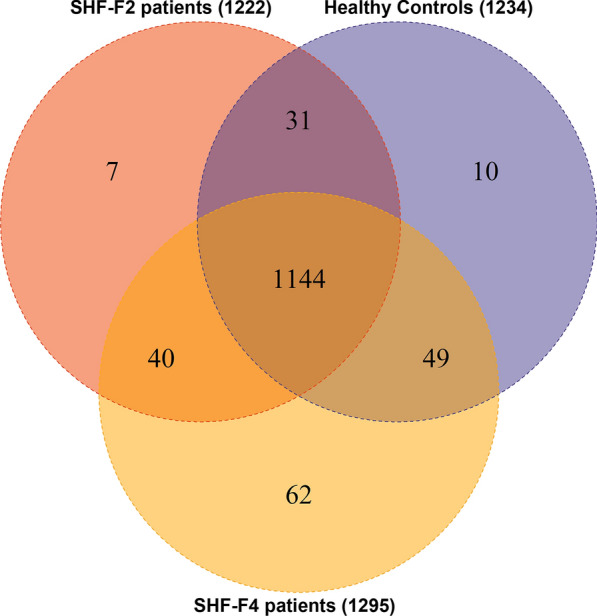
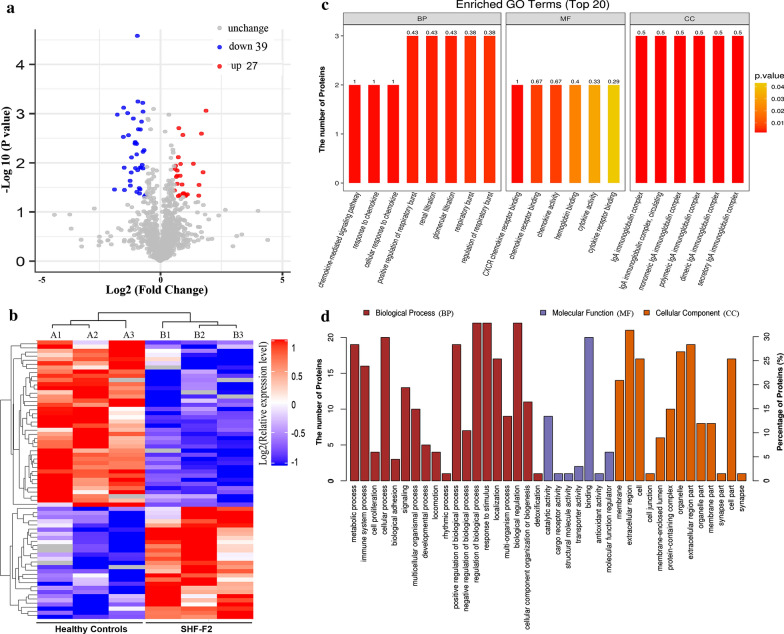
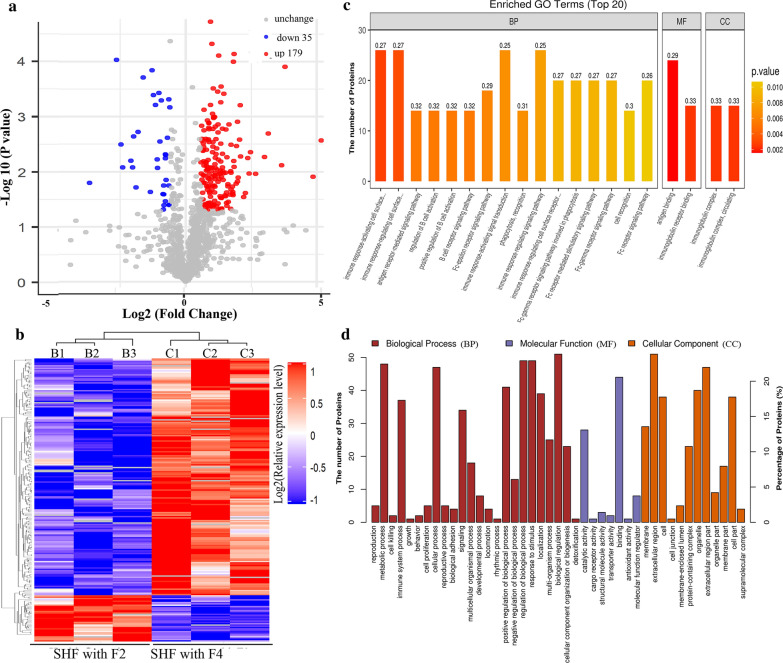
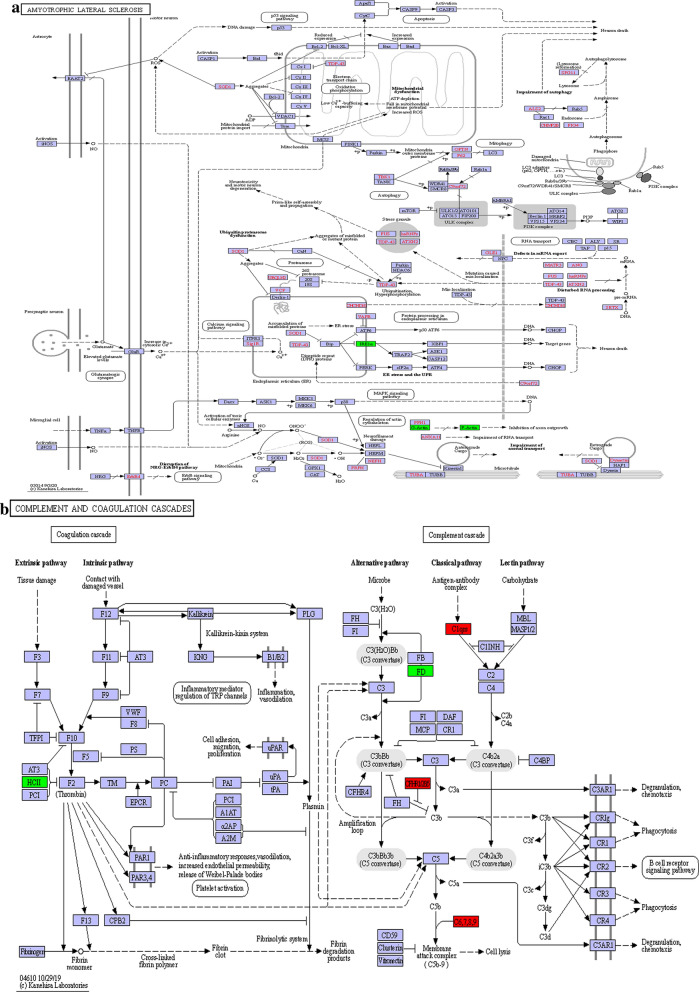
Our analysis identified 1144 proteins, among which 66 were differentially expressed between the healthy control group and the group of patients with advanced S. japonicum-induced hepatic fibrosis stage F2 (SHF-F2) and 214 were differentially expressed between the SHF-F2 and SHF-F4 groups (up- or downregulation of at least 1.5-fold in serum samples). The results also indicated that two selected proteins (C1QA and CFD) are potential biomarkers for distinguishing between patients with SHF-F2 and those with SHF-F4 due to S. japonicum infection.
We provide here the first global proteomic profile of serum samples from patients with advanced S. japonicum-induced hepatic fibrosis. The proteins C1QA and CFD are potential diagnostic markers for patients with SHF-F2 and SHF-F4 due to S. japonicum infection, although further large-scale studies are needed. Our DIA-based quantitative proteomic analysis revealed molecular differences among individuals at different stages of advanced S. japonicum-induced hepatic fibrosis and may provide fundamental information for further detailed investigations.
日本血吸虫是一种寄生扁形动物,是人类血吸虫病的病原体,也是肝纤维化的重要原因。血吸虫病引起的肝纤维化是卵诱导的肉芽肿性病变高度致纤维化性质的结果,这是血吸虫病的主要致病特征。尽管人们越来越意识到血吸虫病引起的肝纤维化与日本血吸虫感染之间的关联,但对于肝硬化患者中与血吸虫病快速进展相关的分子差异知之甚少。
我们系统地使用非依赖性采集(DIA)-基于液相色谱-质谱联用技术来鉴定晚期日本血吸虫引起的肝纤维化患者血清样本中的差异表达蛋白。
我们的分析确定了 1144 种蛋白质,其中 66 种在健康对照组和晚期日本血吸虫引起的肝纤维化 F2 组(SHF-F2)患者之间存在差异表达,214 种在 SHF-F2 和 SHF-F4 组之间存在差异表达(血清样本中至少上调或下调 1.5 倍)。结果还表明,两种选定的蛋白质(C1QA 和 CFD)是区分由于日本血吸虫感染导致的 SHF-F2 和 SHF-F4 患者的潜在生物标志物。
我们在这里提供了晚期日本血吸虫引起的肝纤维化患者血清样本的第一个全蛋白质组学图谱。蛋白质 C1QA 和 CFD 是由于日本血吸虫感染导致 SHF-F2 和 SHF-F4 患者的潜在诊断标志物,尽管需要进一步的大规模研究。我们基于 DIA 的定量蛋白质组学分析揭示了不同阶段晚期日本血吸虫引起的肝纤维化患者之间的分子差异,可能为进一步的详细研究提供基础信息。