Chen Yunqing, Wei Dahai, Deng Min
Department of Infectious Diseases, Affiliated Hospital of Jiaxing University, Jiaxing, People's Republic of China.
Department of Infectious Diseases, First Hospital of Jiaxing, Jiaxing, People's Republic of China.
Infect Drug Resist. 2021 Nov 9;14:4701-4715. doi: 10.2147/IDR.S335666. eCollection 2021.
In clinical practice, the clinicopathological profiles and outcomes of patients infected with hepatitis B virus (HBV) are different between genotypes B and C. However, little is known about the potential mechanism and differences in specific biological pathways associated with the different genotype. This study aimed to compare the serum protein profile between patients infected with HBV genotype B and those infected with HBV genotype C.
A total of 54 serum samples from patients with chronic HBV genotype B infection and those with chronic HBV genotype C infection, and healthy controls were used for the proteomic analysis (n = 18 samples in per group). Serum proteomic profiles were analyzed using data-independent acquisition (DIA)-based liquid chromatography-mass spectrometry to identify differentially expressed proteins (up- or downregulation of at least 1.5-fold) between serum samples from HBV patients infected with HBV genotype B and those infected with genotype C.
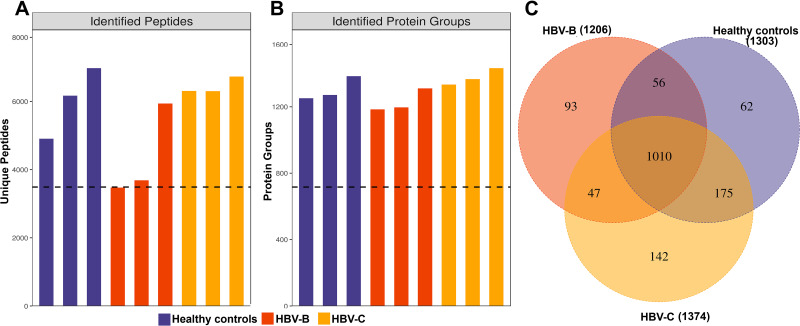
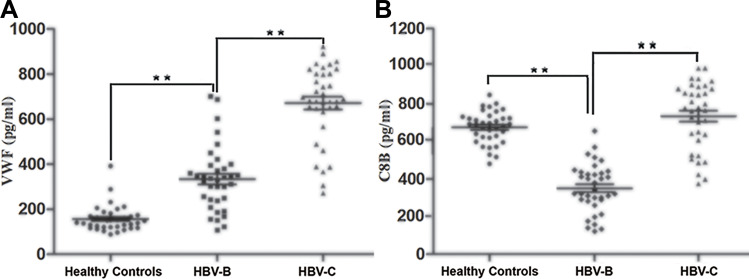
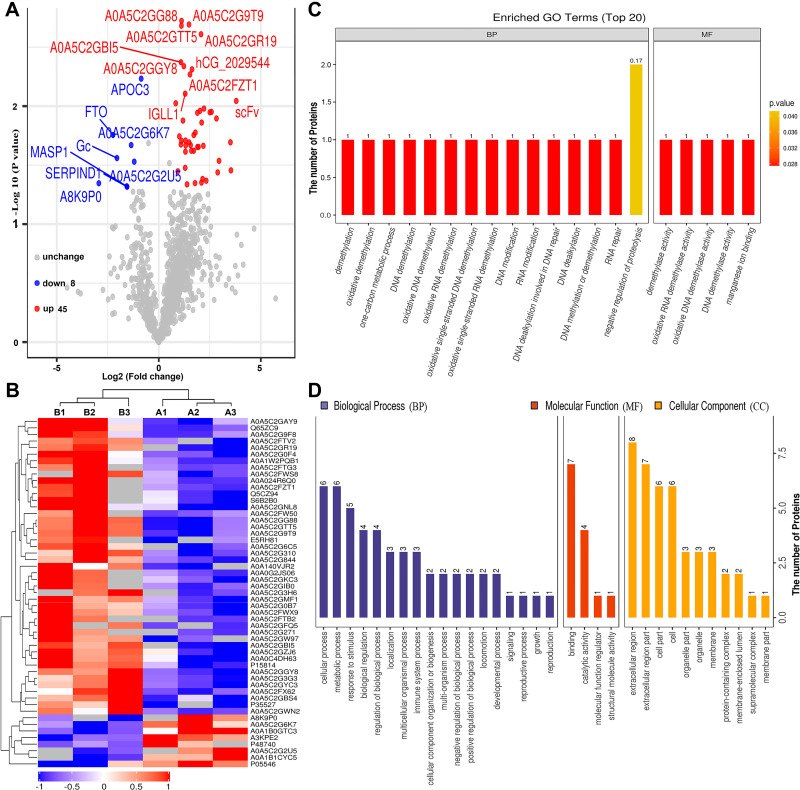
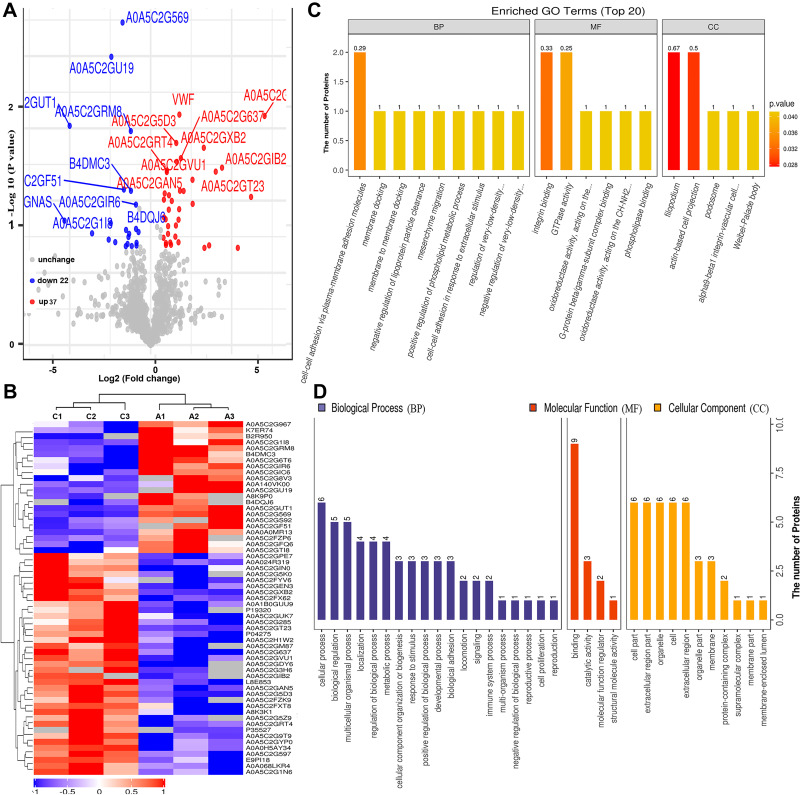
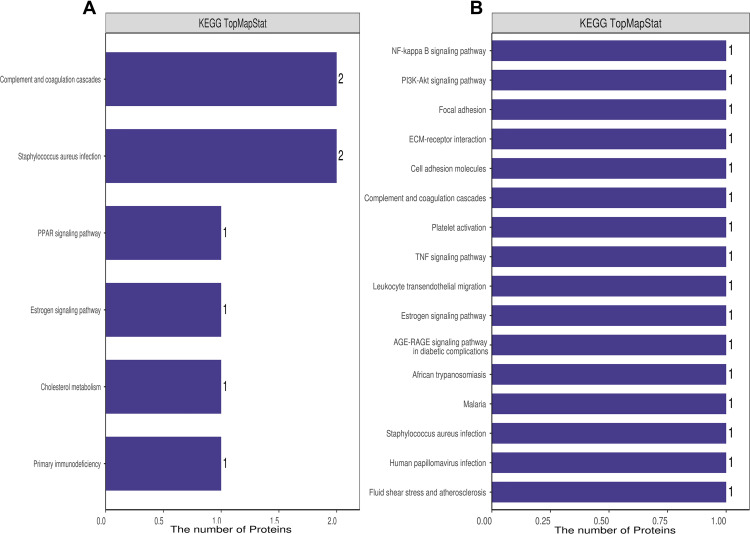
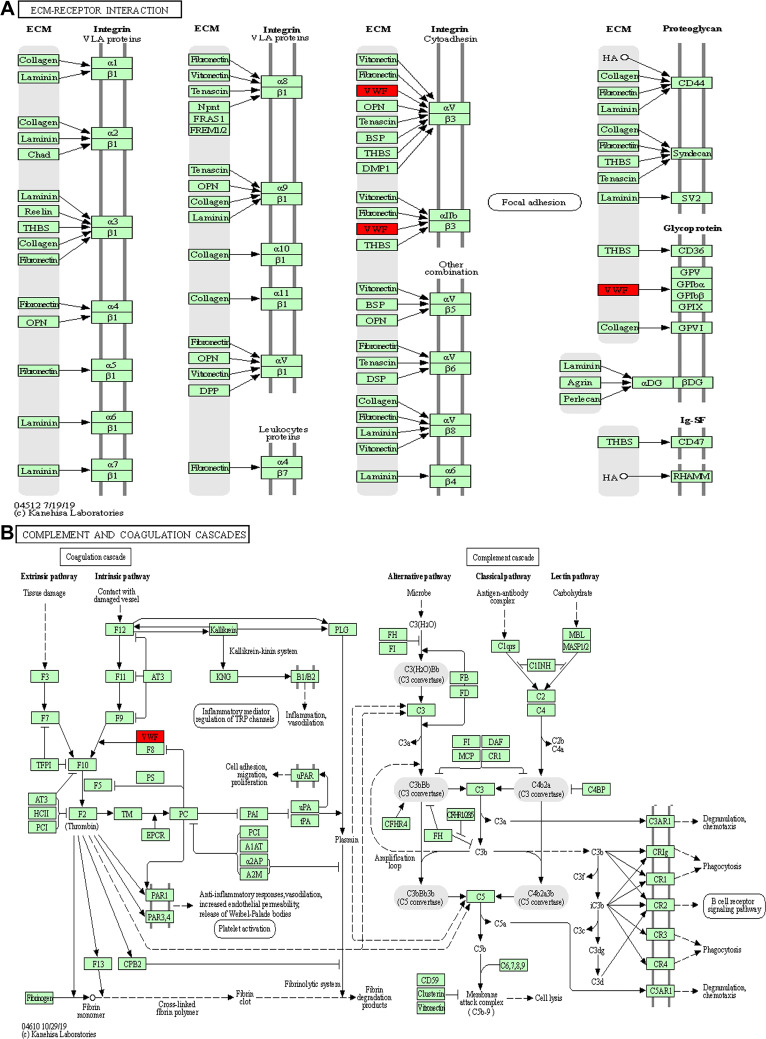
We identified 1010 proteins, 53 of which were differentially expressed between the serum samples of the healthy controls and those of HBV genotype B infected patients, and 59 that were differentially expressed between the samples of the healthy controls and those of HBV genotype C infected patients. Furthermore, our results indicated that two proteins identified as being differentially expressed (VWF and C8B) have potential as biomarkers for distinguishing genotype B infected HBV patients from those infected with genotype C.
The results of our DIA-based quantitative proteomic analysis revealed that HBV genotypes B and C are associated with different molecular profiles and may provide fundamental information for further detailed investigations of the molecular mechanism underlying these differences.
在临床实践中,感染乙型肝炎病毒(HBV)的患者的临床病理特征和预后在B型和C型基因型之间存在差异。然而,对于与不同基因型相关的特定生物学途径的潜在机制和差异知之甚少。本研究旨在比较感染HBV B型基因型的患者和感染HBV C型基因型的患者之间的血清蛋白质谱。
总共54份血清样本,来自慢性HBV B型基因型感染患者、慢性HBV C型基因型感染患者以及健康对照,用于蛋白质组学分析(每组n = 18个样本)。使用基于数据非依赖采集(DIA)的液相色谱 - 质谱法分析血清蛋白质组谱,以鉴定感染HBV B型基因型的HBV患者和感染C型基因型的患者血清样本之间差异表达的蛋白质(至少上调或下调1.5倍)。
我们鉴定出1010种蛋白质,其中53种在健康对照血清样本与感染HBV B型基因型患者的血清样本之间差异表达,59种在健康对照样本与感染HBV C型基因型患者的样本之间差异表达。此外,我们的结果表明,鉴定为差异表达的两种蛋白质(VWF和C8B)有潜力作为区分感染HBV B型基因型患者和感染C型基因型患者的生物标志物。
我们基于DIA的定量蛋白质组学分析结果表明,HBV B型和C型基因型与不同的分子谱相关,可能为进一步详细研究这些差异背后的分子机制提供基础信息。