Key Laboratory of Laboratory Medical Diagnostics, Chinese Ministry of Education, Chongqing Medical University, 400016, Chongqing, China.
Experimental Teaching Center of Basic Medicine Science, Chongqing Medical University, 400016, Chongqing, China.
Cell Death Dis. 2021 May 1;12(5):437. doi: 10.1038/s41419-021-03708-6.
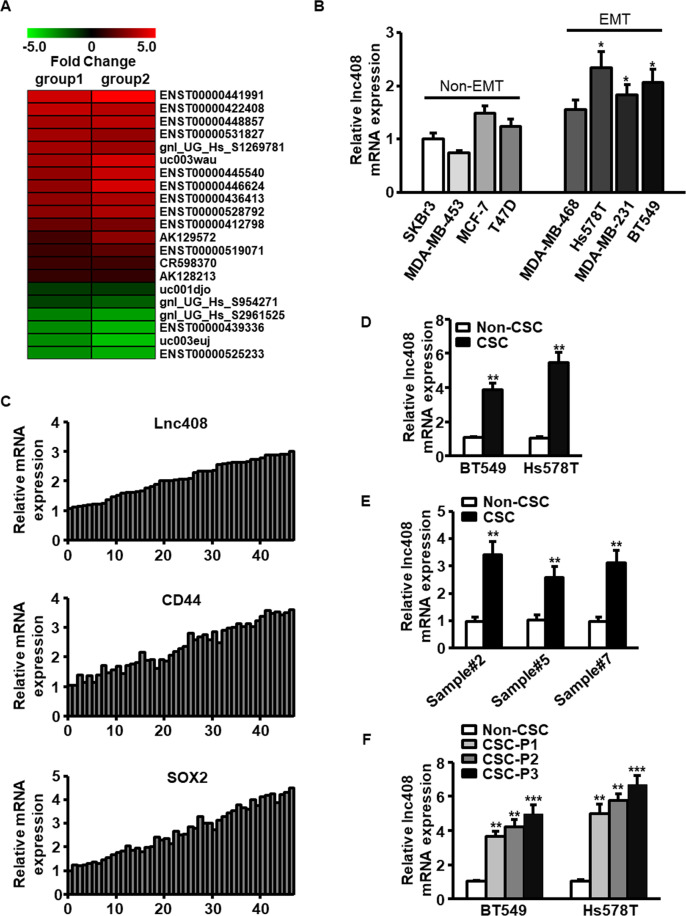
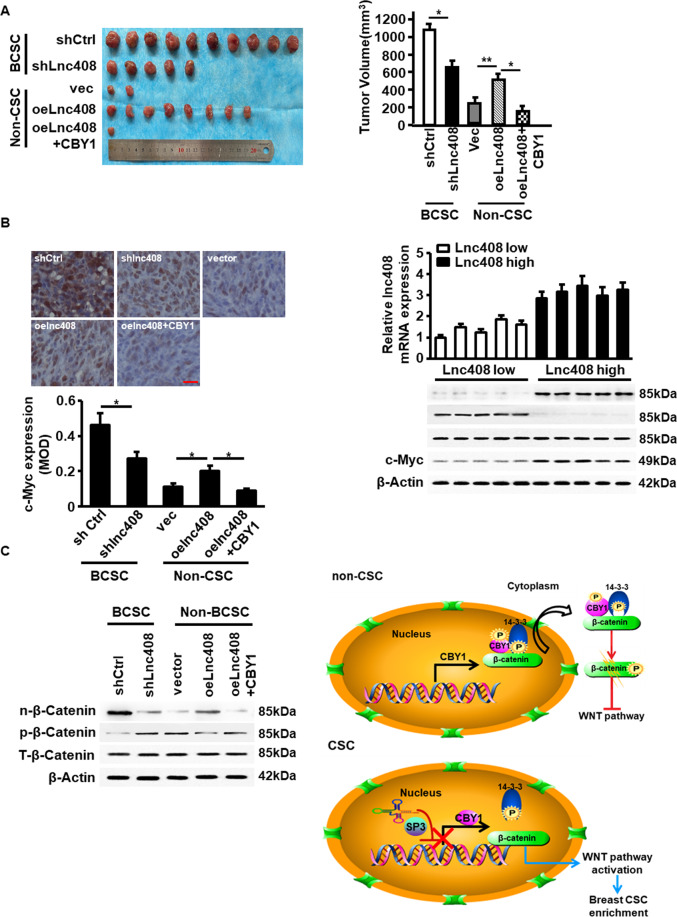
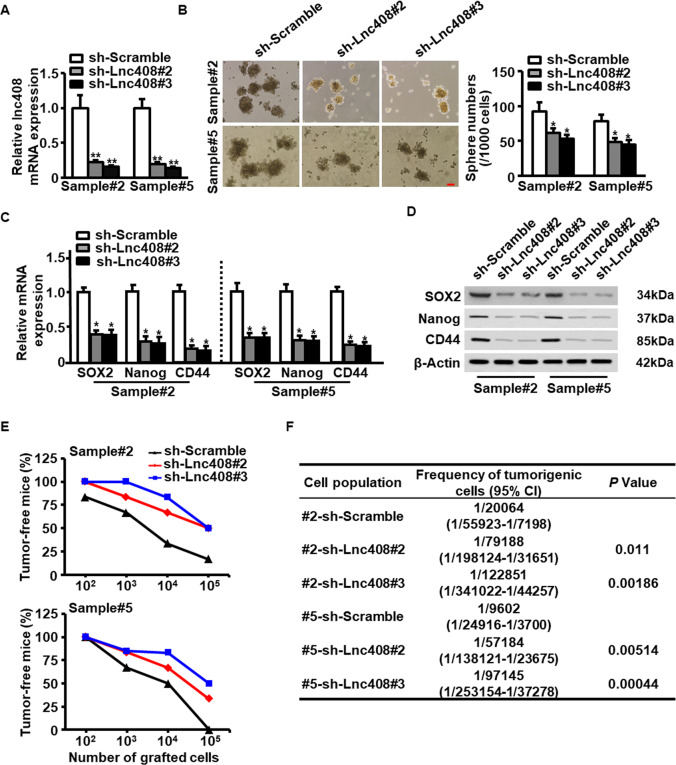
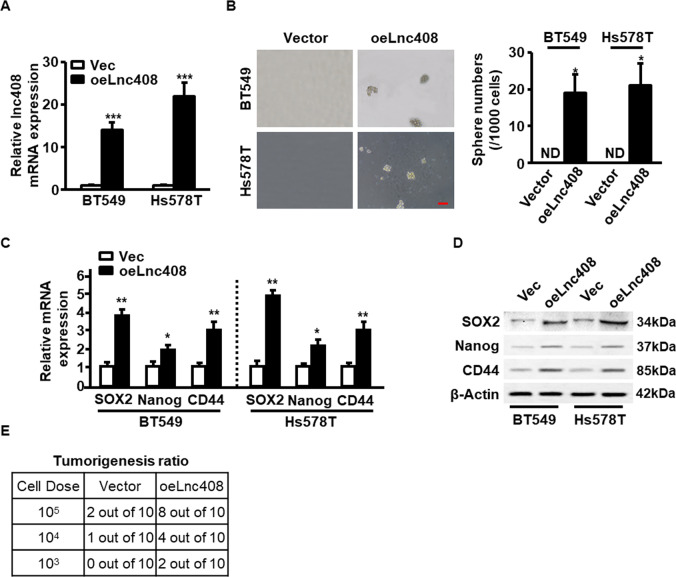
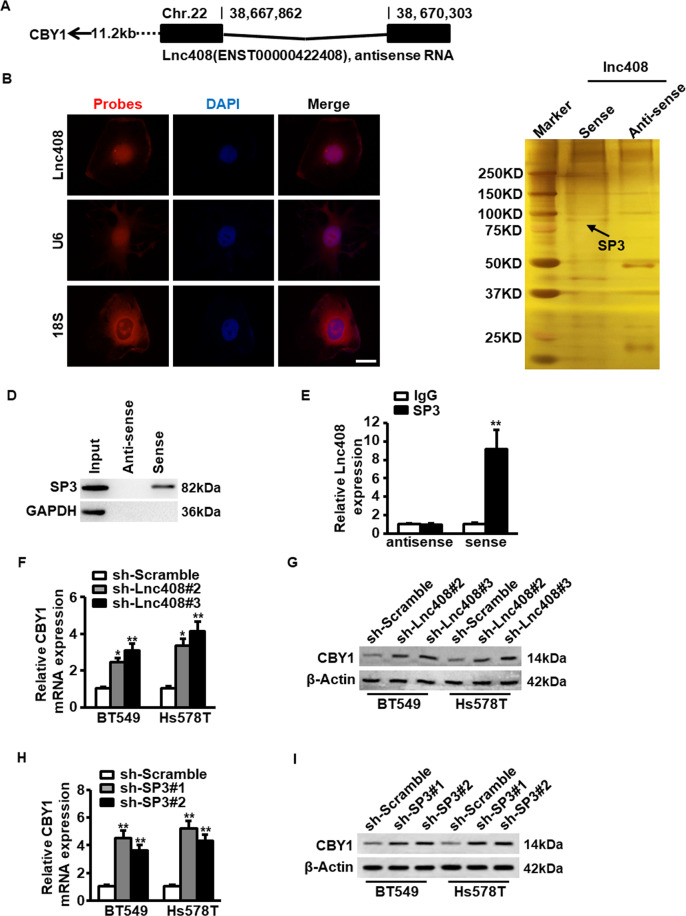
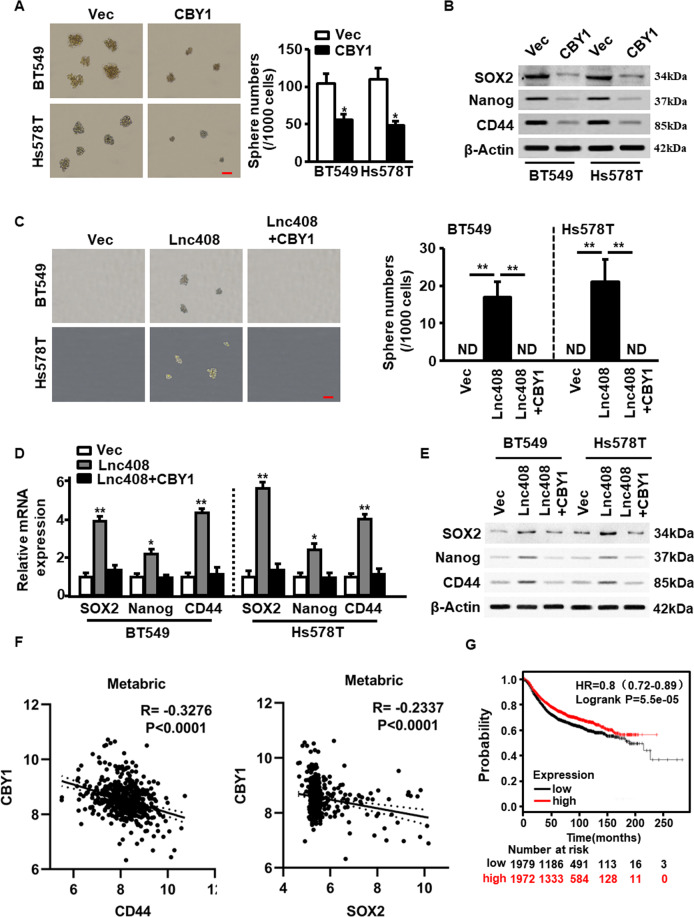
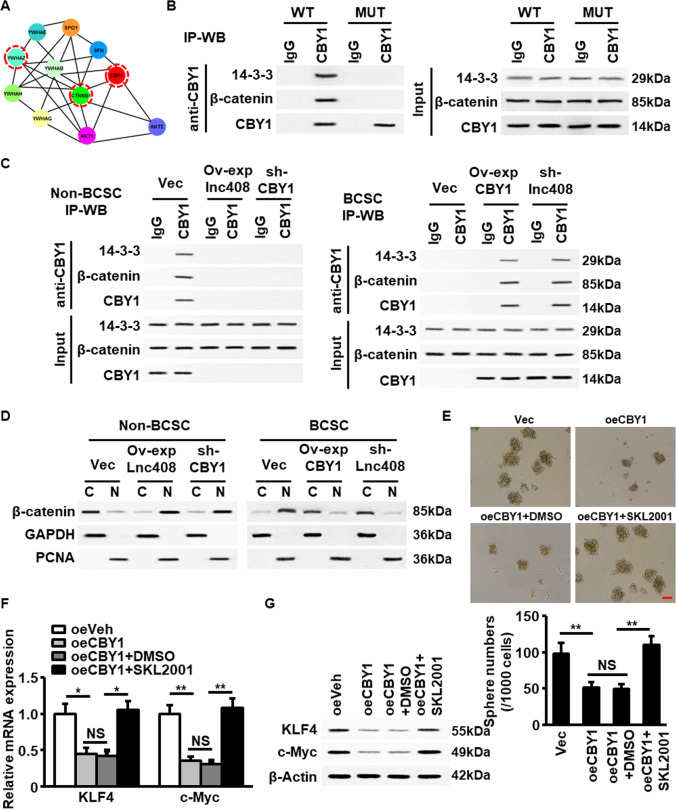
Tumor initiation, development, and relapse may be closely associated with cancer stem cells (CSCs). The complicated mechanisms underlying the maintenance of CSCs are keeping in illustration. Long noncoding RNAs (lncRNAs), due to their multifunction in various biological processes, have been indicated to play a crucial role in CSC renewal and stemness maintenance. Using lncRNA array, we identified a novel lncRNA (named lnc408) in epithelial-mesenchymal transition-related breast CSCs (BCSCs). The lnc408 is high expressed in BCSCs in vitro and in vivo. The enhanced lnc408 is critical to BCSC characteristics and tumorigenesis. Lnc408 can recruit transcript factor SP3 to CBY1 promoter to serve as an inhibitor in CBY1 transcription in BCSCs. The high expressed CBY1 in non-BCSC interacts with 14-3-3 and β-catenin to form a ternary complex, which leads a translocation of the ternary complex into cytoplasm from nucleus and degradation of β-catenin in phosphorylation-dependent pattern. The lnc408-mediated decrease of CBY1 in BCSCs impairs the formation of 14-3-3/β-catenin/CBY1 complex, and keeps β-catenin in nucleus to promote CSC-associated CD44, SOX2, Nanog, Klf4, and c-Myc expressions and contributes to mammosphere formation; however, restoration of CBY1 expression in tumor cells reduces BCSC and its enrichment, thus lnc408 plays an essential role in maintenance of BCSC stemness. In shortly, these findings highlight that the novel lnc408 functions as an oncogenic factor by recruiting SP3 to inhibit CBY1 expression and β-catenin accumulation in nucleus to maintain stemness properties of BCSCs. Lnc408-CBY1-β-catenin signaling axis might serve as a new diagnostic and therapeutic target for breast cancer.
肿瘤的发生、发展和复发可能与癌症干细胞(CSC)密切相关。CSC 维持的复杂机制仍在研究中。长链非编码 RNA(lncRNA)因其在多种生物学过程中的多功能性,被认为在 CSC 更新和干细胞特性维持中发挥关键作用。我们使用 lncRNA 芯片,在上皮间质转化相关的乳腺癌干细胞(BCSC)中鉴定出一种新型 lncRNA(命名为 lnc408)。lnc408 在体外和体内的 BCSC 中高表达。增强的 lnc408 对 BCSC 特征和肿瘤发生至关重要。lnc408 可以募集转录因子 SP3 到 CBY1 启动子,作为 BCSC 中 CBY1 转录的抑制剂。在非 BCSC 中高表达的 CBY1 与 14-3-3 和 β-catenin 相互作用形成三元复合物,导致三元复合物从细胞核易位到细胞质,并以依赖磷酸化的模式降解 β-catenin。lnc408 介导的 BCSC 中 CBY1 的减少会损害 14-3-3/β-catenin/CBY1 复合物的形成,并使β-catenin保持在细胞核中,从而促进 CSC 相关的 CD44、SOX2、Nanog、Klf4 和 c-Myc 的表达,并有助于形成乳腺球;然而,肿瘤细胞中 CBY1 的表达恢复会降低 BCSC 及其富集,因此 lnc408 在维持 BCSC 干细胞特性方面发挥着重要作用。简而言之,这些发现强调了新型 lnc408 通过募集 SP3 抑制 CBY1 表达和β-catenin 在细胞核中的积累,从而发挥致癌因子的作用,维持 BCSC 的干细胞特性。lnc408-CBY1-β-catenin 信号轴可能成为乳腺癌的新的诊断和治疗靶点。