Key Laboratory of Laboratory Medical Diagnostics, Chinese Ministry of Education, Chongqing Medical University, No. 1, Yi-Xue-Yuan Road, Yu-zhong District, Chongqing, 400016, China.
Department of Cell Biology and Medical Genetics, Basic Medical School, Chongqing Medical University, Chongqing, 400016, China.
J Hematol Oncol. 2021 Oct 29;14(1):178. doi: 10.1186/s13045-021-01194-z.
Cancer stem cells (CSCs) are considered as the major cause to tumor initiation, recurrence, metastasis, and drug resistance, driving poor clinical outcomes in patients. Long noncoding RNAs (lncRNAs) have emerged as crucial regulators in cancer development and progression. However, limited lncRNAs involved in CSCs have been reported.
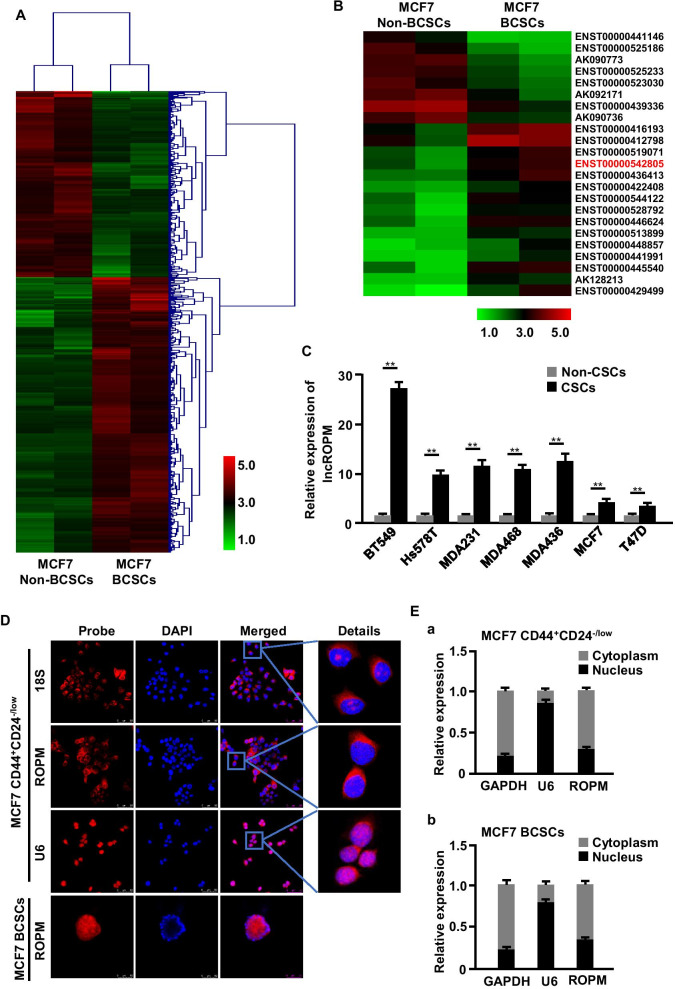
The novel lncROPM (a regulator of phospholipid metabolism) in breast CSCs (BCSCs) was identified by microarray and validated by qRT-PCR in BCSCs from breast cancer cells and tissues. The clinical significance of lncROPM was evaluated in two breast cancer cohorts and TANRIC database (TCGA-BRCA, RNAseq data). Gain- and loss-of-function assays were performed to examine the role of lncROPM on BCSCs both in vitro and in vivo. The regulatory mechanism of lncROPM was investigated by bioinformatics, RNA FISH, RNA pull-down, luciferase reporter assay, and actinomycin D treatment. PLA2G16-mediated phospholipid metabolism was determined by UHPLC-QTOFMS system. Cells' chemosensitivity was assessed by CCK8 assay.
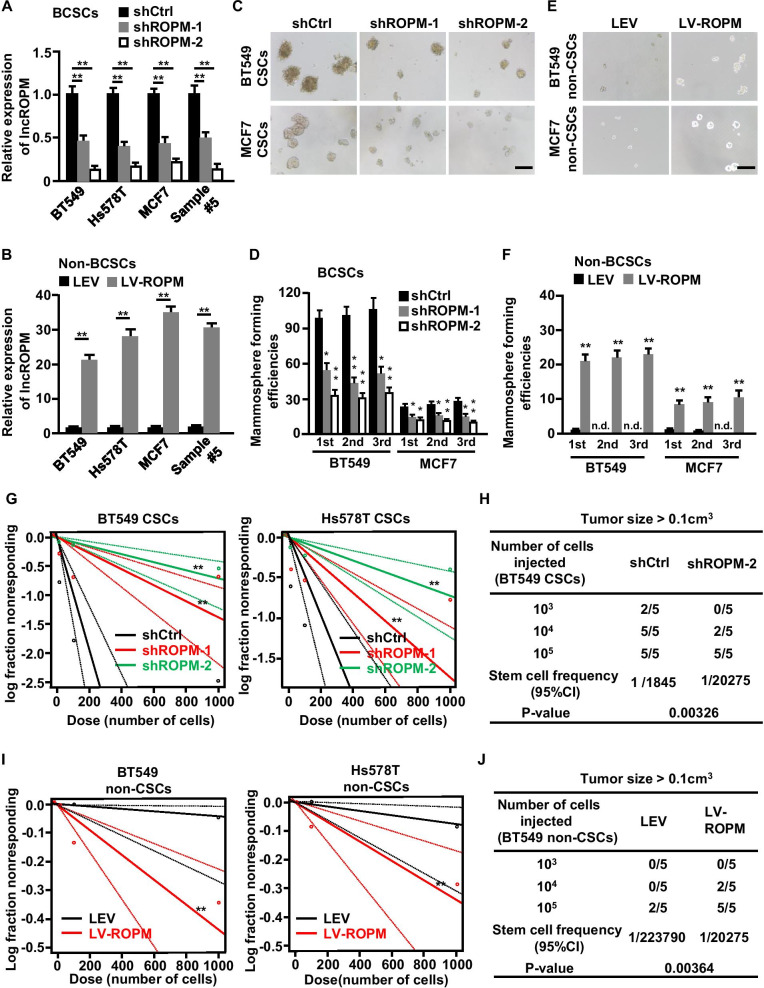
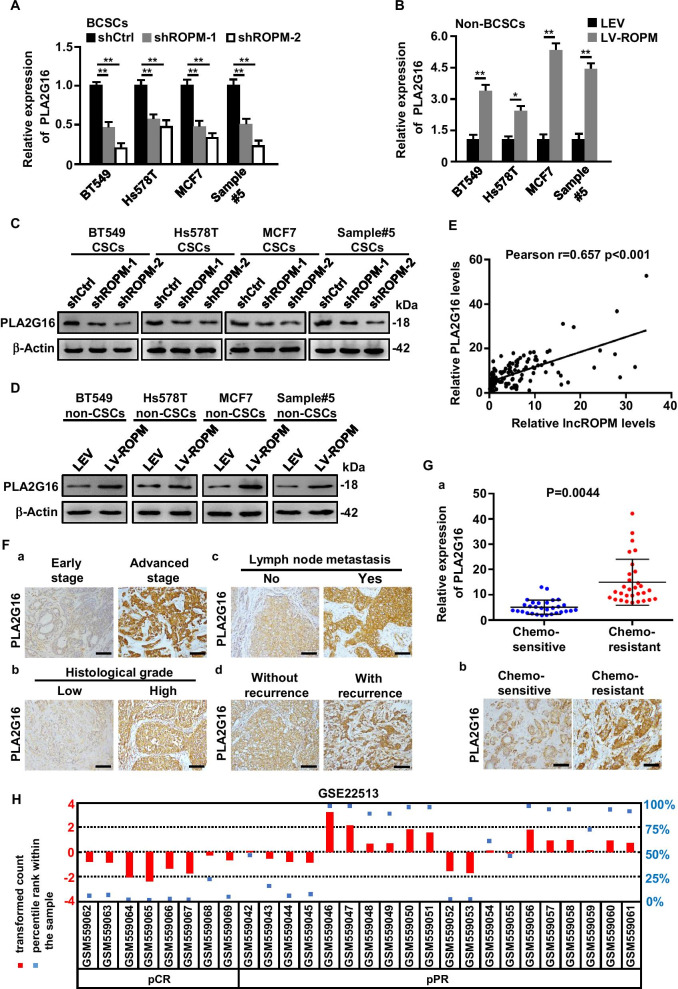
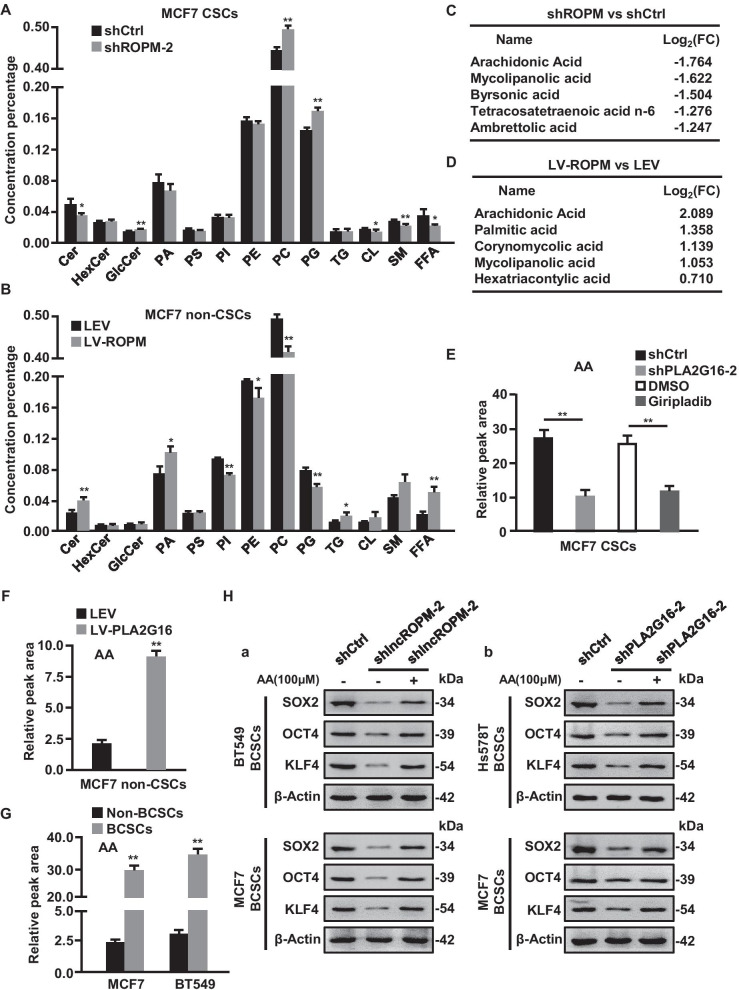
LncROPM is highly expressed in BCSCs. The enhanced lncROPM exists in clinic breast tumors and other solid tumors and positively correlates with malignant grade/stage and poor prognosis in breast cancer patients. Gain- and loss-of-function studies show that lncROPM is required for the maintenance of BCSCs properties both in vitro and in vivo. Mechanistically, lncROPM regulates PLA2G16 expression by directly binding to 3'-UTR of PLA2G16 to increase the mRNA stability. The increased PLA2G16 significantly promotes phospholipid metabolism and the production of free fatty acid, especially arachidonic acid in BCSCs, thereby activating PI3K/AKT, Wnt/β-catenin, and Hippo/YAP signaling, thus eventually involving in the maintenance of BCSCs stemness. Importantly, lncROPM and PLA2G16 notably contribute to BCSCs chemo-resistance. Administration of BCSCs using clinic therapeutic drugs such as doxorubicin, cisplatin, or tamoxifen combined with Giripladib (an inhibitor of cytoplasmic phospholipase A2) can efficiently eliminate BCSCs and tumorigenesis.
Our study highlights that lncROPM and its target PLA2G16 play crucial roles in sustaining BCSC properties and may serve as a biomarker for BCSCs or other cancer stem cells. Targeting lncROPM-PLA2G16 signaling axis may be a novel therapeutic strategy for patients with breast cancer.
癌症干细胞(CSCs)被认为是肿瘤起始、复发、转移和耐药的主要原因,导致患者临床结局不佳。长链非编码 RNA(lncRNA)已成为癌症发生和发展的重要调节因子。然而,涉及 CSCs 的 lncRNA 报道有限。
通过微阵列鉴定了乳腺癌干细胞(BCSCs)中的新型 lncROPM(磷脂代谢调节剂),并通过 qRT-PCR 在乳腺癌细胞和组织中的 BCSCs 中进行了验证。通过两个乳腺癌队列和 TANRIC 数据库(TCGA-BRCA,RNAseq 数据)评估 lncROPM 的临床意义。在体外和体内进行了 gain- 和 loss-of-function 实验,以研究 lncROPM 对 BCSCs 的作用。通过生物信息学、RNA FISH、RNA 下拉、荧光素酶报告基因测定和 Actinomycin D 处理研究 lncROPM 的调节机制。通过 UHPLC-QTOFMS 系统测定 PLA2G16 介导的磷脂代谢。通过 CCK8 测定评估细胞的化学敏感性。
lncROPM 在 BCSCs 中高表达。增强的 lncROPM 存在于临床乳腺肿瘤和其他实体瘤中,与乳腺癌患者的恶性程度/分期和不良预后呈正相关。gain- 和 loss-of-function 研究表明,lncROPM 是维持 BCSCs 特性所必需的,无论是在体外还是体内。机制上,lncROPM 通过直接结合 PLA2G16 的 3'-UTR 来调节 PLA2G16 的表达,从而增加 mRNA 稳定性。增加的 PLA2G16 可显著促进磷脂代谢和游离脂肪酸的产生,尤其是 BCSCs 中的花生四烯酸,从而激活 PI3K/AKT、Wnt/β-catenin 和 Hippo/YAP 信号通路,从而最终参与维持 BCSC 干性。重要的是,lncROPM 和 PLA2G16 显著促进了 BCSC 的化疗耐药性。使用临床治疗药物(如阿霉素、顺铂或他莫昔芬)联合 Giripladib(细胞质磷脂酶 A2 抑制剂)对 BCSC 进行给药,可以有效消除 BCSC 和肿瘤发生。
本研究强调 lncROPM 及其靶标 PLA2G16 在维持 BCSC 特性方面发挥着重要作用,可作为 BCSC 或其他癌症干细胞的标志物。靶向 lncROPM-PLA2G16 信号轴可能是治疗乳腺癌患者的一种新的治疗策略。