Phukan Pranjal, Sarma Kalyan, Sharma Barun Kumar, Boruah Deb K, Gogoi Bidyut Bikash, Chuunthang Daniala
Department of Radiodiagnosis, North Eastern Indira Gandhi Regional Institute of Health and Medical Sciences, Shillong, Meghalaya, India.
Department of Neuroradiology, All India Institute of Medical Sciences, New Delhi, India.
J Neurosci Rural Pract. 2021 Apr;12(2):281-289. doi: 10.1055/s-0041-1722820. Epub 2021 Mar 24.
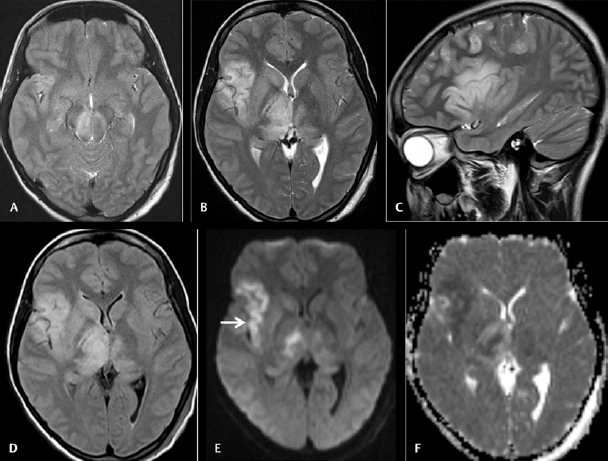
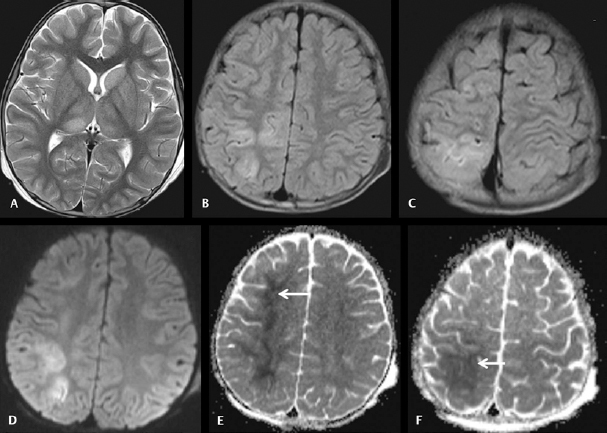
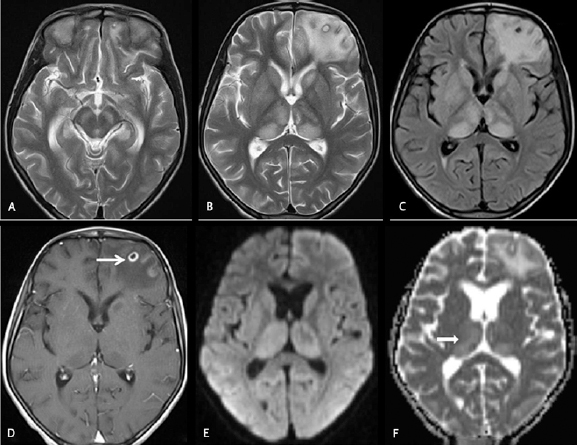
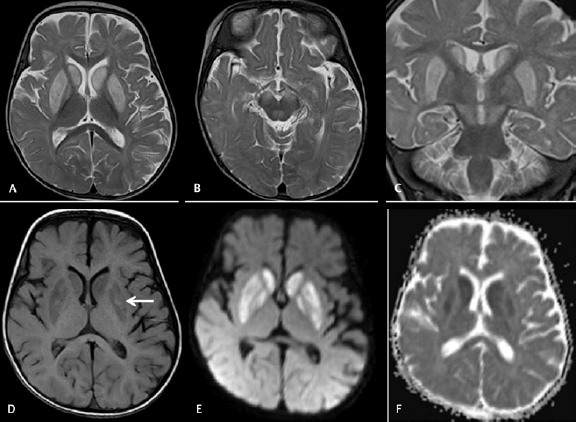
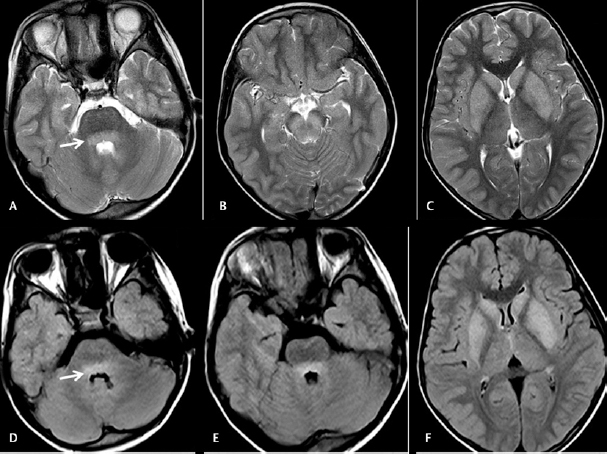
Japanese encephalitis (JE) is an arthropod-borne flavivirus infection having high mortality and morbidity. This study was performed to evaluate the conventional magnetic resonance imaging (MRI) findings in JE and to find out any difference between pediatric and adult JE. This retrospective study was performed on serologically positive 54 JE patients presented to a tertiary care hospital with acute encephalitic symptoms between April 2016 and October 2019. Relevant neurological examination, cerebrospinal fluid analysis, and MRI scan of the brain were performed. Fifty-four JE patients ( = 31 males and = 23 females) having 32 pediatric and 22 adult JE were included in the study sample. Group 1 JE ( = 16) patients had encephalitic symptoms with duration less than 15 days up to the day of MRI scan and group 2 JE ( = 38) had symptoms more than 15 days. Group 1 JE had mean apparent diffusion coefficient (ADC) value of 0.563 ± 0.109 (standard deviation [SD]) × 10 mm /sec and group 2 JE had 1.095 ± 0.206 (SD) × 10 mm /sec. The mean ADC value of pediatric JE was 0.907 ± 0.336 (SD) × 10 mm /sec and adult JE was 0.982 ± 0.253 (SD) × 10 mm /sec. The majority of the JE patient shows abnormal signal alterations in bilateral thalami and substantia nigra. Diffusion-weighted imaging with ADC mapping helps in evaluating the stage of the JE. No statistical significance of the various conventional MRI findings was found between the pediatric JE and adult JE.
日本脑炎(JE)是一种由节肢动物传播的黄病毒感染,具有较高的死亡率和发病率。本研究旨在评估JE患者的传统磁共振成像(MRI)表现,并找出小儿和成人JE之间的差异。
本回顾性研究纳入了2016年4月至2019年10月期间在一家三级医院就诊的54例血清学阳性的JE患者,这些患者均出现急性脑炎症状。对患者进行了相关的神经学检查、脑脊液分析和脑部MRI扫描。
研究样本包括54例JE患者(男性31例,女性22例),其中小儿JE患者32例,成人JE患者22例。第1组JE患者(16例)在MRI扫描当天出现脑炎症状的持续时间少于15天,第2组JE患者(38例)症状持续时间超过15天。第1组JE患者的平均表观扩散系数(ADC)值为0.563±0.109(标准差[SD])×10⁻³mm²/sec,第2组JE患者为1.095±0.206(SD)×10⁻³mm²/sec。小儿JE患者的平均ADC值为0.907±0.336(SD)×10⁻³mm²/sec,成人JE患者为0.982±0.253(SD)×10⁻³mm²/sec。
大多数JE患者在双侧丘脑和黑质出现异常信号改变。弥散加权成像及ADC图有助于评估JE的阶段。小儿JE和成人JE在各种传统MRI表现上未发现统计学差异。