Fingleton Erin, Li Yan, Roche Katherine W
National Institute of Neurological Disorders and Stroke (NINDS), Bethesda, MD, United States.
Front Mol Neurosci. 2021 Apr 15;14:647451. doi: 10.3389/fnmol.2021.647451. eCollection 2021.
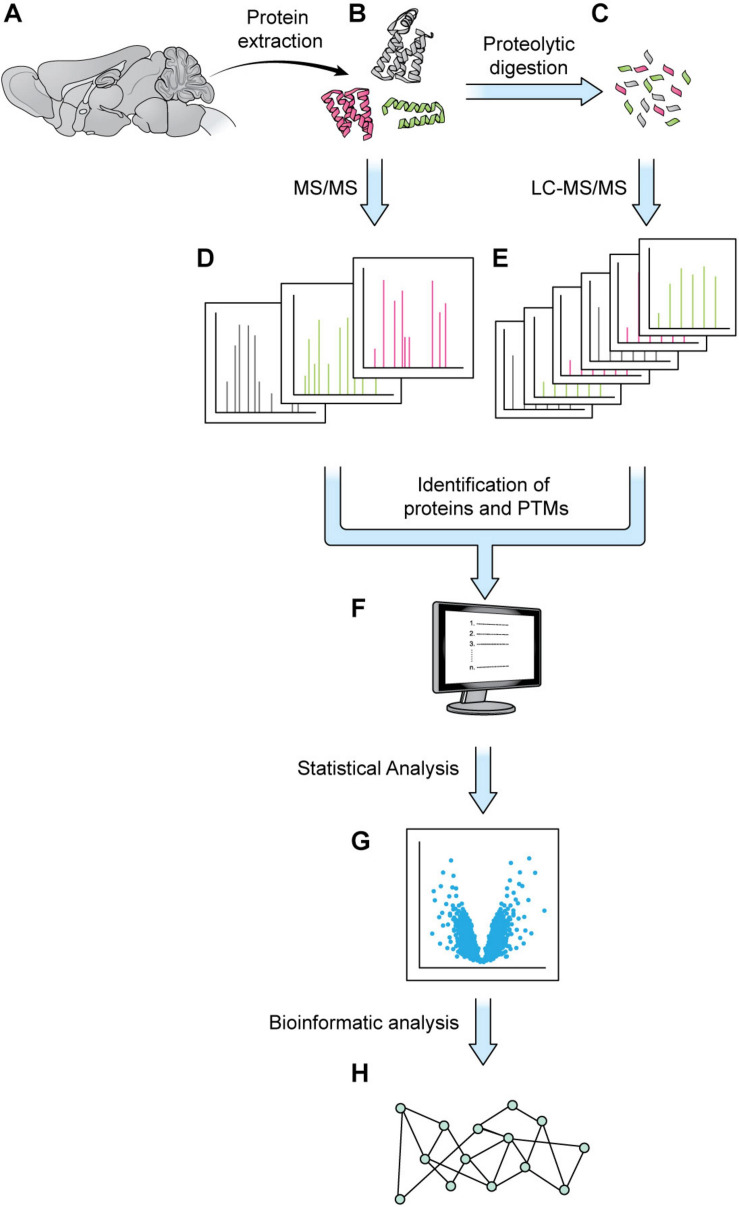
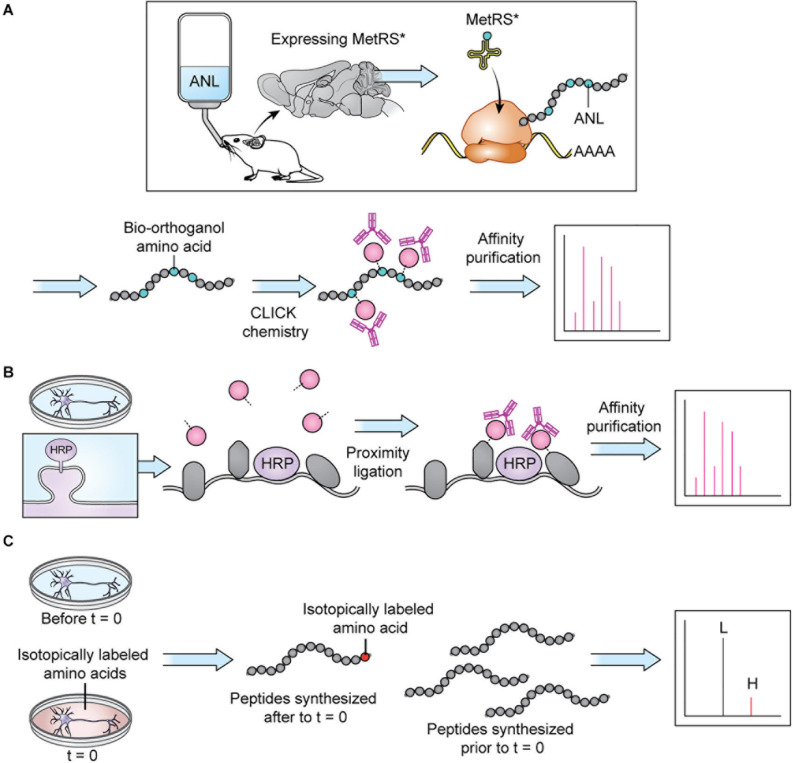
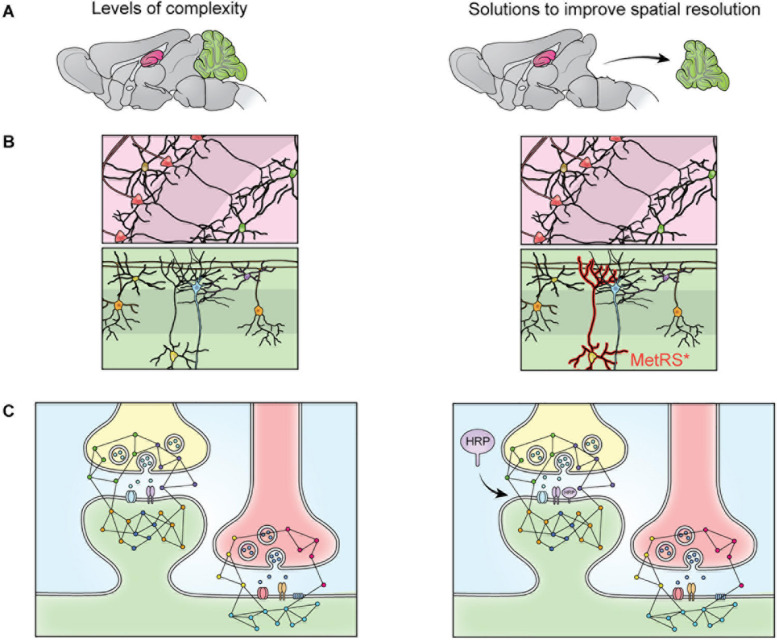
Protein-protein interaction networks and signaling complexes are essential for normal brain function and are often dysregulated in neurological disorders. Nevertheless, unraveling neuron- and synapse-specific proteins interaction networks has remained a technical challenge. New techniques, however, have allowed for high-resolution and high-throughput analyses, enabling quantification and characterization of various neuronal protein populations. Over the last decade, mass spectrometry (MS) has surfaced as the primary method for analyzing multiple protein samples in tandem, allowing for the precise quantification of proteomic data. Moreover, the development of sophisticated protein-labeling techniques has given MS a high temporal and spatial resolution, facilitating the analysis of various neuronal substructures, cell types, and subcellular compartments. Recent studies have leveraged these novel techniques to reveal the proteomic underpinnings of well-characterized neuronal processes, such as axon guidance, long-term potentiation, and homeostatic plasticity. Translational MS studies have facilitated a better understanding of complex neurological disorders, such as Alzheimer's disease (AD), Schizophrenia (SCZ), and Autism Spectrum Disorder (ASD). Proteomic investigation of these diseases has not only given researchers new insight into disease mechanisms but has also been used to validate disease models and identify new targets for research.
蛋白质-蛋白质相互作用网络和信号复合物对于正常脑功能至关重要,且在神经疾病中常常失调。然而,解析神经元和突触特异性蛋白质相互作用网络仍然是一项技术挑战。不过,新技术已实现高分辨率和高通量分析,能够对各种神经元蛋白质群体进行定量和表征。在过去十年中,质谱(MS)已成为串联分析多个蛋白质样品的主要方法,可实现蛋白质组数据的精确定量。此外,先进蛋白质标记技术的发展赋予了质谱高时间和空间分辨率,便于分析各种神经元亚结构、细胞类型和亚细胞区室。近期研究利用这些新技术揭示了诸如轴突导向、长时程增强和稳态可塑性等特征明确的神经元过程的蛋白质组学基础。转化质谱研究有助于更好地理解复杂的神经疾病,如阿尔茨海默病(AD)、精神分裂症(SCZ)和自闭症谱系障碍(ASD)。对这些疾病的蛋白质组学研究不仅为研究人员提供了对疾病机制的新见解,还被用于验证疾病模型和确定新的研究靶点。