Vidal Verónica, Puente Alba, García-Cerro Susana, García Unzueta María Teresa, Rueda Noemí, Riancho Javier, Martínez-Cué Carmen
Department of Physiology and Pharmacology, Faculty of Medicine, University of Cantabria, Santander, Spain.
CIBERSAM, Madrid, Spain.
Front Pharmacol. 2021 Apr 15;12:613211. doi: 10.3389/fphar.2021.613211. eCollection 2021.
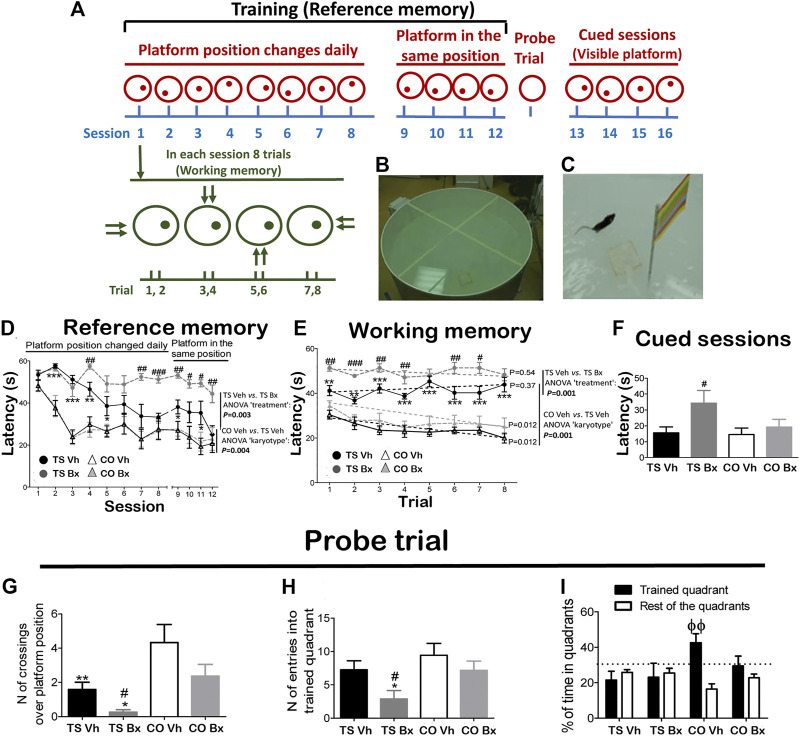
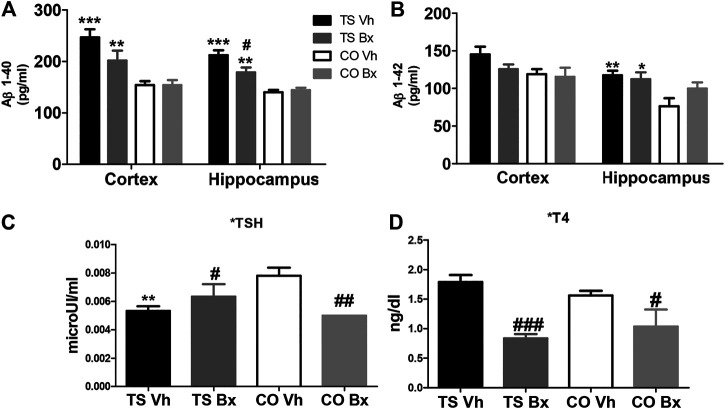
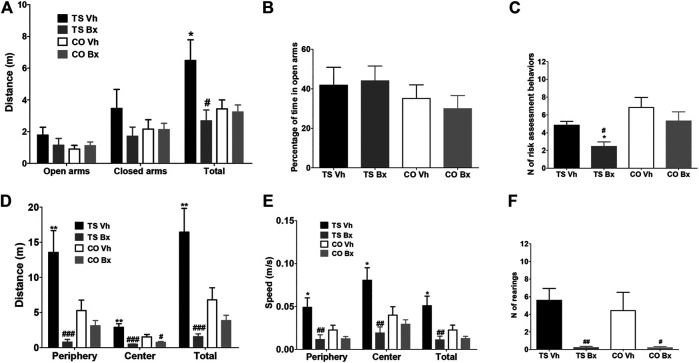
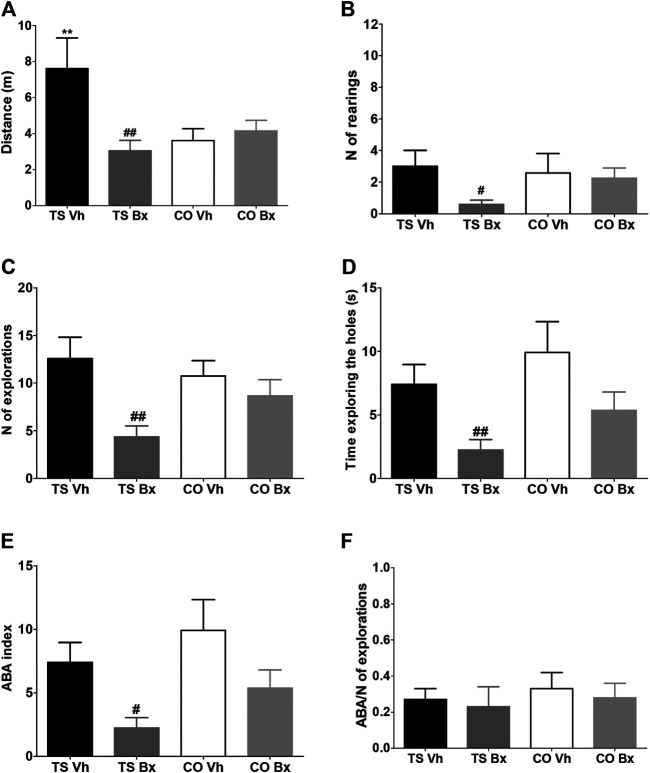
All individuals with Down syndrome (DS) eventually develop Alzheimer's disease (AD) neuropathology, including neurodegeneration, increases in -amyloid (Aβ) expression, and aggregation and neurofibrillary tangles, between the third and fourth decade of their lives. There is currently no effective treatment to prevent AD neuropathology and the associated cognitive degeneration in DS patients. Due to evidence that the accumulation of Aβ aggregates in the brain produces the neurodegenerative cascade characteristic of AD, many strategies which promote the clearance of Aβ peptides have been assessed as potential therapeutics for this disease. Bexarotene, a member of a subclass of retinoids that selectively activates retinoid receptors, modulates several pathways essential for cognitive performance and Aβ clearance. Consequently, bexarotene might be a good candidate to treat AD-associated neuropathology. However, the effects of bexarotene treatment in AD remain controversial. In the present study, we aimed to elucidate whether chronic bexarotene treatment administered to the most commonly used murine model of DS, the Ts65Dn (TS) mouse could reduce Aβ expression in their brains and improve their cognitive abilities. Chronic administration of bexarotene to aged TS mice and their CO littermates for 9 weeks diminished the reference, working, and spatial learning and memory of TS mice, and the spatial memory of CO mice in the Morris water maze. This treatment also produced marked hypoactivity in the plus maze, open field, and hole board tests in TS mice, and in the open field and hole board tests in CO mice. Administration of bexarotene reduced the expression of Aβ1-40, but not of Aβ1-42, in the hippocampi of TS mice. Finally, bexarotene increased Thyroid-stimulating hormone levels in TS mice and reduced Thyroid-stimulating hormone levels in CO mice, while animals of both karyotypes displayed reduced thyroxine levels after bexarotene administration. The bexarotene-induced hypothyroidism could be responsible for the hypoactivity of TS and CO mice and their diminished performance in the Morris water maze. Together, these results do not provide support for the use of bexarotene as a potential treatment of AD neuropathology in the DS population.
所有唐氏综合征(DS)患者最终都会在其生命的第三个和第四个十年间出现阿尔茨海默病(AD)神经病理学特征,包括神经退行性变、β-淀粉样蛋白(Aβ)表达增加、聚集以及神经原纤维缠结。目前尚无有效的治疗方法来预防DS患者的AD神经病理学改变及相关的认知衰退。鉴于有证据表明大脑中Aβ聚集体的积累会引发AD特有的神经退行性级联反应,许多促进Aβ肽清除的策略已被评估为该疾病的潜在治疗方法。贝沙罗汀是一类选择性激活视黄酸受体的视黄酸亚类成员,可调节对认知功能和Aβ清除至关重要的多种途径。因此,贝沙罗汀可能是治疗AD相关神经病理学的良好候选药物。然而,贝沙罗汀治疗AD的效果仍存在争议。在本研究中,我们旨在阐明对最常用的DS小鼠模型Ts65Dn(TS)小鼠长期给予贝沙罗汀治疗是否能降低其大脑中的Aβ表达并改善其认知能力。对老年TS小鼠及其同窝对照(CO)小鼠长期给予贝沙罗汀9周,会降低TS小鼠在莫里斯水迷宫中的参考记忆、工作记忆和空间学习记忆能力以及CO小鼠的空间记忆能力。这种治疗还会使TS小鼠在十字迷宫、旷场试验和洞板试验中出现明显的活动减少,并使CO小鼠在旷场试验和洞板试验中活动减少。给予贝沙罗汀可降低TS小鼠海马中Aβ1-40的表达,但不降低Aβ1-42的表达。最后,贝沙罗汀可提高TS小鼠的促甲状腺激素水平并降低CO小鼠的促甲状腺激素水平,而两种核型的动物在给予贝沙罗汀后甲状腺素水平均降低。贝沙罗汀诱导的甲状腺功能减退可能是TS和CO小鼠活动减少以及它们在莫里斯水迷宫中表现下降的原因。总之,这些结果不支持将贝沙罗汀用作DS人群中AD神经病理学的潜在治疗药物。