Parishar Pooja, Mohapatra Alok Nath, Iyengar Soumya
National Brain Research Centre, Gurugram, India.
Front Psychol. 2021 Apr 15;12:637850. doi: 10.3389/fpsyg.2021.637850. eCollection 2021.
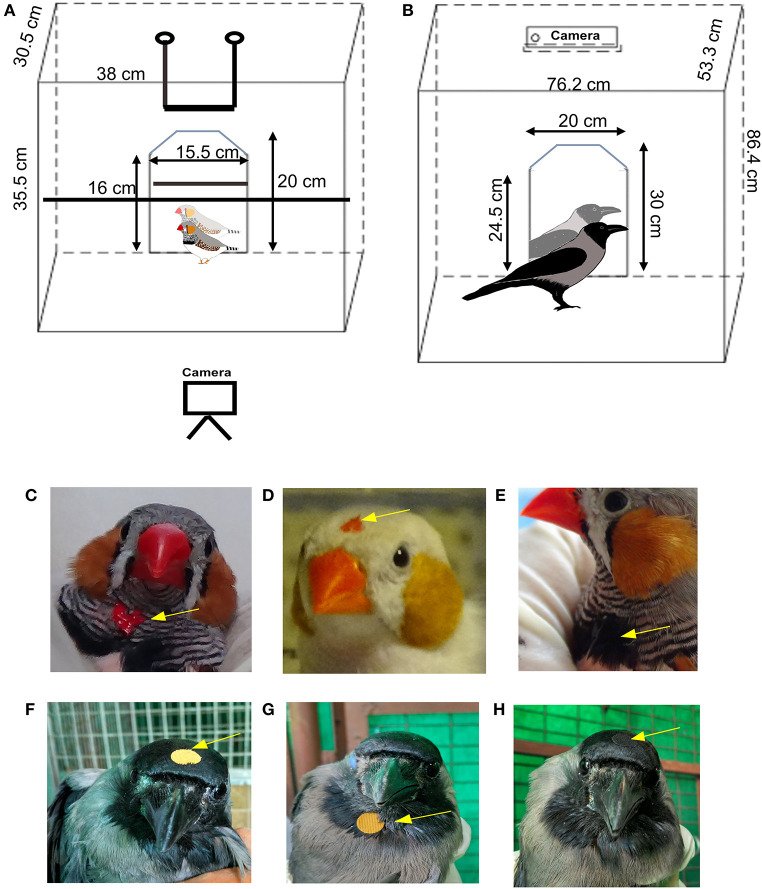
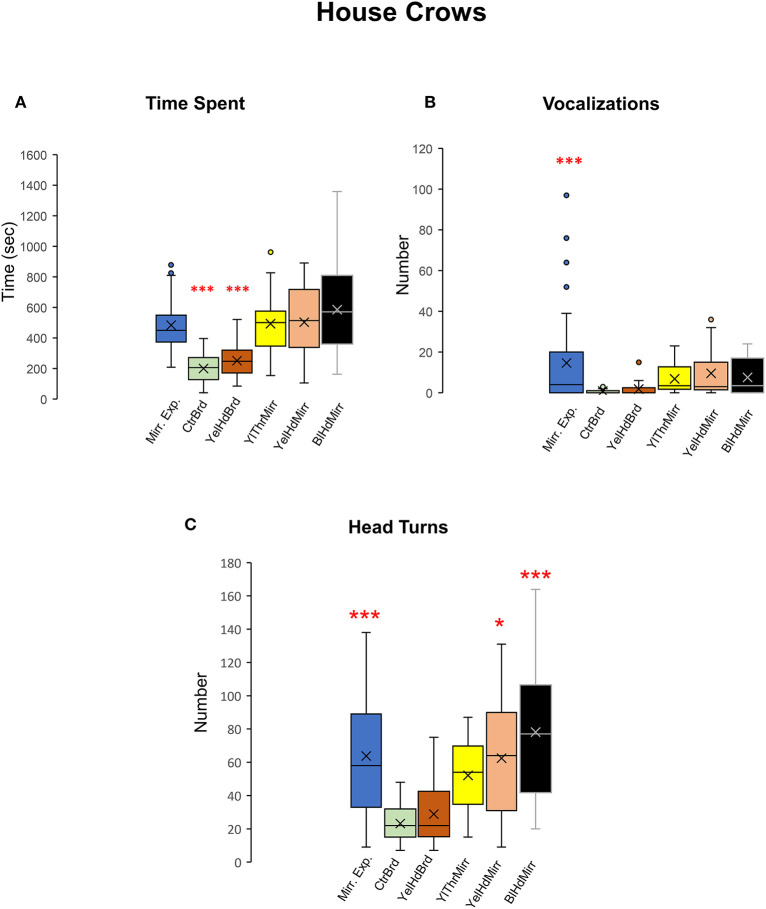
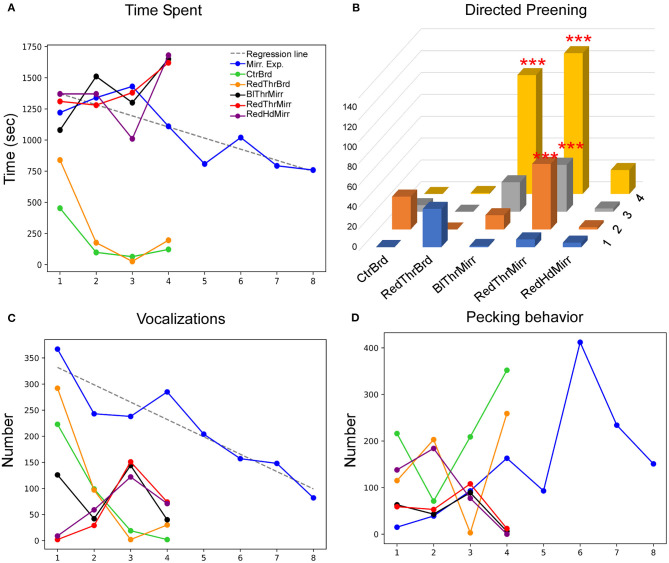
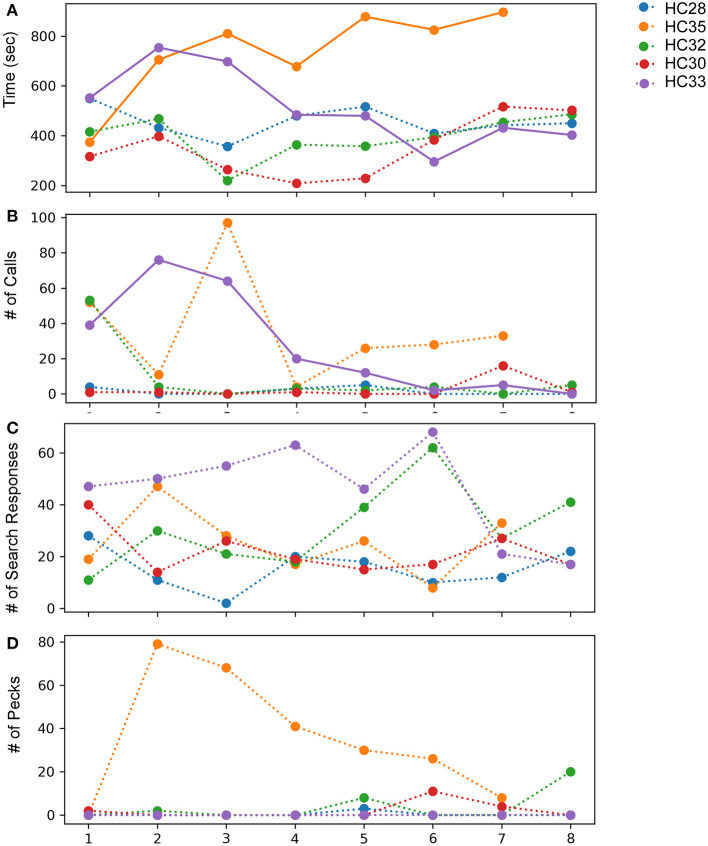
Earlier evidence suggests that besides humans, some species of mammals and birds demonstrate visual self-recognition, assessed by the controversial "mark" test. Whereas, there are high levels of inter-individual differences amongst a single species, some species such as macaques and pigeons which do not spontaneously demonstrate mirror self-recognition (MSR) can be trained to do so. We were surprised to discover that despite being widely used as a model system for avian research, the performance of zebra finches () on the mark test had not been studied earlier. Additionally, we studied the behavioral responses of another species of passerine songbirds (Indian house crows; ) to a mirror and the MSR mark test. Although a small number of adult male zebra finches appeared to display heightened responses toward the mark while observing their reflections, we could not rule out the possibility that these were a part of general grooming rather than specific to the mark. Furthermore, none of the house crows demonstrated mark-directed behavior or increased self-exploratory behaviors when facing mirrors. Our study suggests that self-directed behaviors need to be tested more rigorously in adult male zebra finches while facing their reflections and these findings need to be replicated in a larger population, given the high degree of variability in mirror-directed behaviors.
早期证据表明,除人类外,一些哺乳动物和鸟类物种也表现出视觉自我识别能力,这是通过存在争议的“标记”测试来评估的。然而,在单一物种中存在高度的个体差异,一些原本不会自发表现出镜像自我识别(MSR)的物种,如猕猴和鸽子,经过训练也能够做到。我们惊讶地发现,尽管斑胸草雀被广泛用作鸟类研究的模型系统,但此前尚未对其在标记测试中的表现进行研究。此外,我们还研究了另一种雀形目鸣禽(家鸦)对镜子和MSR标记测试的行为反应。虽然少数成年雄性斑胸草雀在观察自己的倒影时似乎对标记表现出更强的反应,但我们不能排除这些行为是一般梳理行为的一部分,而非特定针对标记的可能性。此外,面对镜子时,没有一只家鸦表现出针对标记的行为或增加自我探索行为。我们的研究表明,成年雄性斑胸草雀在面对自己的倒影时,自我导向行为需要更严格的测试,并且鉴于镜像导向行为的高度变异性,这些发现需要在更大的群体中进行重复验证。