Shi Liyuan, Qin Jingliang, Zheng Hongyuan, Guo Ying, Zhang Haipeng, Zhong Youhong, Yang Chao, Dong Shanshan, Yang Fengyi, Wu Yarong, Zhao Guangyu, Song Yajun, Yang Ruifu, Wang Peng, Cui Yujun
Yunnan Institute of Endemic Diseases Control and Prevention, Dali, China.
State Key Laboratory of Pathogen and Biosecurity, Beijing Institute of Microbiology and Epidemiology, Beijing, China.
Front Microbiol. 2021 Apr 15;12:628335. doi: 10.3389/fmicb.2021.628335. eCollection 2021.
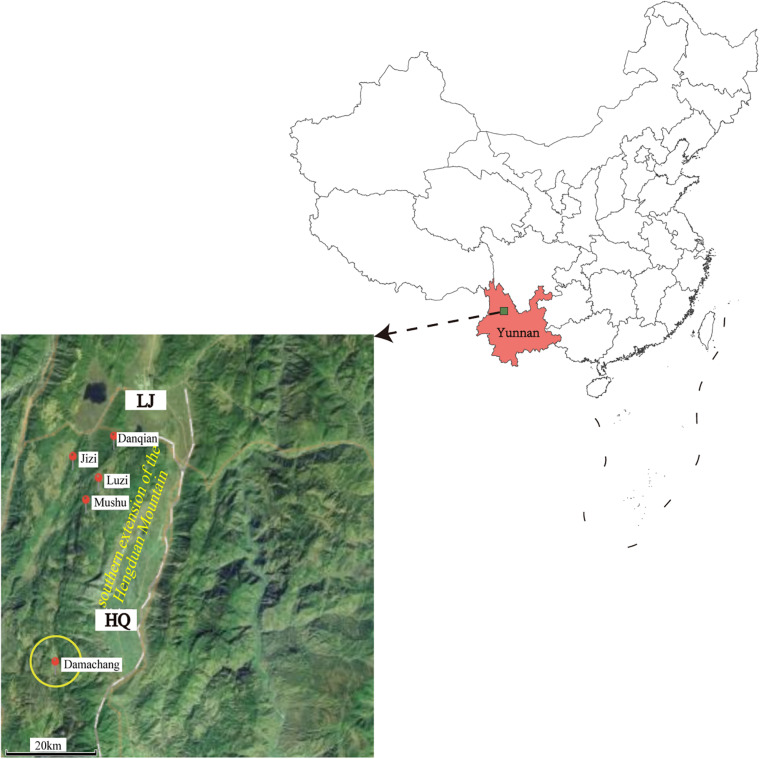
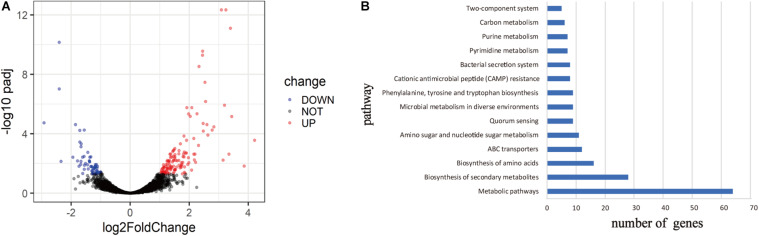
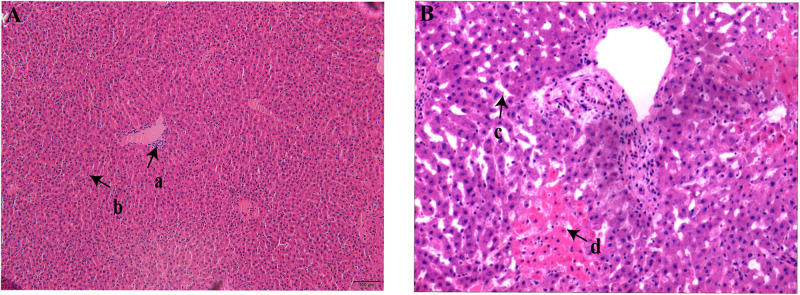
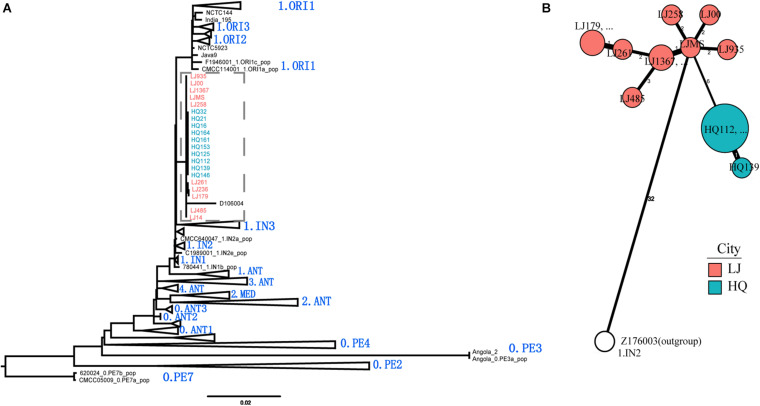
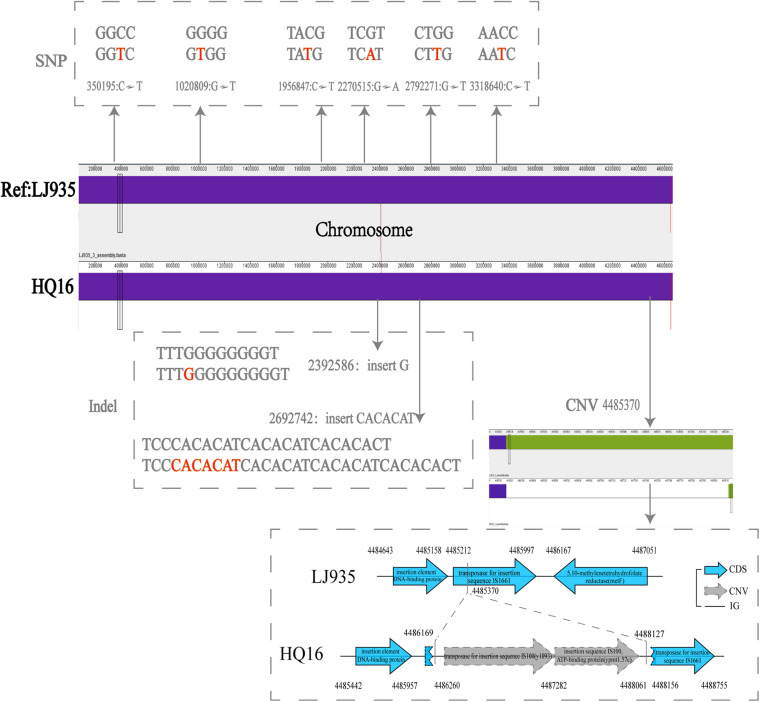
Yunnan Province, China is thought to be the original source of biovar Orientalis of , the causative agent of the third plague pandemic that has spread globally since the end of the 19th century. Although encompassing a large area of natural plague foci, strains have rarely been found in live rodents during surveillance in Yunnan, and most isolates are from rodent corpses and their fleas. In 2017, 10 strains were isolated from seven live rodents and three fleas in Heqing County of Yunnan. These strains were supposed to have low virulence to local rodents and because the rodents were healthy and no dead animals were found in surrounding areas, as had occurred in previous epizootic disease. We performed microscopic and biochemical examinations of the isolates, and compared their whole-genome sequences and transcriptome with those of 10 high virulence strains that were isolated from nine rodents and one parasitic flea in adjacent city (Lijiang). We analyzed the phenotypic, genomic, and transcriptomic characteristics of live rodent isolates. The isolates formed a previously undefined monophyletic branch of that was named 1.IN5. Six SNPs, two indels, and one copy number variation were detected between live rodent isolates and the high virulence neighbors. No obvious functional consequence of these variations was found according to the known annotation information. Among genes which expression differential in the live rodent isolates compared to their high virulent neighbors, we found five iron transfer related ones that were significant up-regulated (| log (FC) | > 1, p.adjust < 0.05), indicating these genes may be related to the low-virulence phenotype. The novel genotype of reported here provides further insights into the evolution and spread of plague as well as clues that may help to decipher the virulence mechanism of this notorious pathogen.
中国云南省被认为是鼠疫杆菌生物变种东方亚种的原始发源地,该病菌是第三次鼠疫大流行的病原体,自19世纪末以来已在全球传播。尽管云南有大面积的自然鼠疫疫源地,但在云南的监测中,很少在活啮齿动物中发现鼠疫杆菌菌株,大多数分离株来自啮齿动物尸体及其跳蚤。2017年,在云南鹤庆县的7只活啮齿动物和3只跳蚤中分离出10株鼠疫杆菌菌株。这些菌株被认为对当地啮齿动物和人类的毒力较低,因为啮齿动物健康,且周边地区未发现死亡动物,而在以往的动物流行病中曾出现过这种情况。我们对分离株进行了显微镜和生化检查,并将它们的全基因组序列和转录组与从相邻城市(丽江)的9只啮齿动物和1只寄生跳蚤中分离出的10株高毒力鼠疫杆菌菌株进行了比较。我们分析了活啮齿动物分离株的表型、基因组和转录组特征。这些分离株形成了一个以前未定义的鼠疫杆菌单系分支,被命名为1.IN5。在活啮齿动物分离株与其高毒力近缘菌株之间检测到6个单核苷酸多态性、2个插入缺失和1个拷贝数变异。根据已知的注释信息,未发现这些变异有明显的功能后果。在与高毒力近缘菌株相比在活啮齿动物分离株中表达有差异的基因中,我们发现5个与铁转运相关的基因显著上调(| log(FC)| > 1,p.adjust < 0.05),表明这些基因可能与低毒力表型有关。这里报道 的鼠疫杆菌新基因型为鼠疫的进化和传播提供了进一步的见解,也为破译这种臭名昭著的病原体的毒力机制提供了线索。