Division of Gastroenterology and Hepatology, Department of Internal Medicine, University of Michigan, 3912 Taubman Center, 1500 East Medical Center Drive, SPC 5362, Ann Arbor, MI, 48109, USA.
Division of Cardiology, Department of Internal Medicine, University of Michigan, Ann Arbor, MI, USA.
Dig Dis Sci. 2022 Feb;67(2):481-491. doi: 10.1007/s10620-021-06922-6. Epub 2021 May 3.
Lifestyle modification is the main treatment for nonalcoholic fatty liver disease (NAFLD), but remains challenging to implement. The aim of this pilot was to assess the acceptability and feasibility of a mobile-technology based lifestyle program for NAFLD patients.
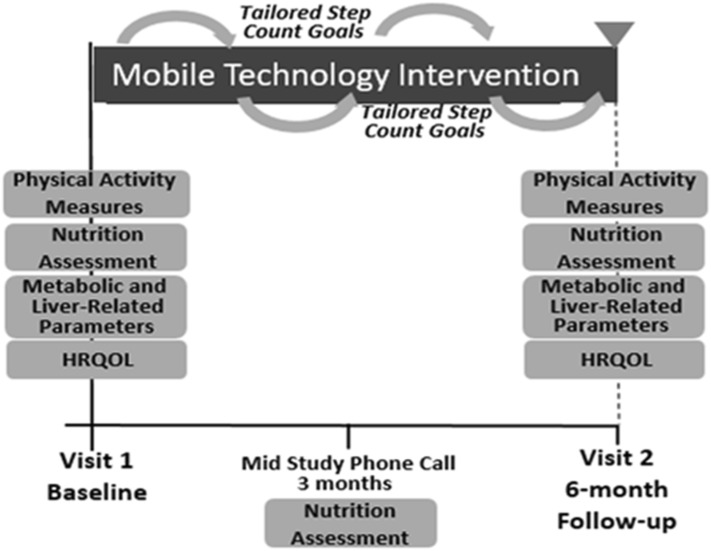
We enrolled adult patients with NAFLD in a 6-month mobile-technology based program where participants received a FitBit with weekly tailored step count goals and nutritional assessments. Anthropometrics, hepatic and metabolic parameters, Fibroscan, physical function and activity, and health-related quality of life measures were obtained at enrollment and month 6. Semi-structured exit interviews were conducted to assess patient's experience with the program.
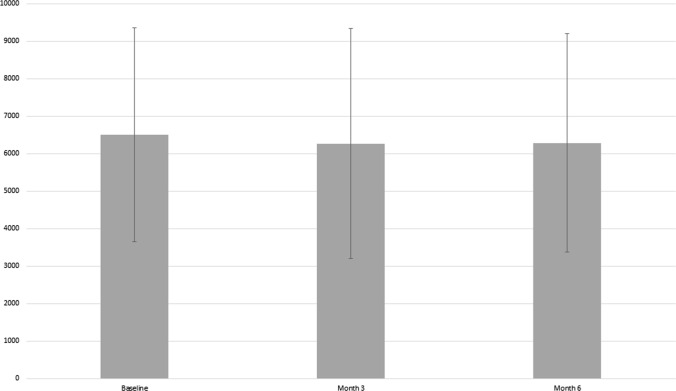
40 (63%) eligible patients were enrolled. Median age was 52.5 with 53% males, 93% whites, 43% with diabetes and median BMI 33.9. On baseline Fibroscan, 59% had F0-2 fibrosis and 70% had moderate-severe steatosis. 33 patients completed the study. Median percentage of days with valid FitBit data collection was 91. 4 patients increased and maintained, 19 maintained, and 8 increased but subsequently returned to baseline weekly step count. 59% of patients reported Fitbit was easy to use and 66% felt step count feedback motivated them to increase their activity. Roughly 50% of patients had reduction in weight, triglycerides and Fibroscan liver stiffness, and 75% had improvement in controlled attenuation parameter and physical function.
A 6-month mobile-technology based pilot lifestyle intervention was feasible and acceptable to NAFLD patients. The program promoted physical activity and was associated with improvement in clinical parameters in some patients.
生活方式的改变是非酒精性脂肪性肝病(NAFLD)的主要治疗方法,但实施起来仍然具有挑战性。本研究的目的是评估基于移动技术的生活方式干预在 NAFLD 患者中的可接受性和可行性。
我们招募了成年 NAFLD 患者参加一个为期 6 个月的基于移动技术的项目,参与者将获得一个 Fitbit,每周设定个性化的步数目标和营养评估。在入组时和第 6 个月时,测量了人体测量学、肝脏和代谢参数、Fibroscan、身体功能和活动以及健康相关生活质量的指标。进行了半结构化的退出访谈,以评估患者对该计划的体验。
40 名(63%)符合条件的患者入组。中位年龄为 52.5 岁,男性占 53%,白人占 93%,43%患有糖尿病,BMI 中位数为 33.9。在基线 Fibroscan 上,59%的患者有 F0-2 纤维化,70%的患者有中重度脂肪变性。33 名患者完成了研究。Fitbit 数据采集的有效天数中位数为 91%。4 名患者增加并保持了每周的步数,19 名患者保持了每周的步数,8 名患者增加了但随后又回到了基线每周步数。59%的患者表示 Fitbit 易于使用,66%的患者认为步数反馈激励他们增加活动量。大约 50%的患者体重、甘油三酯和 Fibroscan 肝硬度下降,75%的患者受控衰减参数和身体功能改善。
一项为期 6 个月的基于移动技术的生活方式干预试验对 NAFLD 患者是可行和可接受的。该计划促进了身体活动,并与一些患者的临床参数改善有关。