Department of Internal Medicine, Texas Tech University Health Sciences Center, Lubbock, TX 79430, USA.
Department of Internal Medicine, Texas Tech University Health Sciences Center, Lubbock, TX 79430, USA; Department of Pharmacology and Neuroscience, Texas Tech University Health Sciences Center, Lubbock, TX 79430, USA; Department of Neurology, Texas Tech University Health Sciences Center, Lubbock, TX 79430, USA; Department of Public Health, Graduate School of Biomedical Sciences, Texas Tech University Health Sciences Center, Lubbock, TX 79430, USA; Department of Speech, Language, and Hearing Sciences, Texas Tech University Health Sciences Center, Lubbock, TX 79430, USA.
Biochim Biophys Acta Mol Basis Dis. 2021 Aug 1;1867(8):166162. doi: 10.1016/j.bbadis.2021.166162. Epub 2021 Apr 30.
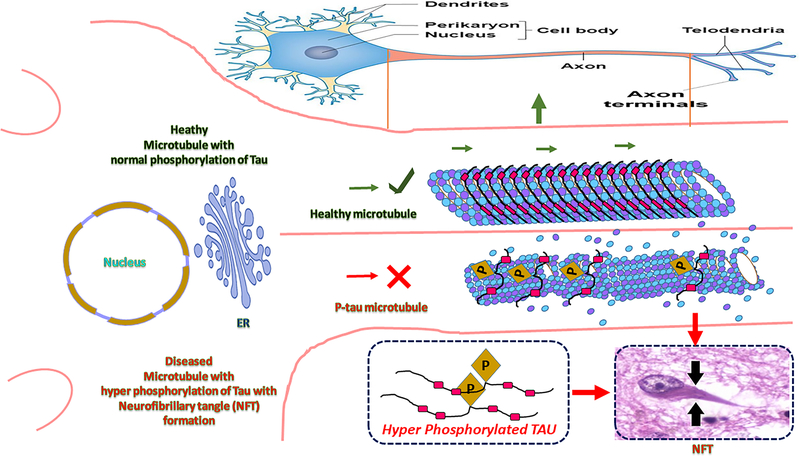
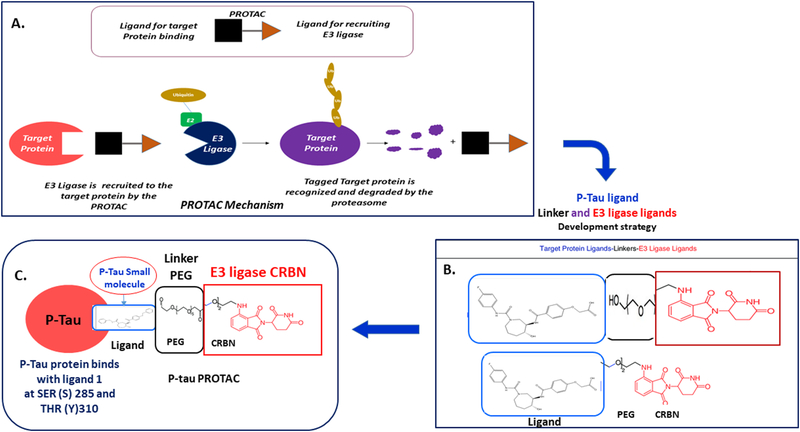
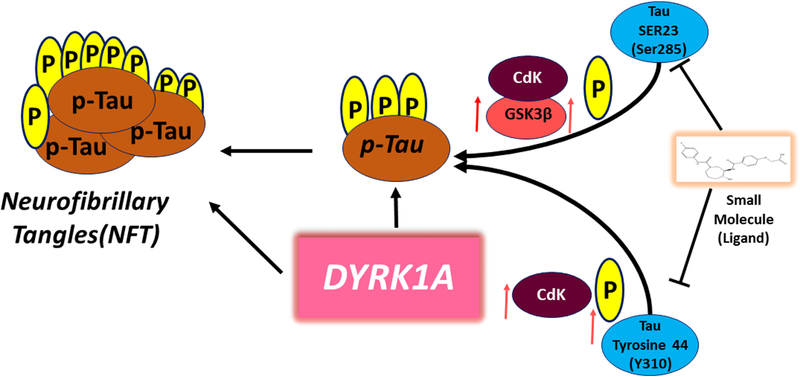
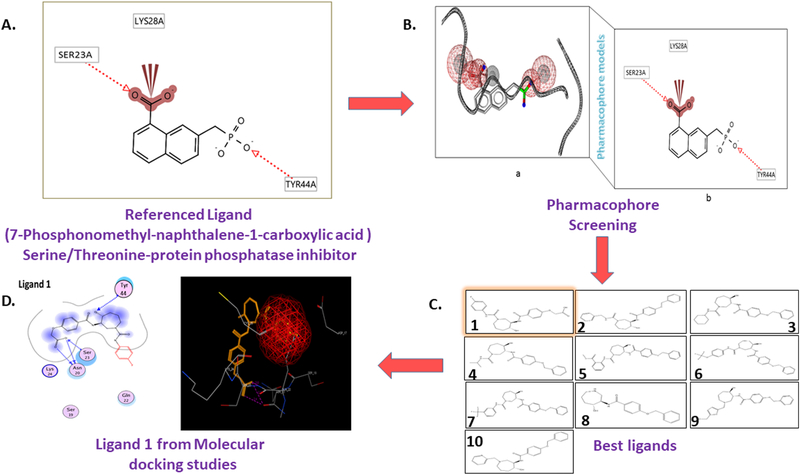
Tau is a microtubule-stabilizing protein that plays an important role in the formation of axonal microtubules in neurons. Phosphorylated tau (p-Tau) has received great attention in the field of Alzheimer's disease (AD) as a potential therapeutic target due to its involvement with synaptic damage and neuronal dysfunction. Mounting evidence suggests that amyloid beta (Aβ)-targeted clinical trials continuously failed; therefore, it is important to consider alternative therapeutic strategies such as p-tau-PROTACs targeted small molecules for AD and other tauopathies. The present article describes the characteristics of tau biology, structure, and function in both healthy and pathological states in AD. It also explains data from studies that have identified the involvement of p-tau in neuronal damage and synaptic and cognitive functions in AD. Current article also covers several aspects, including small molecule inhibitors, and the development of p-tau-PROTACs targeted drug molecules to treat patients with AD and other tauopathies.
tau 是一种微管稳定蛋白,在神经元轴突微管的形成中发挥重要作用。磷酸化 tau(p-Tau)因其与突触损伤和神经元功能障碍有关,在阿尔茨海默病(AD)领域受到极大关注,成为潜在的治疗靶点。越来越多的证据表明,针对淀粉样β(Aβ)的临床试验不断失败;因此,考虑替代治疗策略很重要,例如针对 AD 和其他 tau 病的 p-tau-PROTACs 靶向小分子。本文描述了 tau 在 AD 中健康和病理状态下的生物学、结构和功能特征。它还解释了研究中确定 p-tau 参与 AD 中神经元损伤以及突触和认知功能的相关数据。本文还涵盖了小分子抑制剂以及针对 p-tau-PROTACs 靶向药物分子的开发等几个方面,以治疗 AD 和其他 tau 病患者。