Star Eleanor, Stevens Megan, Gooding Clare, Smith Christopher W J, Li Ling, Ayine Monica Lamici, Harper Steve J, Bates David O, Oltean Sebastian
Institute of Biomedical & Clinical Sciences, Medical School, College of Medicine and Health, University of Exeter, St Luke's Campus, Exeter, EX1 2LU, UK.
Department of Biochemistry, University of Cambridge, Hopkins Building, Tennis Court Road, Cambridge, CB2 1QW, UK.
Oncogenesis. 2021 May 3;10(5):36. doi: 10.1038/s41389-021-00323-0.
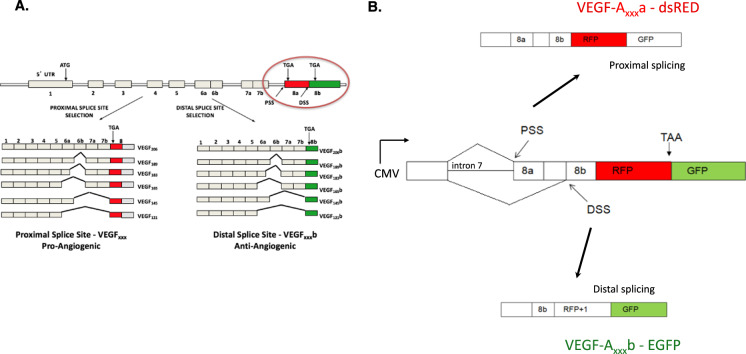
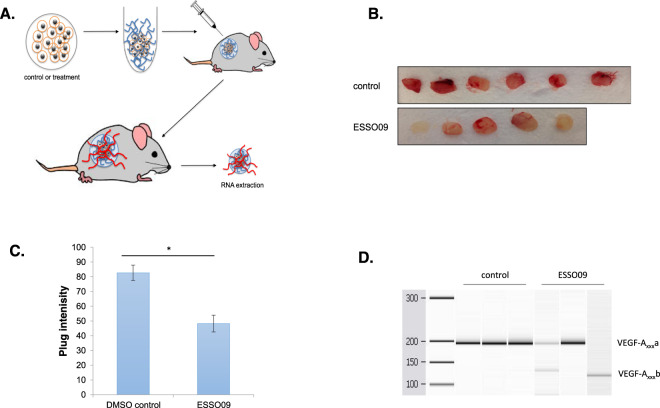
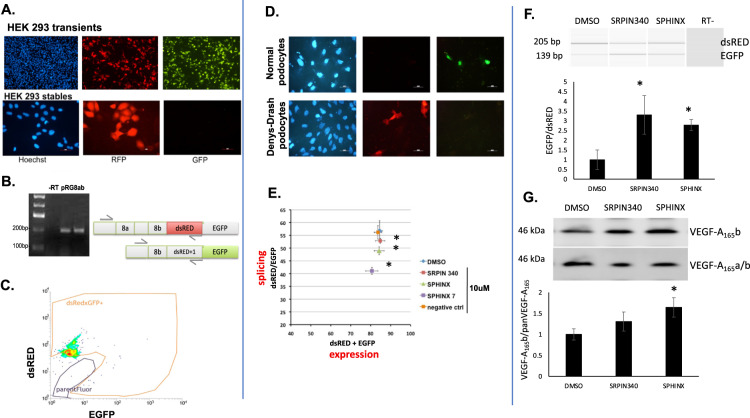
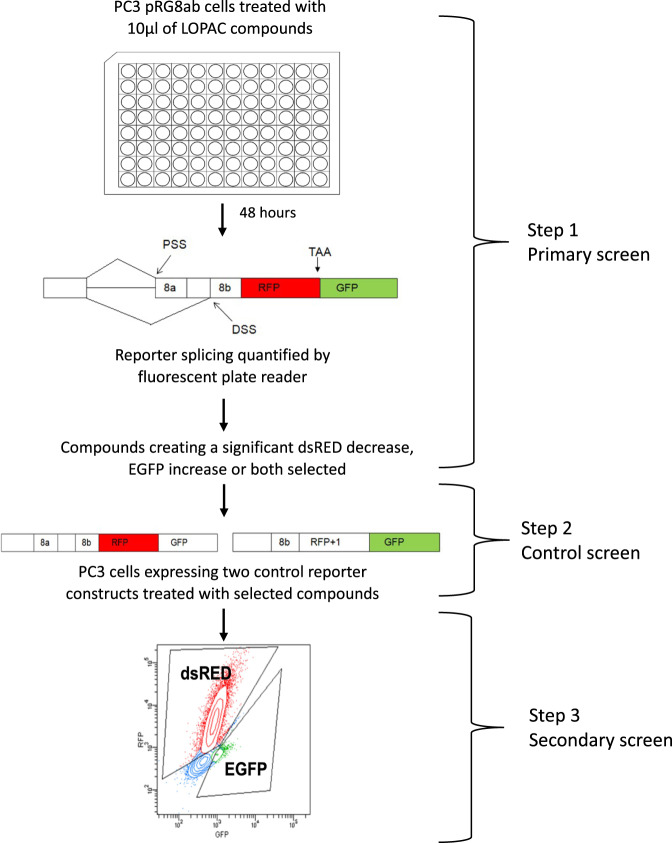
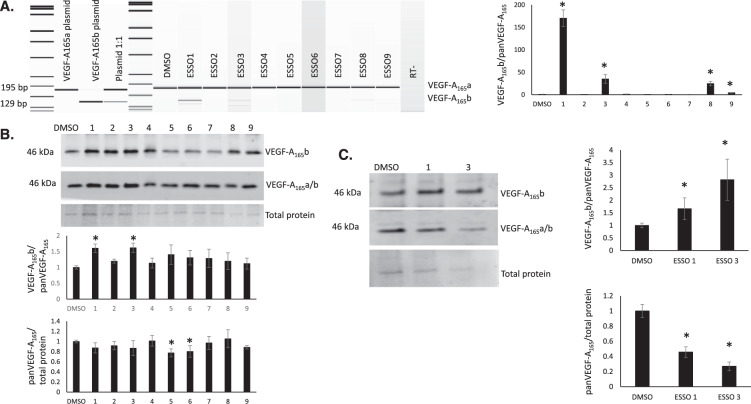
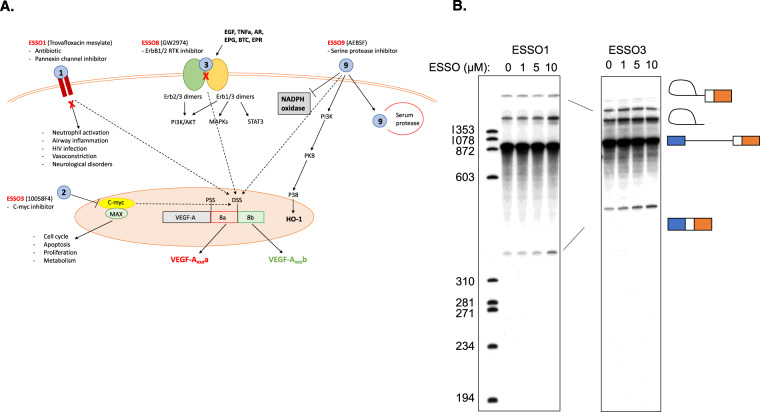
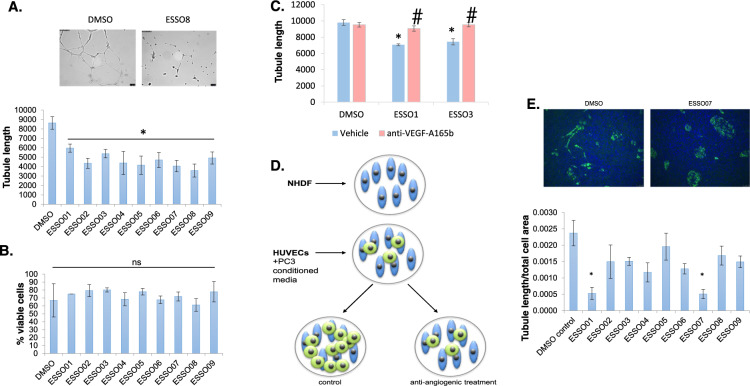
Alternative splicing of the vascular endothelial growth factor A (VEGF-A) terminal exon generates two protein families with differing functions. Pro-angiogenic VEGF-Aa isoforms are produced via selection of the proximal 3' splice site of the terminal exon. Use of an alternative distal splice site generates the anti-angiogenic VEGF-Ab proteins. A bichromatic splicing-sensitive reporter was designed to mimic VEGF-A alternative splicing and was used as a molecular tool to further investigate this alternative splicing event. Part of VEGF-A's terminal exon and preceding intron were inserted into a minigene construct followed by the coding sequences for two fluorescent proteins. A different fluorescent protein is expressed depending on which 3' splice site of the exon is used during splicing (dsRED denotes VEGF-Aa and EGFP denotes VEGF-Ab). The fluorescent output can be used to follow splicing decisions in vitro and in vivo. Following successful reporter validation in different cell lines and altering splicing using known modulators, a screen was performed using the LOPAC library of small molecules. Alterations to reporter splicing were measured using a fluorescent plate reader to detect dsRED and EGFP expression. Compounds of interest were further validated using flow cytometry and assessed for effects on endogenous VEGF-A alternative splicing at the mRNA and protein level. Ex vivo and in vitro angiogenesis assays were used to demonstrate the anti-angiogenic effect of the compounds. Furthermore, anti-angiogenic activity was investigated in a Matrigel in vivo model. To conclude, we have identified a set of compounds that have anti-angiogenic activity through modulation of VEGF-A terminal exon splicing.
血管内皮生长因子A(VEGF-A)末端外显子的可变剪接产生了两个功能不同的蛋白质家族。促血管生成的VEGF-Aa亚型是通过选择末端外显子近端的3'剪接位点产生的。使用另一个远端剪接位点则产生抗血管生成的VEGF-Ab蛋白。设计了一种双色剪接敏感报告基因来模拟VEGF-A的可变剪接,并将其用作分子工具来进一步研究这一可变剪接事件。将VEGF-A末端外显子的一部分和前面的内含子插入一个小基因构建体中,随后是两种荧光蛋白的编码序列。根据剪接过程中使用外显子的哪个3'剪接位点,会表达不同的荧光蛋白(dsRED表示VEGF-Aa,EGFP表示VEGF-Ab)。荧光输出可用于跟踪体外和体内的剪接决定。在不同细胞系中成功验证报告基因并使用已知调节剂改变剪接后,使用小分子LOPAC文库进行筛选。使用荧光酶标仪检测dsRED和EGFP表达,测量报告基因剪接的变化。使用流式细胞术进一步验证感兴趣的化合物,并在mRNA和蛋白质水平评估其对内源性VEGF-A可变剪接的影响。使用离体和体外血管生成试验来证明这些化合物的抗血管生成作用。此外,在基质胶体内模型中研究了抗血管生成活性。总之,我们已经鉴定出一组通过调节VEGF-A末端外显子剪接而具有抗血管生成活性的化合物。