Rethineswaran Vinoth Kumar, Kim Da Yeon, Kim Yeon-Ju, Jang WoongBi, Ji Seung Taek, Van Le Thi Hong, Giang Ly Thanh Truong, Ha Jong Seong, Yun Jisoo, Jung Jinsup, Kwon Sang-Mo
Convergence Stem Cell Research Center, Pusan National University, Yangsan 50612, Korea.
Laboratory for Vascular Medicine and Stem Cell Biology, Department of Physiology, School of Medicine, Pusan National University, Yangsan 50612, Korea.
Int J Mol Sci. 2021 Apr 30;22(9):4796. doi: 10.3390/ijms22094796.
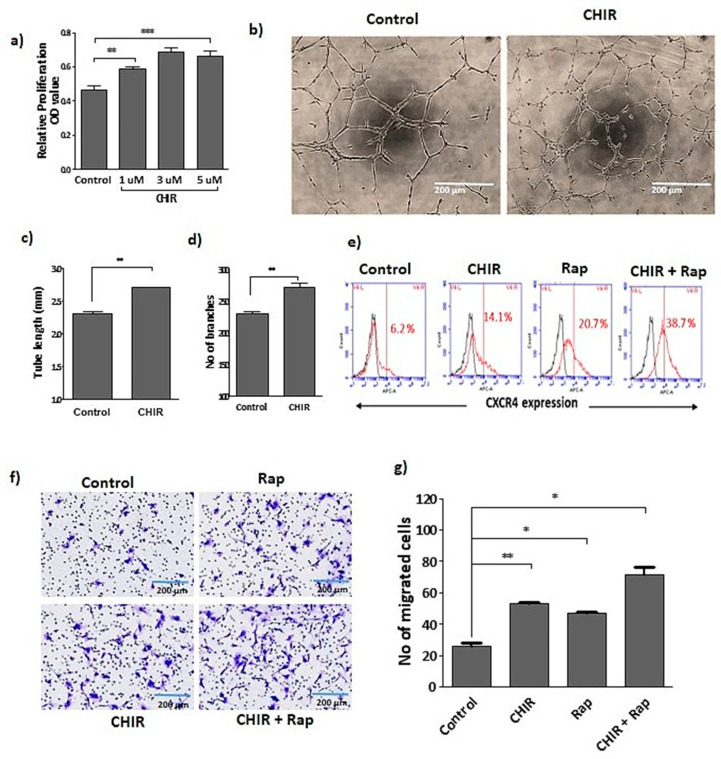
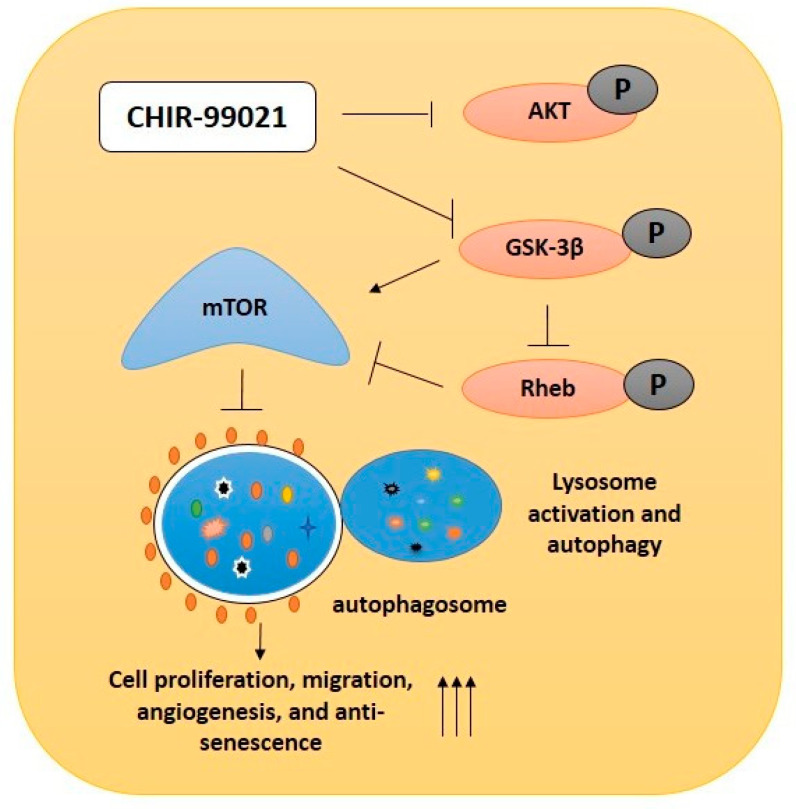
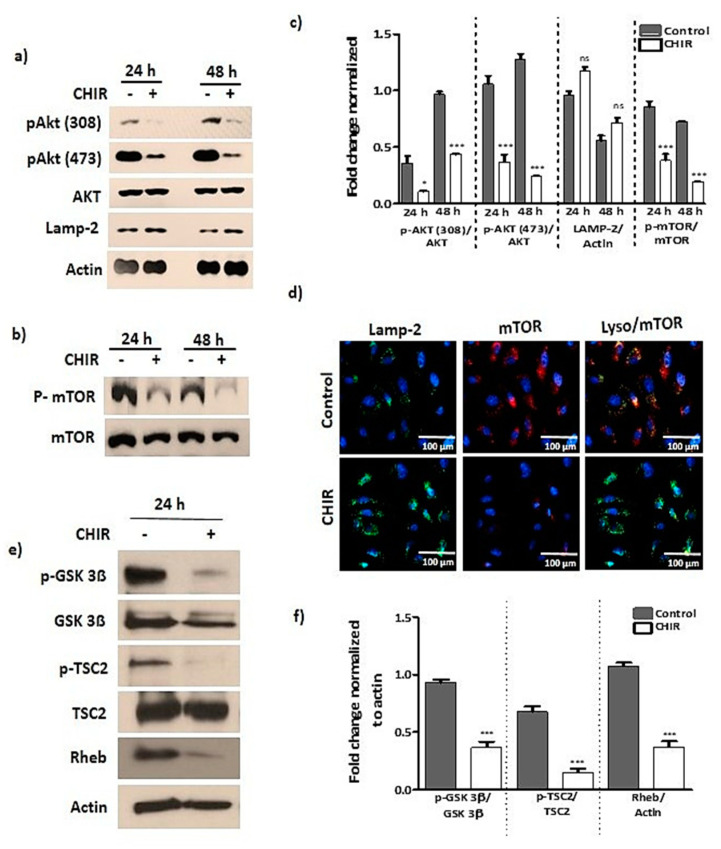
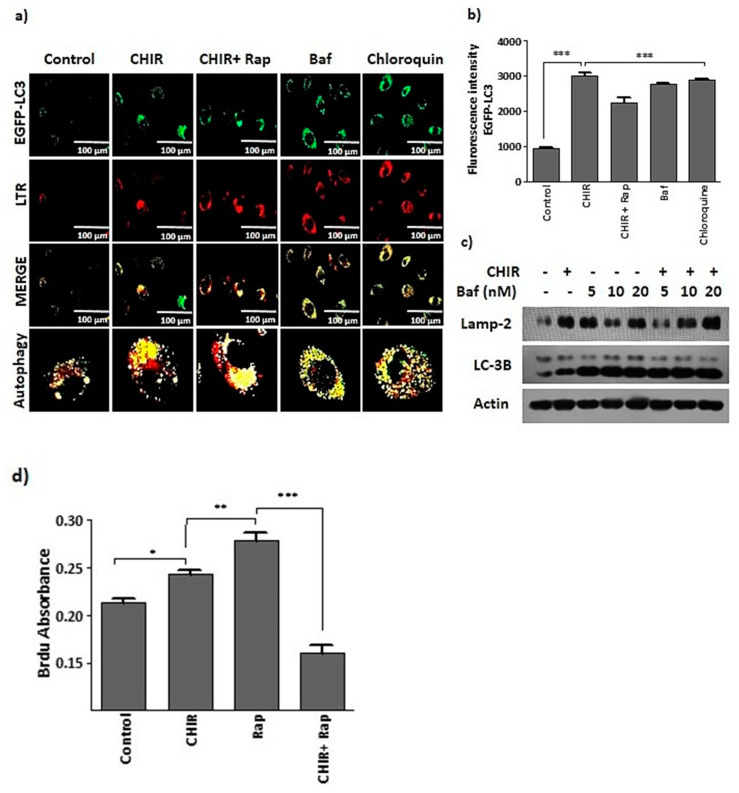
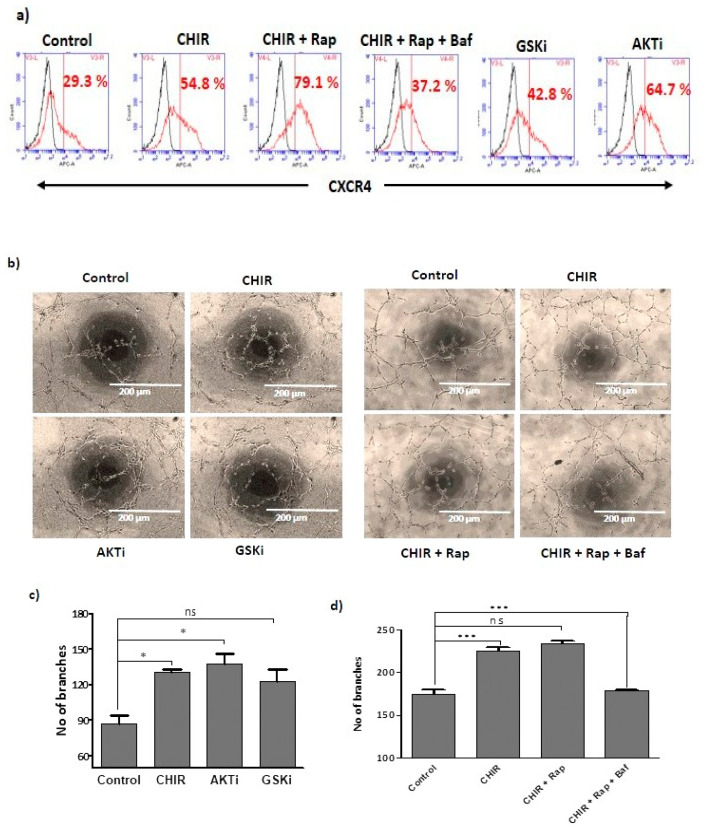
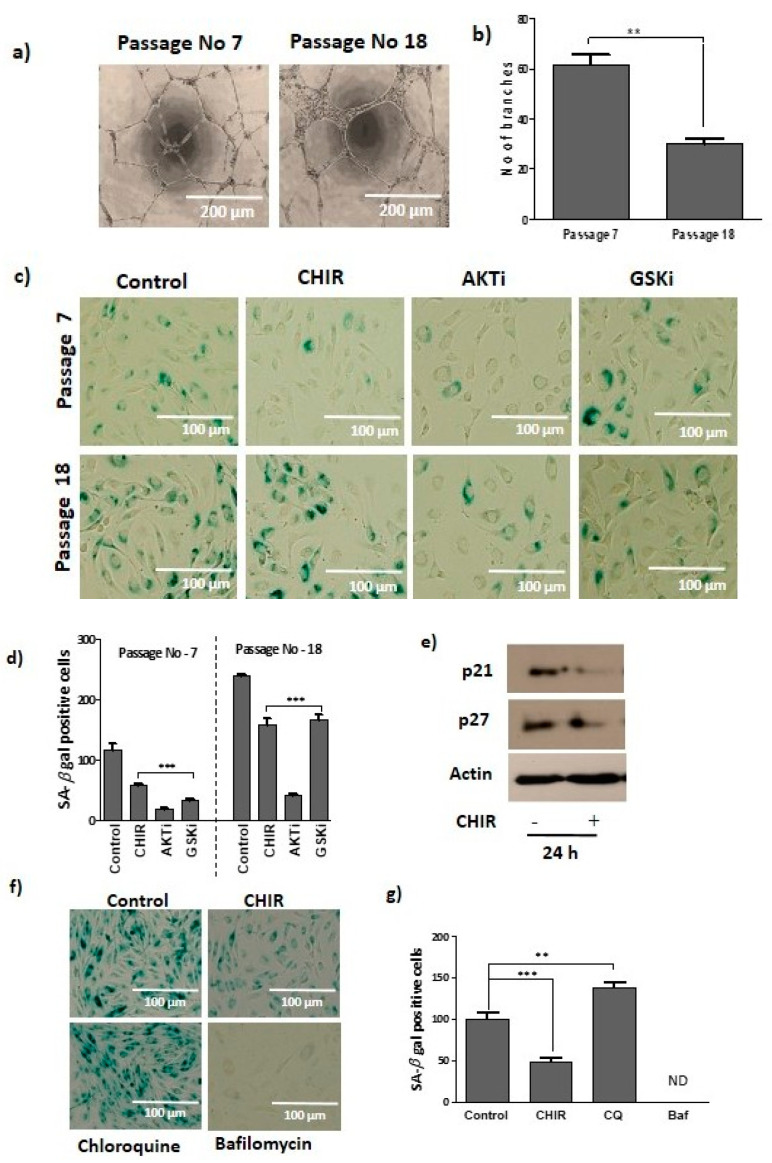
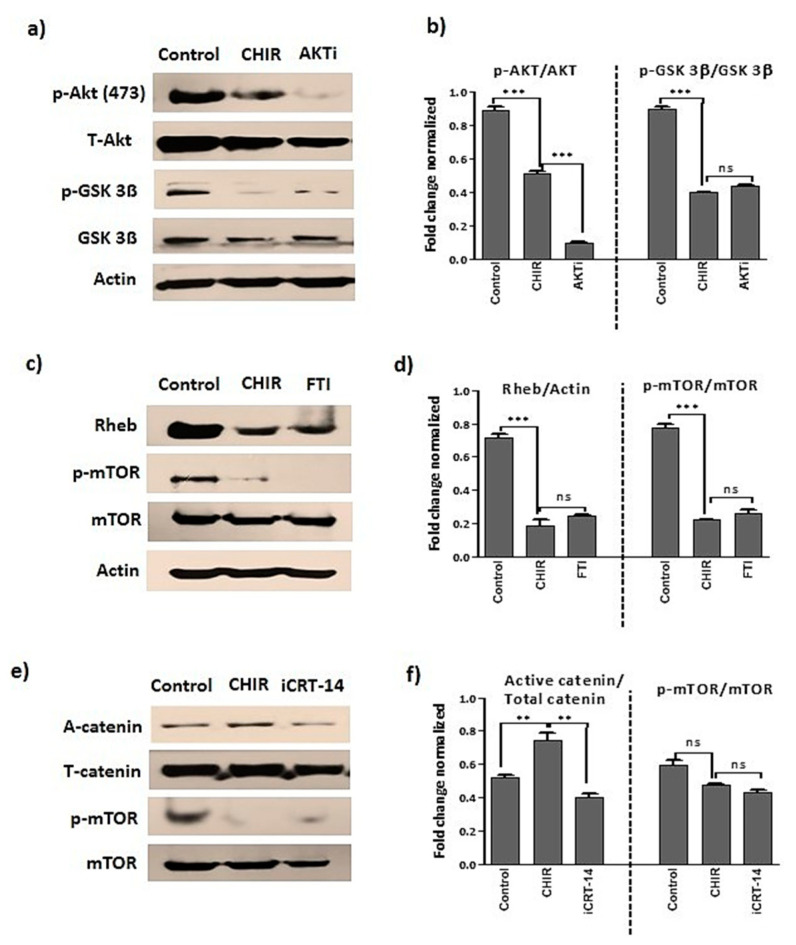
Endothelial progenitor cells (EPCs) are specialized cells in circulating blood, well known for their ability to form new vascular structures. Aging and various ailments such as diabetes, atherosclerosis and cardiovascular disease make EPCs vulnerable to decreasing in number, which affects their migration, proliferation and angiogenesis. Myocardial ischemia is also linked to a reduced number of EPCs and their endothelial functional role, which hinders proper blood circulation to the myocardium. The current study shows that an aminopyrimidine derivative compound (CHIR99021) induces the inhibition of GSK-3β in cultured late EPCs. GSK-3β inhibition subsequently inhibits mTOR by blocking the phosphorylation of TSC2 and lysosomal localization of mTOR. Furthermore, suppression of GSK-3β activity considerably increased lysosomal activation and autophagy. The activation of lysosomes and autophagy by GSK-3β inhibition not only prevented replicative senescence of the late EPCs but also directed their migration, proliferation and angiogenesis. To conclude, our results demonstrate that lysosome activation and autophagy play a crucial role in blocking the replicative senescence of EPCs and in increasing their endothelial function. Thus, the findings provide an insight towards the treatment of ischemia-associated cardiovascular diseases based on the role of late EPCs.
内皮祖细胞(EPCs)是循环血液中的特殊细胞,以其形成新血管结构的能力而闻名。衰老以及糖尿病、动脉粥样硬化和心血管疾病等各种疾病会使EPCs数量易减少,这会影响它们的迁移、增殖和血管生成。心肌缺血也与EPCs数量减少及其内皮功能作用有关,这会阻碍心肌的正常血液循环。当前研究表明,一种氨基嘧啶衍生物化合物(CHIR99021)在培养的晚期EPCs中诱导GSK-3β的抑制。GSK-3β抑制随后通过阻断TSC2的磷酸化和mTOR的溶酶体定位来抑制mTOR。此外,GSK-3β活性的抑制显著增加了溶酶体激活和自噬。GSK-3β抑制引起的溶酶体和自噬激活不仅阻止了晚期EPCs的复制性衰老,还指导了它们的迁移、增殖和血管生成。总之,我们的结果表明,溶酶体激活和自噬在阻断EPCs的复制性衰老以及增强其内皮功能方面起着关键作用。因此,这些发现基于晚期EPCs的作用为缺血相关心血管疾病的治疗提供了思路。