Jeju Marine Research Center, Korea Institute of Ocean Science and Technology, 2670 Iljudong-ro, Gujwa-eup, Jeju-si 63349, Korea.
Department of Ocean Science, University of Science and Technology, 217 Gajeong-ro, Yuseong-gu, Daejeon 34113, Korea.
Mar Drugs. 2021 Apr 29;19(5):256. doi: 10.3390/md19050256.
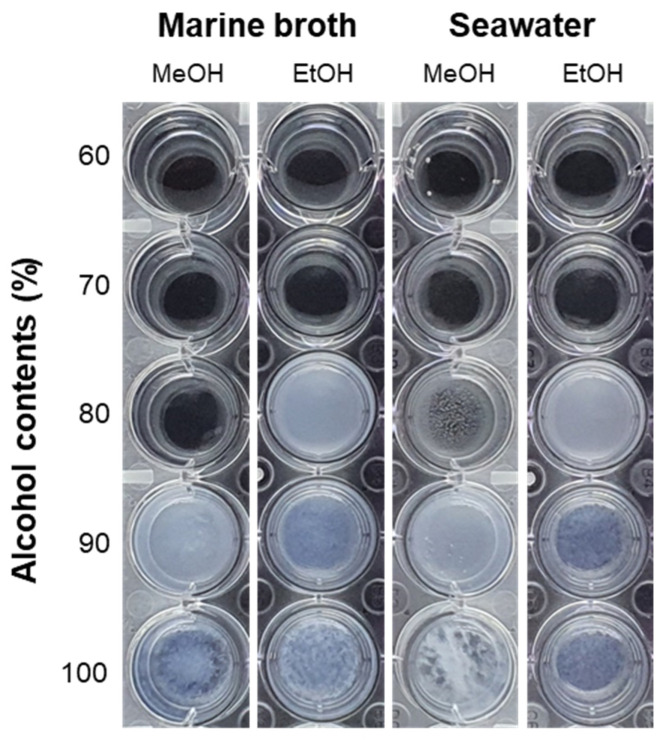
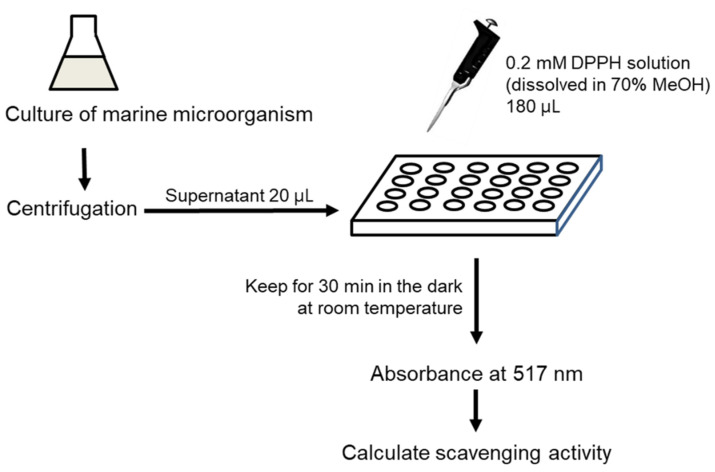
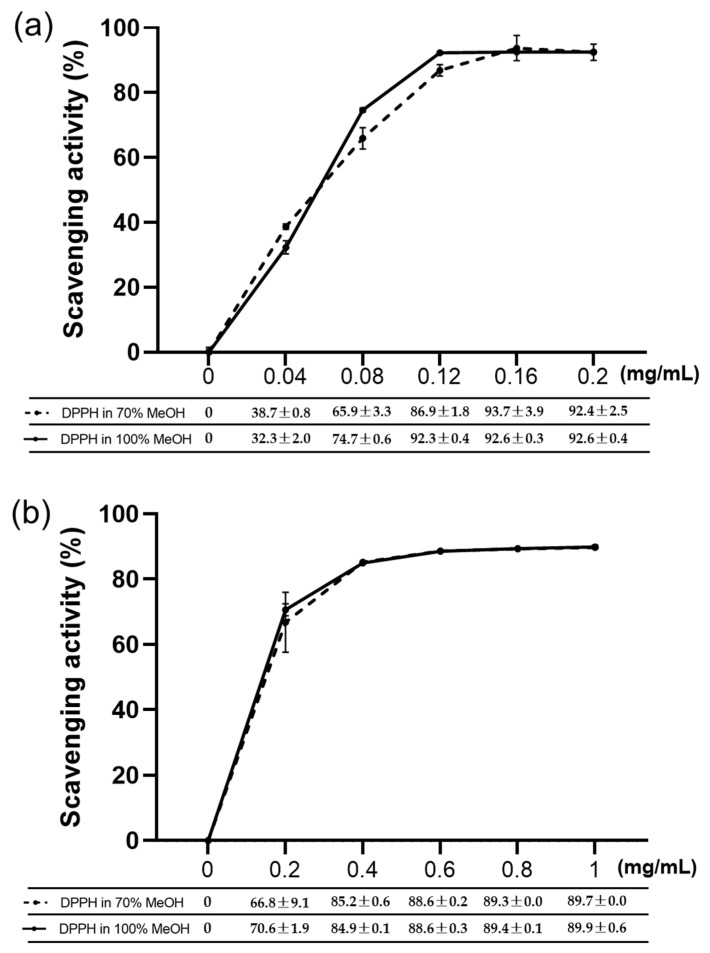
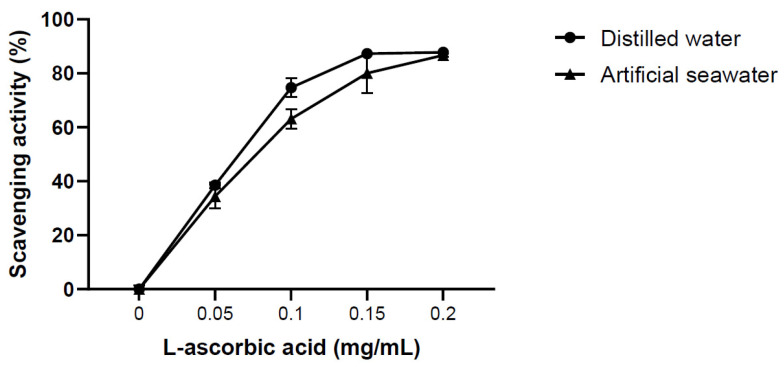
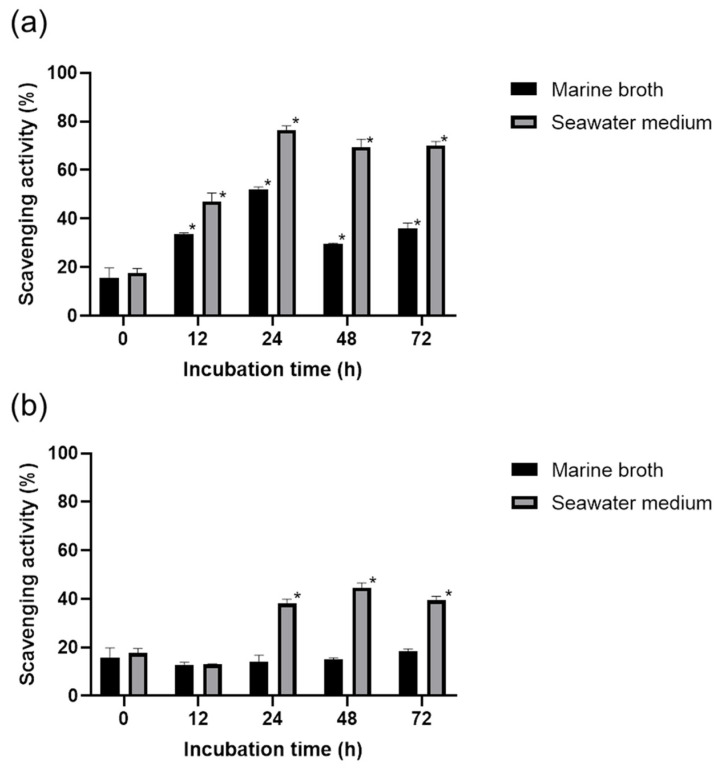
Antioxidants prevent ageing and are usually quantified and screened using the 1,1-diphenyl-2-picrylhydrazyl (DPPH) assay. However, this assay cannot be used for salt-containing samples, such as the cell-free supernatants of marine microorganisms that are aggregated under these conditions. Herein, the DPPH solvent (methanol or ethanol) and its water content were optimized to enable the analysis of salt-containing samples, aggregation was observed for alcohol contents of >70%. The water content of methanol influenced the activities of standard antioxidants but did not significantly affect that of the samples. Based on solution stability considerations, 70% aqueous methanol was chosen as the optimal DPPH solvent. The developed method was successfully applied to the cell-free supernatants of marine bacteria ( and ), revealing their high antioxidant activities. Furthermore, it was concluded that this method would be useful for the screening of marine microorganism-derived antioxidants, which also has numerous potential applications, such as salt-fermented foods.
抗氧化剂可预防衰老,通常使用 1,1-二苯基-2-苦基肼基(DPPH)法进行定量和筛选。然而,该方法不能用于含盐样品,如在这些条件下聚集的海洋微生物的无细胞上清液。在此,优化了 DPPH 溶剂(甲醇或乙醇)及其含水量,以实现含盐样品的分析,发现醇含量>70%时会发生聚集。甲醇的含水量会影响标准抗氧化剂的活性,但对样品的活性影响不大。基于溶液稳定性的考虑,选择 70%的甲醇水溶液作为最佳 DPPH 溶剂。所开发的方法成功地应用于海洋细菌(和)的无细胞上清液中,揭示了它们具有高抗氧化活性。此外,还得出结论,该方法可用于筛选海洋微生物来源的抗氧化剂,这也具有许多潜在的应用,如盐发酵食品。