MRC Centre for Molecular Bacteriology and Infection, Department of Infectious Disease, Imperial College London, London, UK.
Genes Immun. 2021 Oct;22(5-6):255-267. doi: 10.1038/s41435-021-00129-5. Epub 2021 May 4.
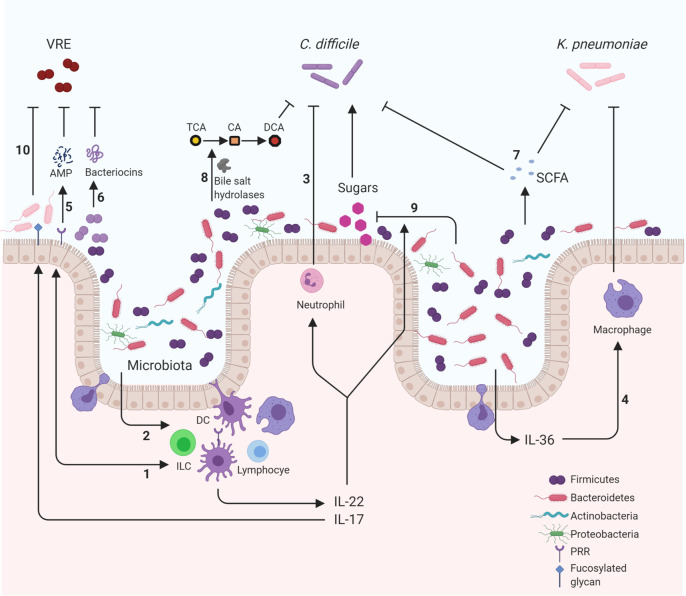
Colonization by the microbiota provides one of our most effective barriers against infection by pathogenic microbes. The microbiota protects against infection by priming immune defenses, by metabolic exclusion of pathogens from their preferred niches, and through direct antimicrobial antagonism. Disruption of the microbiota, especially by antibiotics, is a major risk factor for bacterial pathogen colonization. Restoration of the microbiota through microbiota transplantation has been shown to be an effective way to reduce pathogen burden in the intestine but comes with a number of drawbacks, including the possibility of transferring other pathogens into the host, lack of standardization, and potential disruption to host metabolism. More refined methods to exploit the power of the microbiota would allow us to utilize its protective power without the drawbacks of fecal microbiota transplantation. To achieve this requires detailed understanding of which members of the microbiota protect against specific pathogens and the mechanistic basis for their effects. In this review, we will discuss the clinical and experimental evidence that has begun to reveal which members of the microbiota protect against some of the most troublesome antibiotic-resistant pathogens: Klebsiella pneumoniae, vancomycin-resistant enterococci, and Clostridioides difficile.
微生物组的定植为我们提供了对抗病原微生物感染的最有效屏障之一。微生物组通过免疫防御的启动、代谢排除病原体占据的优势生态位,以及通过直接的抗菌拮抗作用来保护免受感染。微生物组的破坏,特别是抗生素的使用,是细菌病原体定植的主要危险因素。通过微生物组移植来恢复微生物组已被证明是减少肠道病原体负担的有效方法,但也存在一些缺点,包括将其他病原体转移到宿主的可能性、缺乏标准化以及对宿主代谢的潜在干扰。更精细的方法来利用微生物组的力量将使我们能够利用其保护作用,而不会有粪便微生物组移植的缺点。要实现这一目标,需要详细了解哪些微生物组成员可以预防特定的病原体,以及它们的作用机制。在这篇综述中,我们将讨论临床和实验证据,这些证据开始揭示哪些微生物组成员可以预防一些最麻烦的抗生素耐药病原体:肺炎克雷伯菌、耐万古霉素肠球菌和艰难梭菌。