Noubiap Jean Jacques, Agbaedeng Thomas A, Kamtchum-Tatuene Joseph, Fitzgerald John L, Middeldorp Melissa E, Kleinig Timothy, Sanders Prashanthan
Centre for Heart Rhythm Disorders, University of Adelaide, Adelaide, Australia.
Neuroscience and Mental Health Institute, Faculty of Medicine and Dentistry, University of Alberta, Edmonton, Canada.
Int J Cardiol Heart Vasc. 2021 Apr 16;34:100780. doi: 10.1016/j.ijcha.2021.100780. eCollection 2021 Jun.
To summarize data on atrial fibrillation (AF) detection rates and predictors across different rhythm monitoring strategies in patients with cryptogenic stroke (CS) or embolic stroke of undetermined source (ESUS).
MEDLINE, Embase, and Web of Science were searched to identify all published studies providing relevant data through July 6, 2020. Random-effects meta-analysis method was used to pool estimates.
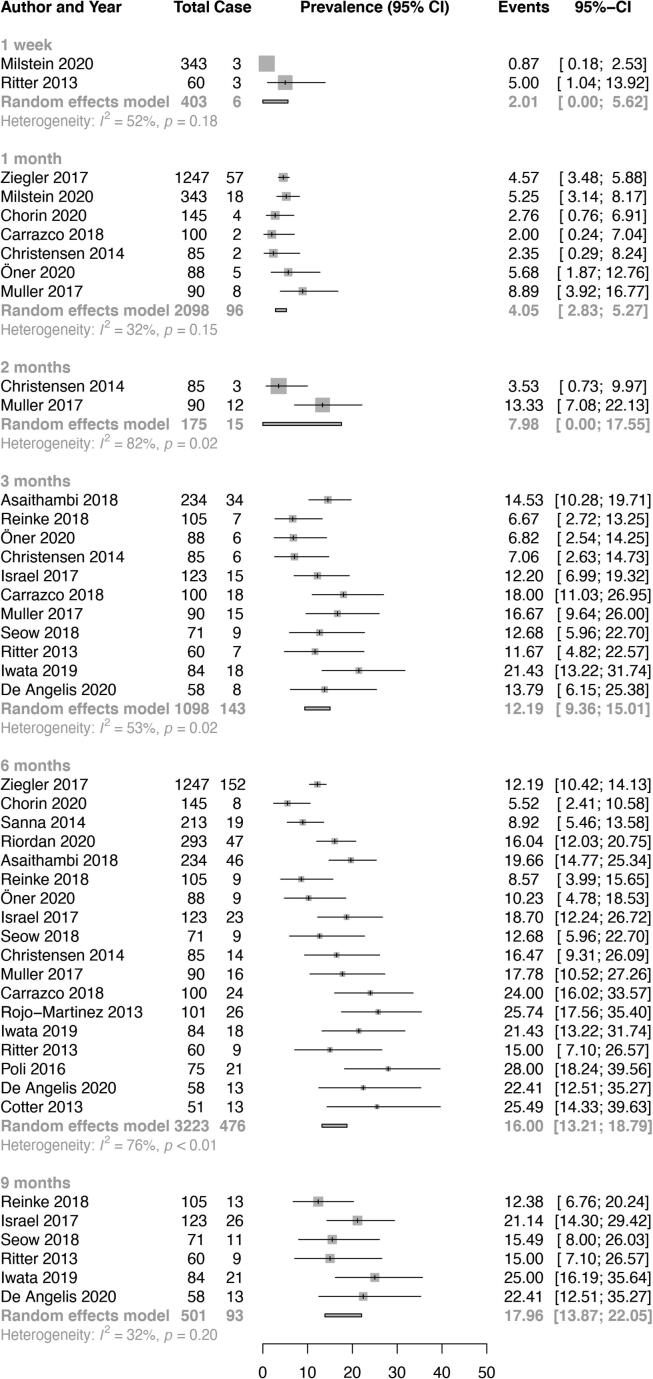
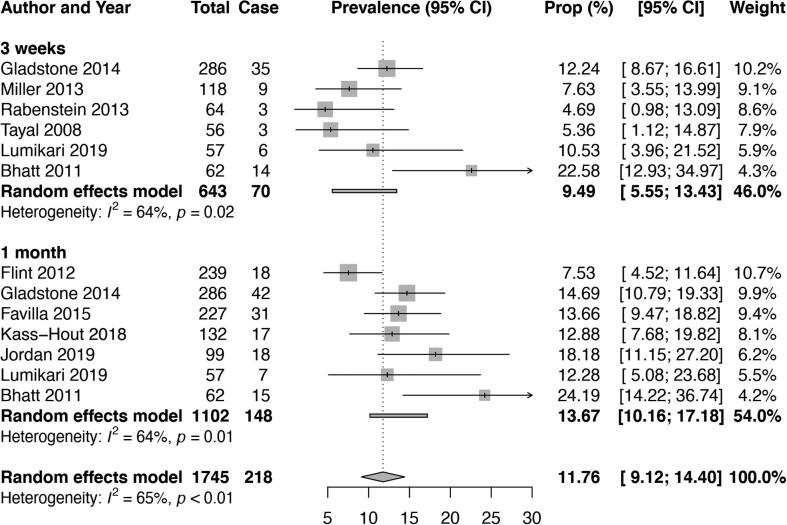
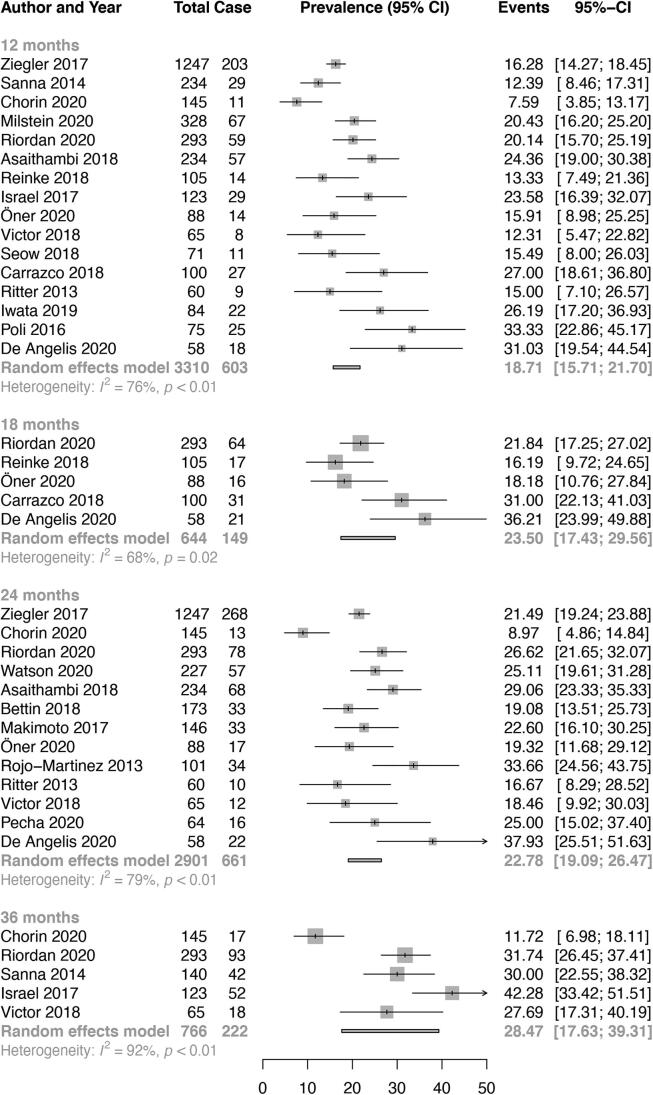
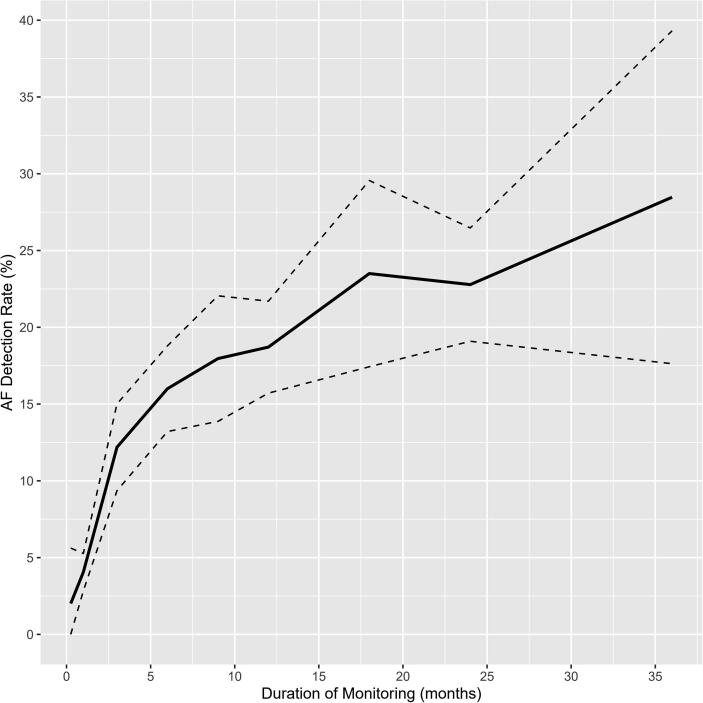
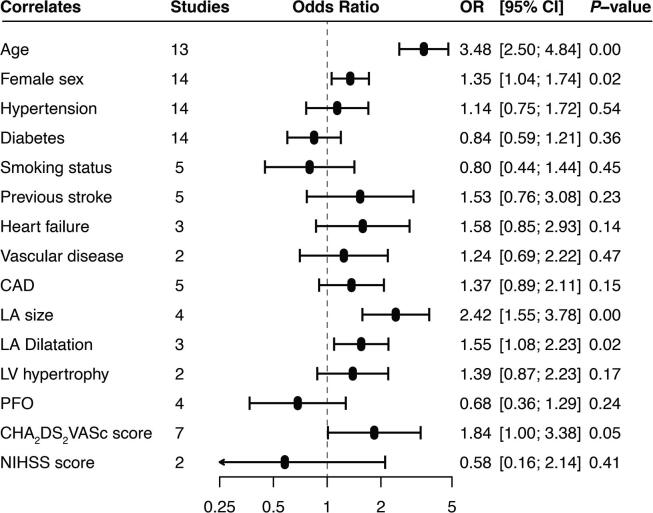
We included 47 studies reporting on a pooled population of 8,215 patients with CS or ESUS. Using implantable cardiac monitor (ICM), the pooled rate of AF was 12.2% (95% CI 9.4-15.0) at 3 months, 16.0% (95% CI 13.2-18.8) at 6 months, 18.7% (95% CI 15.7-21.7) at 12 months, 22.8% (95% CI 19.1-26.5) at 24 months, and 28.5% (95% CI 17.6-39.3) at 36 months. AF rates were significantly higher in patients with ESUS vs CS (22.0% vs 14.2%; < 0.001) at 6 months, and in studies using Reveal LINQ vs Reveal XT ICM (19.1% vs 13.0%; p = 0.001) at 12 months. Using mobile cardiac outpatient telemetry (MCOT), the pooled rate of AF was 13.7% (95% CI 10.2-17.2) at 1 month. Predictors of AF detection with ICM included older age, CHADS-VASc score, left atrial enlargement, P wave maximal duration and prolonged PR interval.
The yield of ICM increases with the duration of monitoring. More than a quarter of patients with CS or ESUS will be diagnosed with AF during follow-up. About one in seven patients had AF detected within a month of MCOT, suggesting that a non-invasive rhythm monitoring strategy should be considered before invasive monitoring.
总结隐匿性卒中(CS)或不明来源栓塞性卒中(ESUS)患者采用不同心律监测策略时的房颤(AF)检出率及预测因素。
检索MEDLINE、Embase和Web of Science,以识别截至2020年7月6日发表的所有提供相关数据的研究。采用随机效应荟萃分析方法汇总估计值。
我们纳入了47项研究,报告的合并人群为8215例CS或ESUS患者。使用植入式心脏监测器(ICM)时,3个月时AF的合并发生率为12.2%(95%CI 9.4-15.0),6个月时为16.0%(95%CI 13.2-18.8),12个月时为18.7%(95%CI 15.7-21.7),24个月时为22.8%(95%CI 19.1-26.5),36个月时为28.5%(95%CI 17.6-39.3)。6个月时,ESUS患者的AF发生率显著高于CS患者(22.0%对14.2%;<0.001),12个月时,使用Reveal LINQ与Reveal XT ICM的研究中AF发生率也有显著差异(19.1%对13.0%;p = 0.001)。使用移动心脏门诊遥测(MCOT)时,1个月时AF的合并发生率为13.7%(95%CI 10.2-17.2)。ICM检测AF的预测因素包括年龄较大、CHADS-VASc评分、左心房扩大、P波最大时限和PR间期延长。
ICM的检出率随监测时间延长而增加。超过四分之一的CS或ESUS患者在随访期间将被诊断为AF。约七分之一的患者在MCOT的一个月内检测到AF,这表明在进行侵入性监测之前应考虑采用非侵入性心律监测策略。