Cellular and Molecular Therapeutics Branch, National Heart Lung and Blood Institutes (NHLBI)/National Institute of Diabetes and Digestive and Kidney Diseases (NIDDK), National Institutes of Health (NIH), Bethesda, MD, USA.
Division of Molecular and Medical Genetics, Center for Gene and Cell Therapy, The Institute of Medical Science, The University of Tokyo, Minato-ku, Tokyo, Japan.
Cell Rep Med. 2021 Apr 20;2(4):100247. doi: 10.1016/j.xcrm.2021.100247.
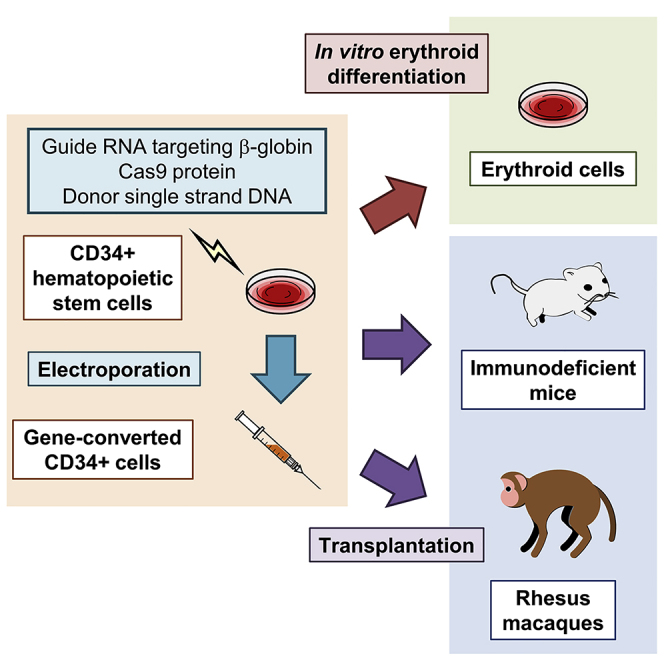
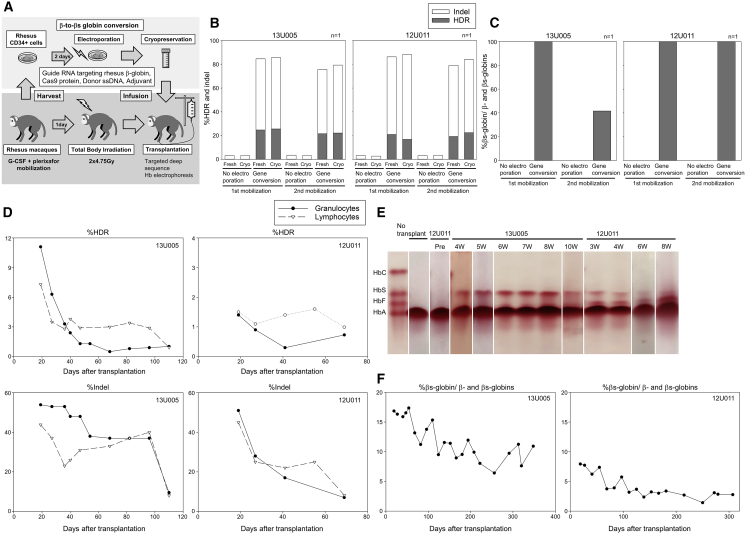
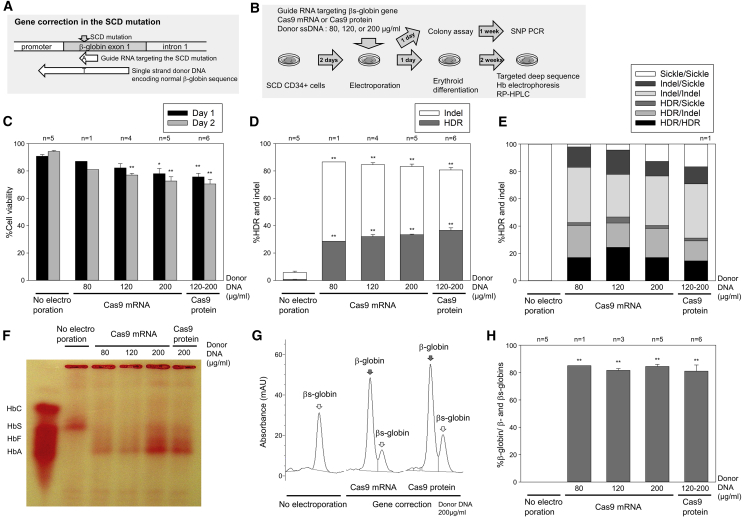
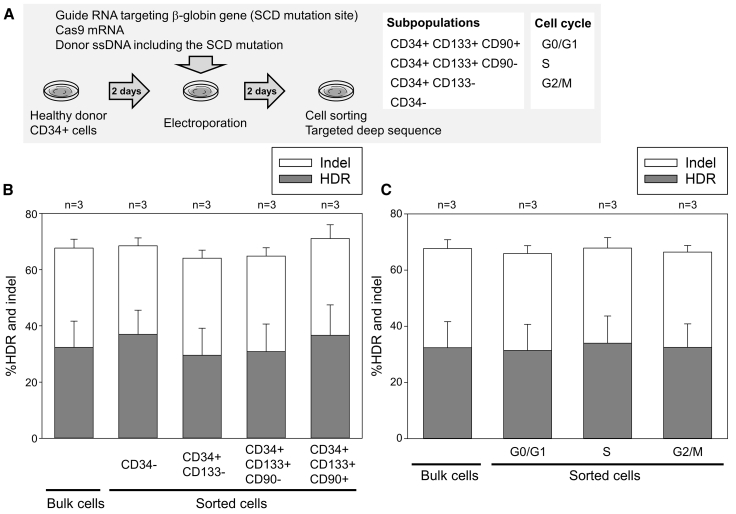
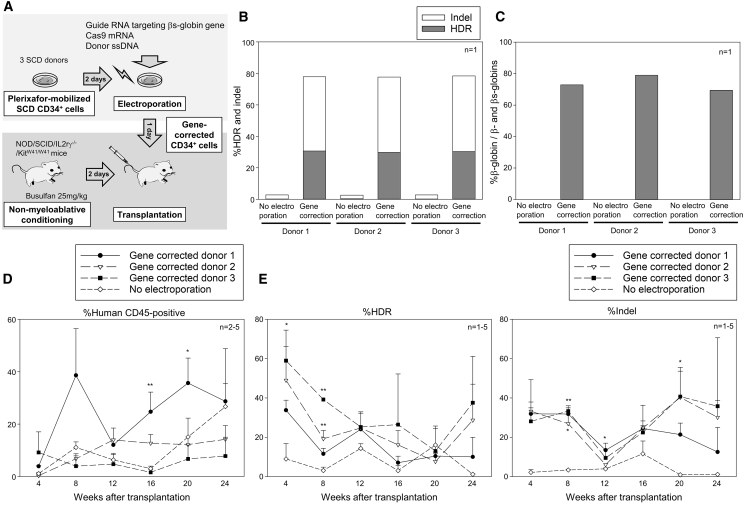
Sickle cell disease (SCD) is caused by a 20A > T mutation in the β-globin gene. Genome-editing technologies have the potential to correct the SCD mutation in hematopoietic stem cells (HSCs), producing adult hemoglobin while simultaneously eliminating sickle hemoglobin. Here, we developed high-efficiency viral vector-free non-footprint gene correction in SCD CD34 cells with electroporation to deliver SCD mutation-targeting guide RNA, Cas9 endonuclease, and 100-mer single-strand donor DNA encoding intact β-globin sequence, achieving therapeutic-level gene correction at DNA (∼30%) and protein (∼80%) levels. Gene-edited SCD CD34 cells contributed corrected cells 6 months post-xenograft mouse transplant without off-target δ-globin editing. We then developed a rhesus β-to-βs-globin gene conversion strategy to model HSC-targeted genome editing for SCD and demonstrate the engraftment of gene-edited CD34 cells 10-12 months post-transplant in rhesus macaques. In summary, gene-corrected CD34 HSCs are engraftable in xenograft mice and non-human primates. These findings are helpful in designing HSC-targeted gene correction trials.
镰状细胞病(SCD)是由β-珠蛋白基因中的 20A>T 突变引起的。基因组编辑技术有可能纠正造血干细胞(HSCs)中的 SCD 突变,产生成人血红蛋白,同时消除镰状血红蛋白。在这里,我们通过电穿孔开发了一种高效的无病毒载体非足迹基因校正方法,用于递送 SCD 突变靶向向导 RNA、Cas9 内切酶和 100 个碱基对的单链供体 DNA,该 DNA 编码完整的β-珠蛋白序列,在 DNA(约 30%)和蛋白质(约 80%)水平上实现治疗水平的基因校正。基因编辑的 SCD CD34 细胞在异种移植小鼠移植后 6 个月内产生校正细胞,没有脱靶 δ-珠蛋白编辑。然后,我们开发了一种恒河猴β-到-βs-珠蛋白基因转换策略,用于模拟 SCD 的 HSC 靶向基因组编辑,并证明基因编辑的 CD34 细胞在恒河猴移植后 10-12 个月的植入。总之,基因校正的 CD34 HSCs 可在异种移植小鼠和非人类灵长类动物中植入。这些发现有助于设计 HSC 靶向基因校正试验。