Department of Rheumatology and Immunology, Medical School, University of Pécs, Akác u. 1, Pécs, H-7632, Hungary.
Department of Internal Medicine, Teaching Hospital Mór Kaposi, Kaposvár, Hungary.
Lipids Health Dis. 2021 May 5;20(1):47. doi: 10.1186/s12944-021-01473-1.
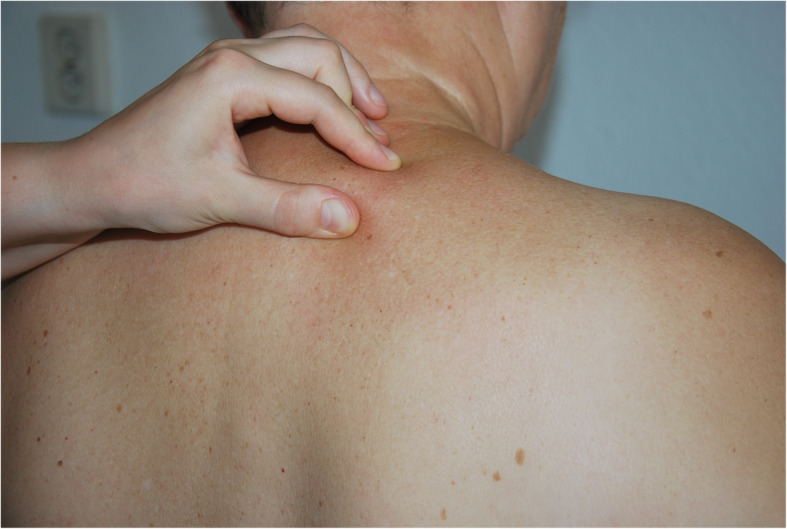
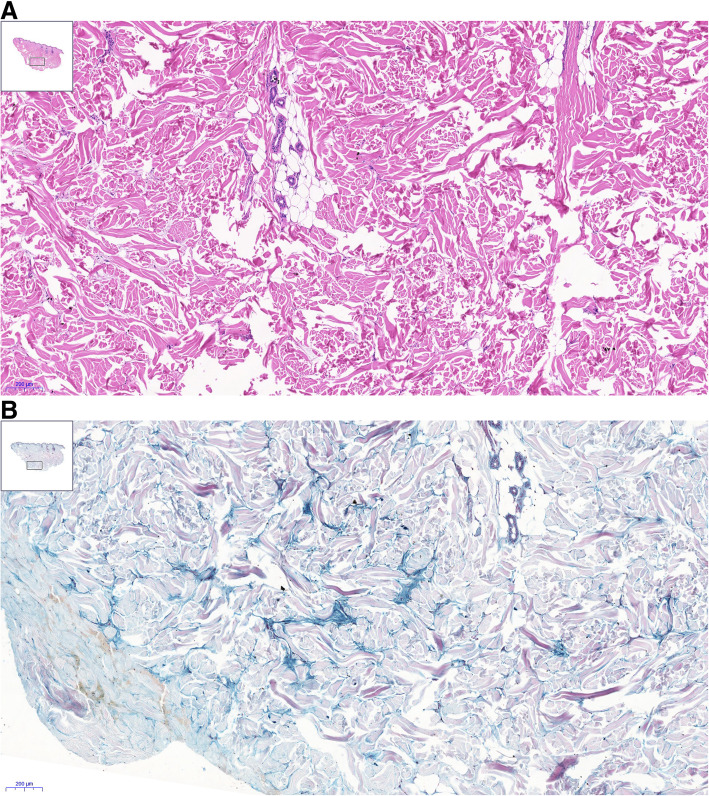
Scleroedema adultorum of Buschke is a rare disorder characterized by fibromucinous thickening of the dermis that manifests mainly at the nape of the neck and on the upper back and shoulders. This study screened patients with diabetes mellitus for skin hardening caused by scleroedema adultorum of Buschke and characterized the clinical and laboratory findings in patients with newly identified cases, with a focus on lipid metabolism abnormalities and vascular complications.
Out of 113 consecutive patients with diabetes, 11 (9.7%) new scleroedema patients, all with type 2 diabetes, were found. Their clinical and laboratory data were compared to those of the rest of the screened patients and to those of a cohort of 15 patients with scleroedema and diabetes who were already being treated in a tertiary clinical centre at the University of Pécs.
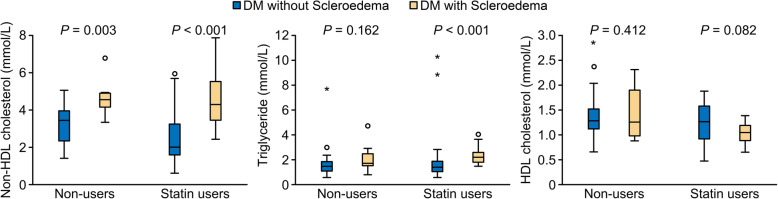
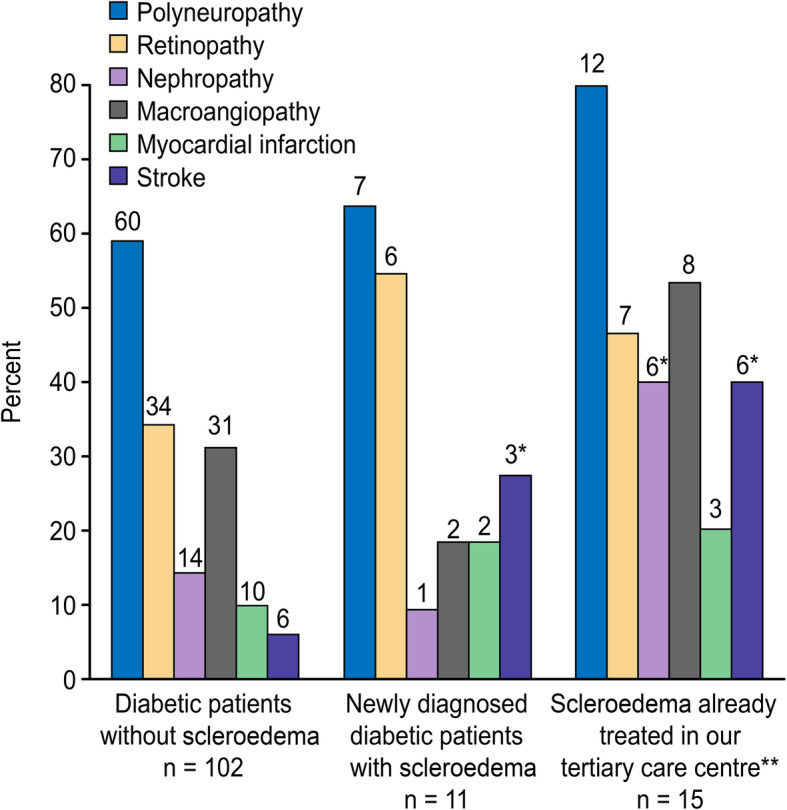
Higher proportions of patients with dyslipidaemia, hypertriglyceridemia (P < 0.05) and increased mean levels of non-high-density lipoprotein cholesterol (non-HDL-C) were found (P < 0.01) in both scleroedema groups than in the group without scleroedema. Stroke and venous thromboembolism (VTE) were more frequently found in the histories of both the newly identified scleroedema group (each 3/11; 27.3%) and the treated cohort (each 6/15; 40.0%) than in the group without scleroedema (6/102; 5.9% in cases of stroke P = 0.021, P < 0.001; and 14/102; 13.7%; P < 0.05 in cases of VTE, respectively). Based on binary logistic regression, a high non-HDL-C level (odds ratio (OD): 3.338, confidence interval (CI): 1.77-6.28; P < 0.001) and insulin treatment (OR 7.64, CI 1.9-29.3; P = 0.003) were independent predictors of scleroedema in patients with diabetes mellitus.
Diabetes patients with scleroedema had more severe dyslipidaemia and higher occurrence of vascular complications compared to those without scleroedema. In addition to poorly controlled type 2 diabetes mellitus requiring insulin treatment, high non-HDL-C levels may be another contributing factor to the development of scleroedema.
NCT04335396 .
Buschke 成人硬肿病是一种罕见的疾病,其特征是真皮纤维粘液性增厚,主要发生在颈背和上背部及肩部。本研究对糖尿病患者进行筛查,以发现 Buschke 成人硬肿病引起的皮肤硬化,并对新确诊病例的临床和实验室检查结果进行特征描述,重点关注脂代谢异常和血管并发症。
在 113 例连续的糖尿病患者中,发现了 11 例(9.7%)新的 Buschke 成人硬肿病患者,均为 2 型糖尿病患者。将他们的临床和实验室数据与筛查患者的其余部分以及在佩奇大学三级临床中心接受治疗的 15 例硬肿病合并糖尿病患者的队列进行比较。
与无硬肿病组相比,硬肿病组(均为 3/11;27.3%)和治疗组(均为 6/15;40.0%)中血脂异常、高甘油三酯血症(P<0.05)和非高密度脂蛋白胆固醇(non-HDL-C)平均水平升高的患者比例更高(均为 P<0.01)。新发硬肿病组(各 3/11;27.3%)和治疗组(各 6/15;40.0%)的卒中史和静脉血栓栓塞(VTE)史均较无硬肿病组(各 6/102;5.9%的卒中史,P=0.021,P<0.001;各 14/102;13.7%的 VTE 史,P<0.05)更为频繁。基于二元逻辑回归,高非高密度脂蛋白胆固醇水平(比值比(OR):3.338,置信区间(CI):1.77-6.28;P<0.001)和胰岛素治疗(OR 7.64,CI 1.9-29.3;P=0.003)是糖尿病患者硬肿病的独立预测因素。
与无硬肿病的糖尿病患者相比,硬肿病患者的血脂异常更为严重,血管并发症的发生率更高。除了需要胰岛素治疗的控制不佳的 2 型糖尿病外,高非高密度脂蛋白胆固醇水平可能是硬肿病发展的另一个促成因素。
NCT04335396 。