Department of Veterinary Bioscience and Veterinary Public Health, Faculty of Veterinary Medicine, Chiang Mai University, 50100, Chiang Mai, Thailand.
Central Laboratory, Faculty of Veterinary Medicine, Chiang Mai University, 50100, Chiang Mai, Thailand.
BMC Vet Res. 2021 May 5;17(1):186. doi: 10.1186/s12917-021-02889-8.
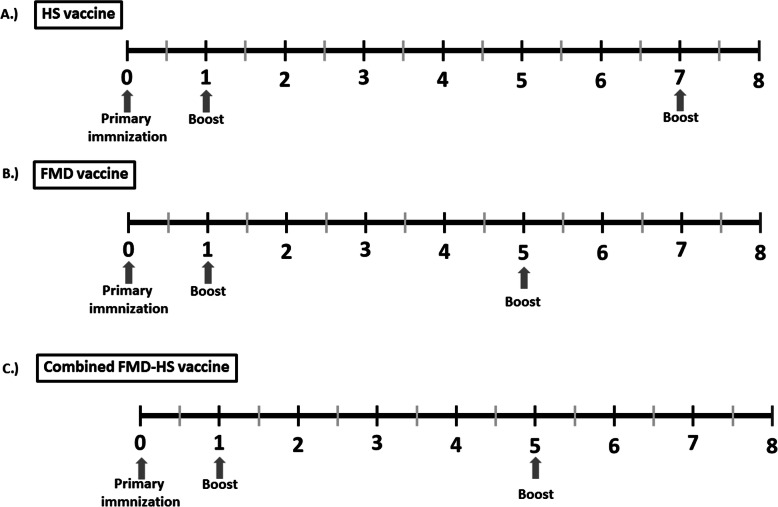
Foot-and-mouth disease (FMD) and Haemorrhagic septicemia (HS) are two important diseases that are known to have caused significant economic losses to the cattle industry. Accordingly, vaccinations have been recognized as an efficient method to control and prevent both of the above-mentioned diseases. This study aimed to determine the immune response to FMD virus antigens and the recombinant outer membrane protein of HS (rOmpH) of Pasteurella multocida in cattle administered as a combination vaccine and compare antibody titers with the two vaccines given independently, under field conditions. Dairy cattle were divided into three groups. Each group was immunized with different vaccine types according to the vaccination program employed in this study. Antibody responses were determined by indirect ELISA, liquid phase blocking ELISA (LPB-ELISA) and viral neutralization test (VNT). Furthermore, the cellular immune responses were measured by lymphocyte proliferation assay (LPA).
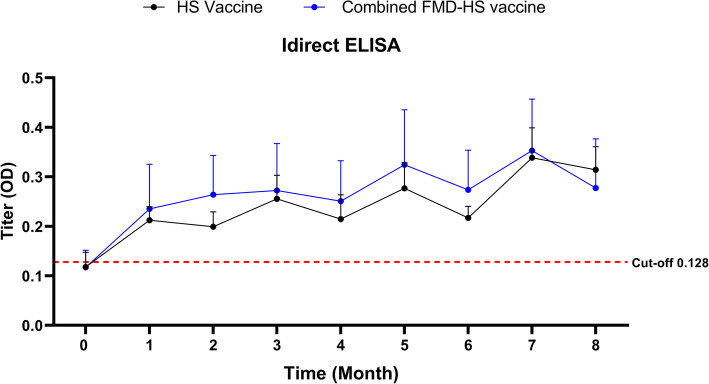
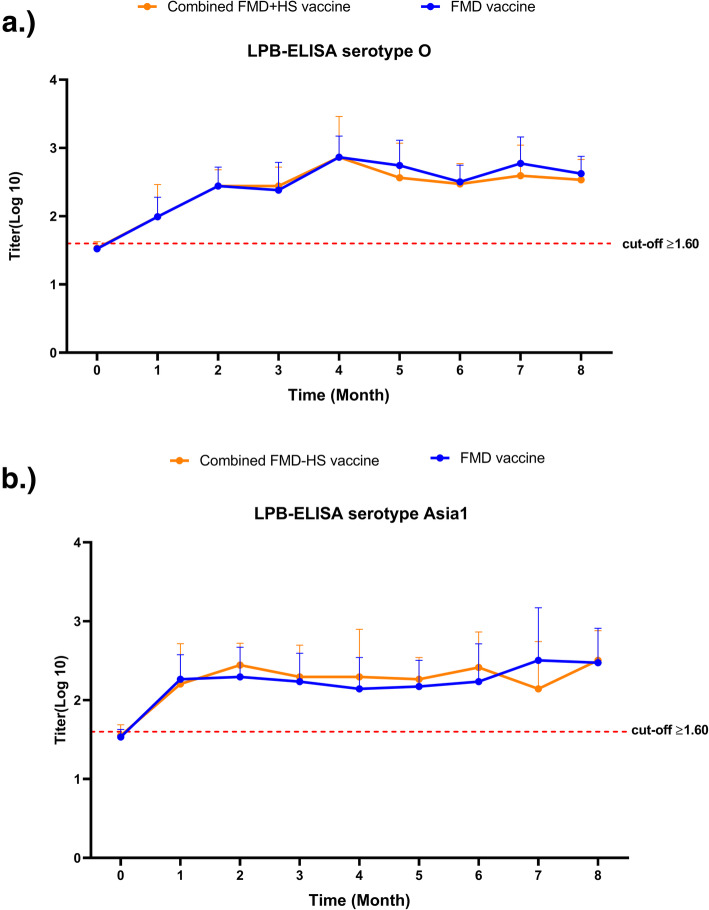
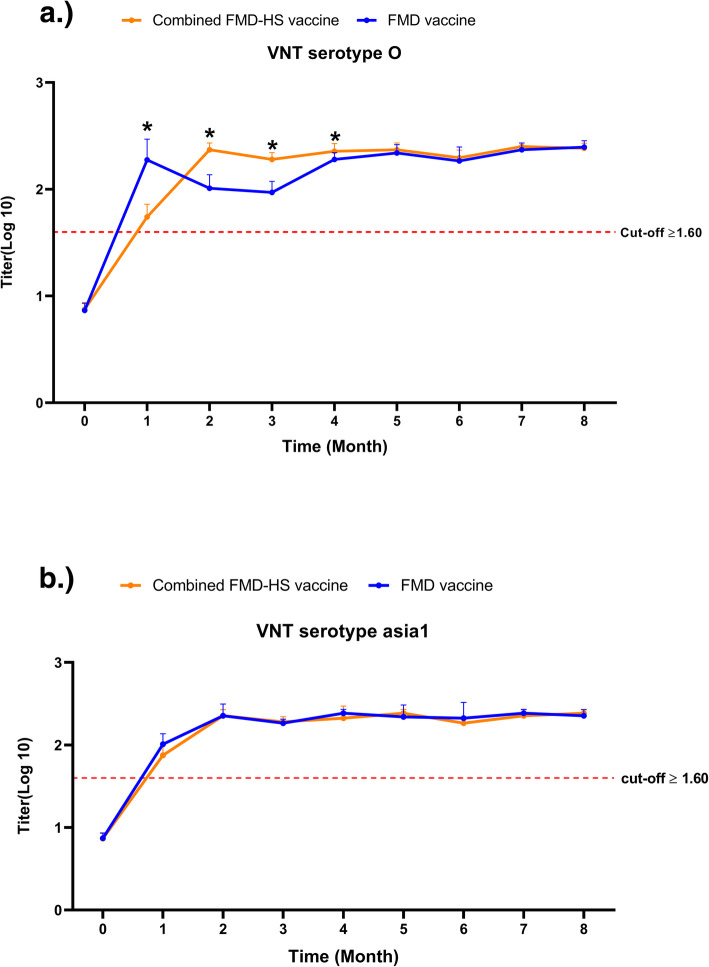
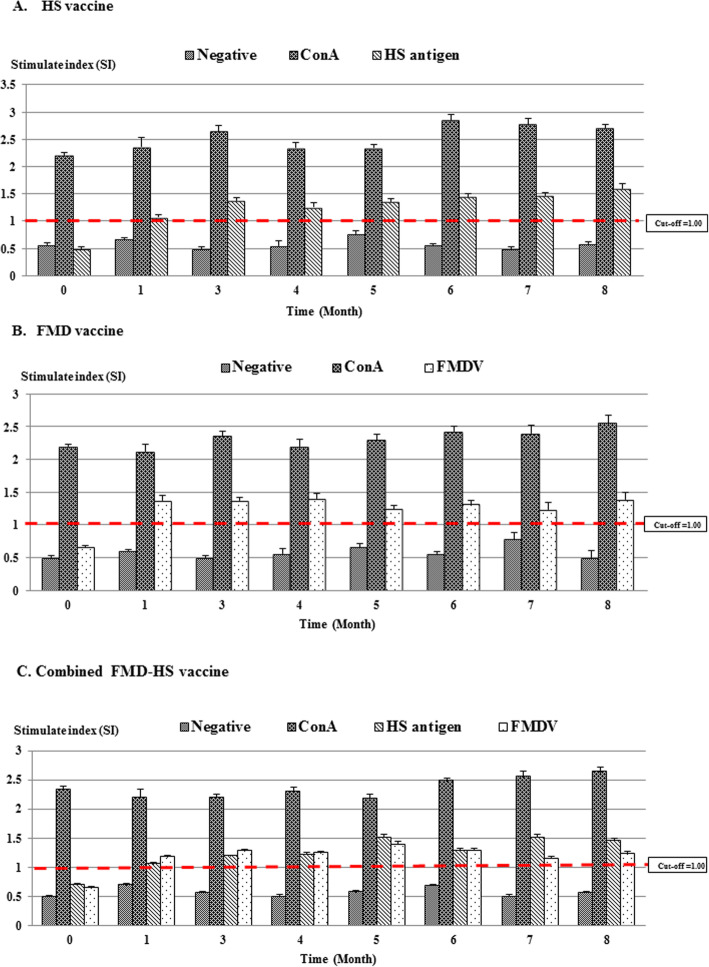
The overall antibody titers to HS and FMDV were above cut-off values for the combined FMD-HS vaccine in this study.The mean antibody titer against HS after the first immunization in the combined FMD-HS vaccine groups was higher than in the HS vaccine groups. However, no statistically significant differences (p > 0.05) were observed between groups. Likewise, the antibody titer to the FMDV serotypes O/TAI/189/87 and Asia 1/TAI/85 determined by LPB-ELISA in the combined vaccine were not statistically significantly different when compared to the FMD vaccine groups. However, the mean VNT antibody titer of combined vaccine against serotype O was significantly higher than the VN titer of FMD vaccine groups (p < 0.05). Moreover, the LPA results showed that all vaccinated groups displayed significantly higher than the negative control (p < 0.05). Nevertheless, no differences in the lymphocyte responses were observed in comparisons between the groups (p > 0.05).
The combined FMD-HS vaccine formulated in this study could result in high both antibody and cellular immune responses without antigenic competition. Therefore, the combined FMD-HS vaccine can serve as an alternative vaccine against both HS and FMD in dairy cattle under field conditions.
口蹄疫(FMD)和出血性败血症(HS)是两种重要的疾病,已知它们给牛养殖业造成了重大的经济损失。因此,疫苗接种已被认为是控制和预防上述两种疾病的有效方法。本研究旨在确定牛接种口蹄疫病毒抗原和多杀性巴氏杆菌重组外膜蛋白(rOmpH)的组合疫苗后的免疫反应,并在田间条件下与单独接种两种疫苗的抗体滴度进行比较。奶牛被分为三组。每组根据本研究中使用的免疫接种方案接种不同类型的疫苗。通过间接 ELISA、液相阻断 ELISA(LPB-ELISA)和病毒中和试验(VNT)来确定抗体反应。此外,通过淋巴细胞增殖试验(LPA)来测量细胞免疫反应。
本研究中组合 FMD-HS 疫苗的总体针对 HS 和 FMDV 的抗体滴度均高于临界值。组合 FMD-HS 疫苗组第一次免疫后的 HS 平均抗体滴度高于 HS 疫苗组。然而,各组之间无统计学差异(p>0.05)。同样,LPB-ELISA 测定的组合疫苗对 FMDV 血清型 O/TAI/189/87 和 Asia 1/TAI/85 的抗体滴度与 FMD 疫苗组无统计学差异。然而,组合疫苗对血清型 O 的平均 VNT 抗体滴度显著高于 FMD 疫苗组(p<0.05)。此外,LPA 结果表明,所有接种组的反应均显著高于阴性对照(p<0.05)。然而,各组之间的淋巴细胞反应没有差异(p>0.05)。
本研究中配制的 FMD-HS 组合疫苗可引起高抗体和细胞免疫反应,而无抗原竞争。因此,该组合 FMD-HS 疫苗可作为牛在田间条件下针对 HS 和 FMD 的替代疫苗。