Department of International Health, Johns Hopkins University Bloomberg School of Public Health, Baltimore, Maryland, USA
Department of International Health, Johns Hopkins University Bloomberg School of Public Health, Baltimore, Maryland, USA.
BMJ Open. 2021 May 5;11(5):e042572. doi: 10.1136/bmjopen-2020-042572.
There is currently no defined method for assessing injury severity using population-based data, which limits our understanding of the burden of non-fatal injuries and community-based approaches for primary prevention of injuries. This study describes a systematic approach, Population-based Injury Severity Assessment (PISA) index, for assessing injury severity at the population level.
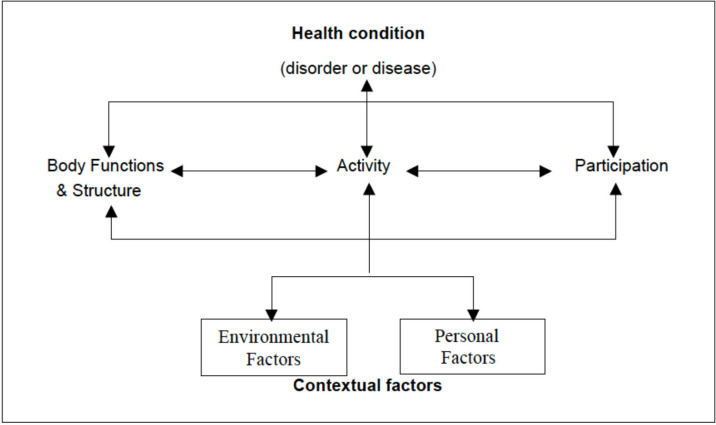
Based on the WHO International Classification of Functionality conceptual model on health and disability, eight indicators for assessing injury severity were defined. The eight indicators assessed anatomical, physiological, postinjury immobility, hospitalisation, surgical treatment, disability, duration of assisted living and days lost from work or school. Using a large population-based survey conducted in 2013 including 1.16 million individuals from seven subdistricts of rural Bangladesh, information on the eight indicators were derived for all non-fatal injury events, and these were summarised into a single injury severity index using a principal component analysis (PCA). Principal component loadings derived from the PCA were used to predict the severity (low, moderate, high) of non-fatal injuries, and were applied to the fatal injury data to assess the criterion validity of the index. The determinants of non-fatal injury severity were determined using ordered logistic regression.
There were 119 703 non-fatal injuries and 14% were classified as high severity based on the PISA index. The PISA index accurately predicted 82% of all fatal injuries as highly severe. Non-fatal injuries of high severity were frequent with unintentional poisoning (57%) and violence (35%). Injuries of high severity were commoner among males (OR 1.16, 95% CI 1.12 to 1.21), adults 65 years and older (OR 1.30, 95% CI 1.23 to 1.36), lower socioeconomic status and intentional injuries. Education was associated with reduced odds of high severe injuries.
The PISA index provides a valid and systematic approach for assessing injury severity at the population level, and is relevant for improving the characterisation of the burden and epidemiology of injuries in non-health facility-based settings. Additional testing of the PISA index is needed to further establish its validity and reliability.
目前,使用基于人群的数据评估伤害严重程度尚无明确方法,这限制了我们对非致命性伤害负担的了解,也限制了以社区为基础进行伤害初级预防的方法。本研究描述了一种系统方法,即基于人群的伤害严重程度评估(PISA)指数,用于评估人群水平的伤害严重程度。
根据世界卫生组织关于健康和残疾的国际功能、残疾和健康分类概念模型,定义了 8 个评估伤害严重程度的指标。这 8 个指标评估解剖学、生理学、受伤后活动受限、住院、手术治疗、残疾、辅助生活时间和工作或学业损失天数。利用 2013 年在孟加拉国七个分区进行的一项大型基于人群的调查,获取了所有非致命性伤害事件的 8 项指标信息,并用主成分分析(PCA)将这些信息汇总为单一的伤害严重程度指数。从 PCA 中得出的主成分负荷用于预测非致命性伤害的严重程度(低、中、高),并将其应用于致命性伤害数据,以评估该指数的效标效度。使用有序逻辑回归确定非致命性伤害严重程度的决定因素。
共有 119703 例非致命性伤害,根据 PISA 指数,14%的伤害被归类为严重程度高。PISA 指数准确预测了 82%的高度严重致命性伤害。高严重程度的非致命性伤害很常见,其中意外中毒(57%)和暴力(35%)最为常见。高严重程度的伤害在男性中更为常见(比值比 1.16,95%置信区间 1.12 至 1.21),65 岁及以上的成年人(比值比 1.30,95%置信区间 1.23 至 1.36),社会经济地位较低以及故意受伤。教育与高严重伤害的可能性降低有关。
PISA 指数为评估人群水平的伤害严重程度提供了一种有效且系统的方法,与改善非卫生机构环境中伤害负担和流行病学特征有关。需要进一步测试 PISA 指数以进一步确定其有效性和可靠性。