Li Zhi, Wang Ling, Huang Lv-Shuai, Zhang Meng, Cai Xianhua, Xu Feng, Wu Fei, Li Honghua, Huang Wencai, Zhou Qunfang, Yao Jing, Liang Yong, Liu Guoliang
Department of Orthopedics, General Hospital of Chinese PLA Central Theater Command, Wuhan, 430070, China.
Southern Medical University, Guangzhou, 510515, China.
Sci Rep. 2021 May 5;11(1):9626. doi: 10.1038/s41598-021-89187-3.
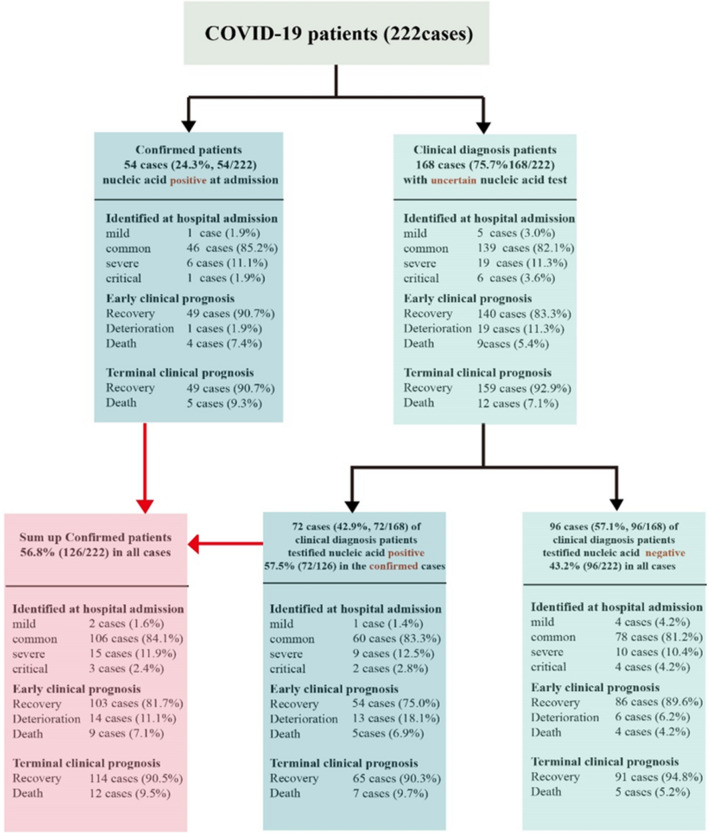
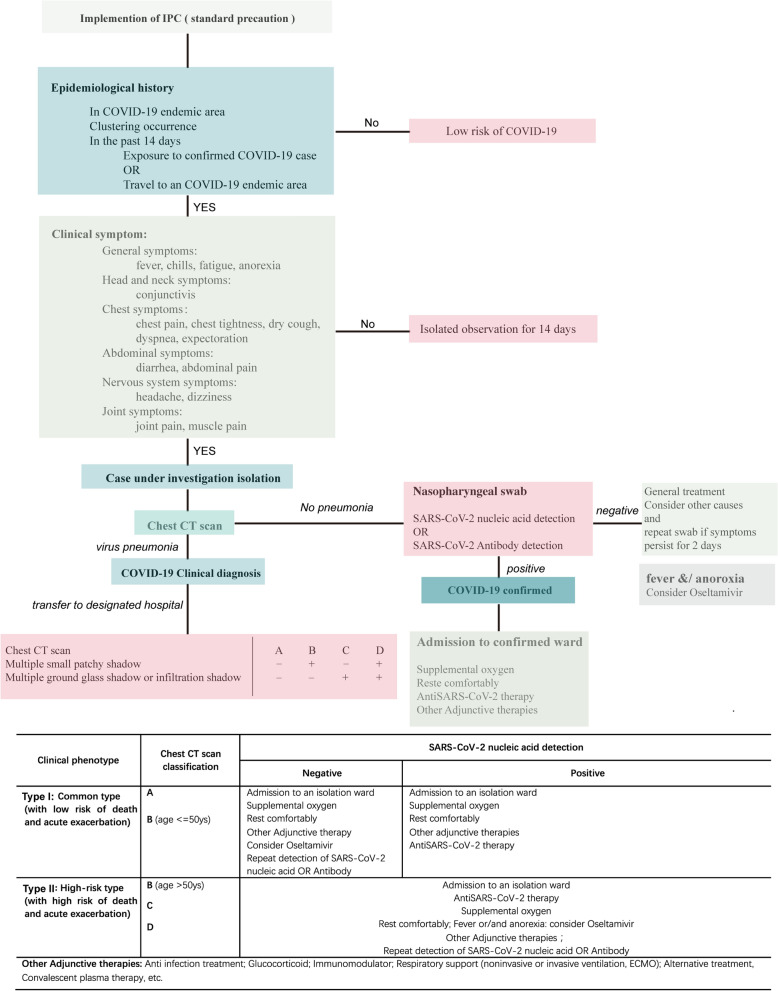
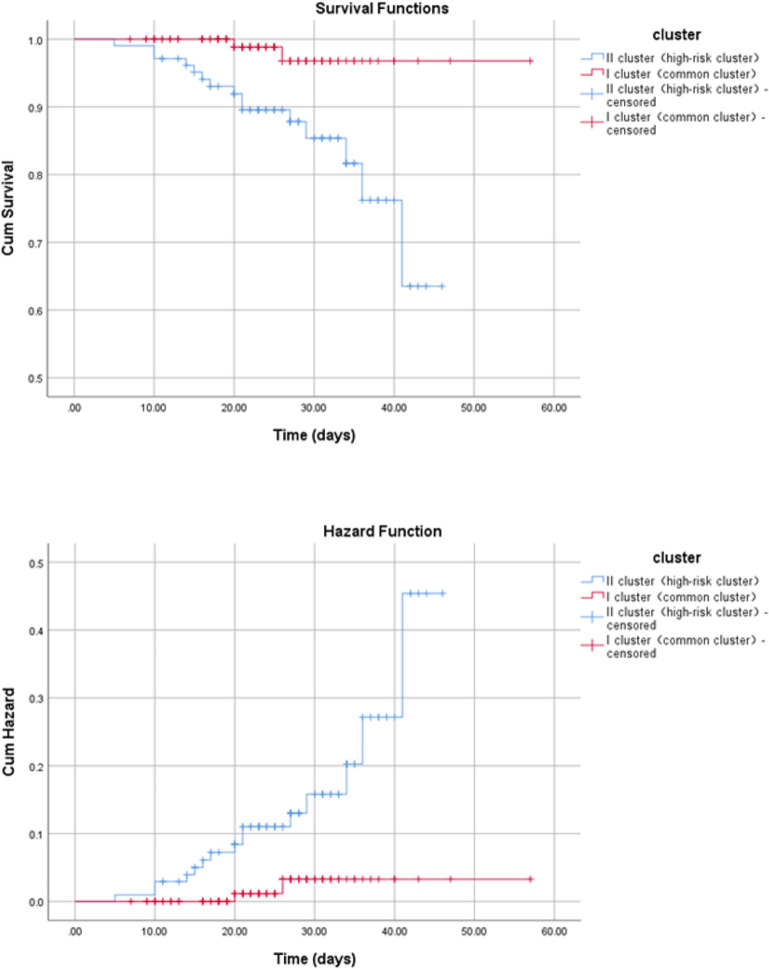
Early classification and risk assessment for COVID-19 patients are critical for improving their terminal prognosis, and preventing the patients deteriorate into severe or critical situation. We performed a retrospective study on 222 COVID-19 patients in Wuhan treated between January 23rd and February 28th, 2020. A decision tree algorithm has been established including multiple factor logistic for cluster analyses that were performed to assess the predictive value of presumptive clinical diagnosis and features including characteristic signs and symptoms of COVID-19 patients. Therapeutic efficacy was evaluated by adopting Kaplan-Meier survival curve analysis and cox risk regression. The 222 patients were then clustered into two groups: cluster I (common type) and cluster II (high-risk type). High-risk cases can be judged from their clinical characteristics, including: age > 50 years, chest CT images with multiple ground glass or wetting shadows, etc. Based on the classification analysis and risk factor analysis, a decision tree algorithm and management flow chart were established, which can help well recognize individuals who needs hospitalization and improve the clinical prognosis of the COVID-19 patients. Our risk factor analysis and management process suggestions are useful for improving the overall clinical prognosis and optimize the utilization of public health resources during treatment of COVID-19 patients.
对新型冠状病毒肺炎(COVID-19)患者进行早期分类和风险评估对于改善其最终预后以及防止患者病情恶化为重症或危重症至关重要。我们对2020年1月23日至2月28日期间在武汉接受治疗的222例COVID-19患者进行了一项回顾性研究。建立了一种决策树算法,包括用于聚类分析的多因素逻辑回归,以评估推定临床诊断和特征(包括COVID-19患者的特征性体征和症状)的预测价值。采用Kaplan-Meier生存曲线分析和Cox风险回归评估治疗效果。然后将这222例患者分为两组:第一组(普通型)和第二组(高危型)。高危病例可根据其临床特征判断,包括:年龄>50岁、胸部CT图像有多个磨玻璃或实变影等。基于分类分析和危险因素分析,建立了决策树算法和管理流程图,有助于很好地识别需要住院治疗的个体并改善COVID-19患者的临床预后。我们的危险因素分析和管理流程建议对于改善整体临床预后以及在COVID-19患者治疗期间优化公共卫生资源的利用是有用的。