Endocrinology, Department of Clinical and Experimental Medicine, Garibaldi-Nesima Medical Center, Catania, Italy.
Surgical Oncology, Garibaldi-Nesima Medical Center, Catania, Italy.
Front Endocrinol (Lausanne). 2021 Apr 19;12:652675. doi: 10.3389/fendo.2021.652675. eCollection 2021.
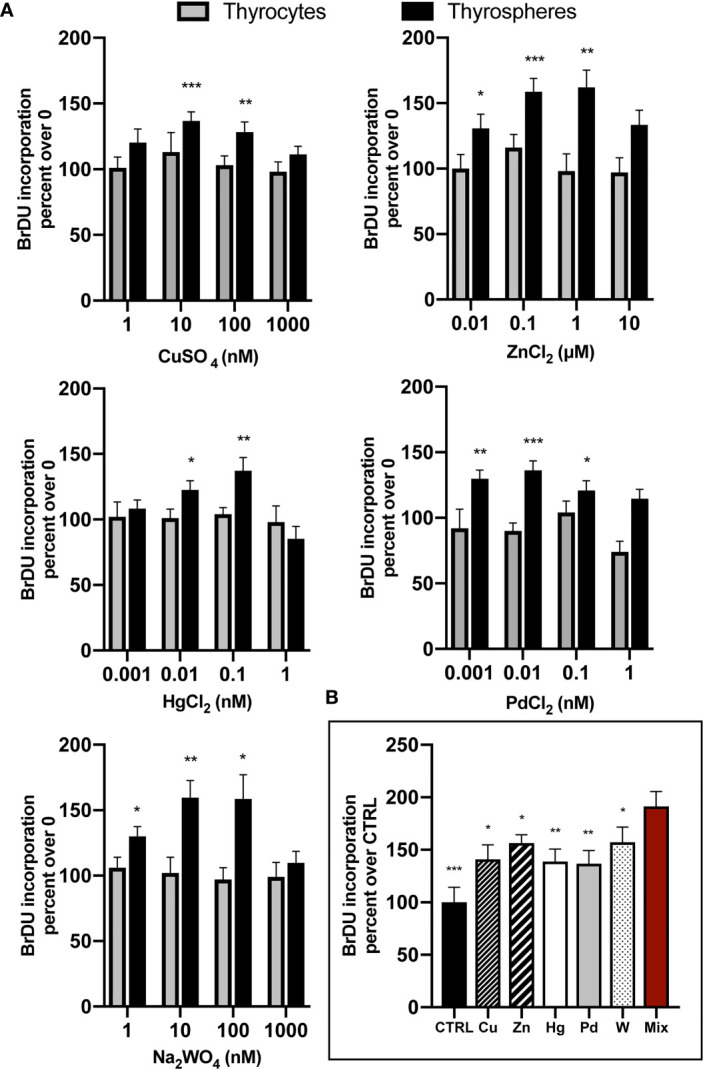
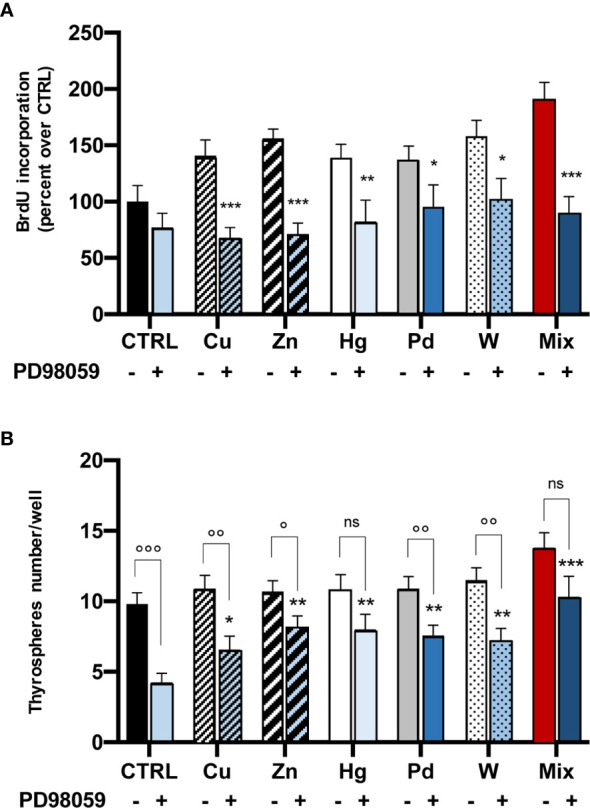
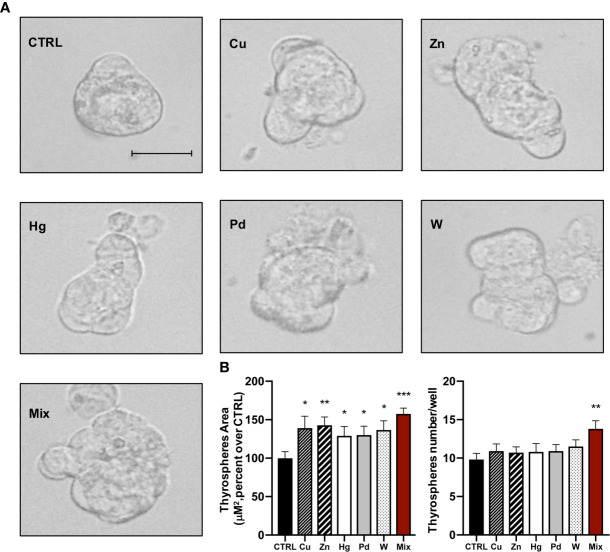
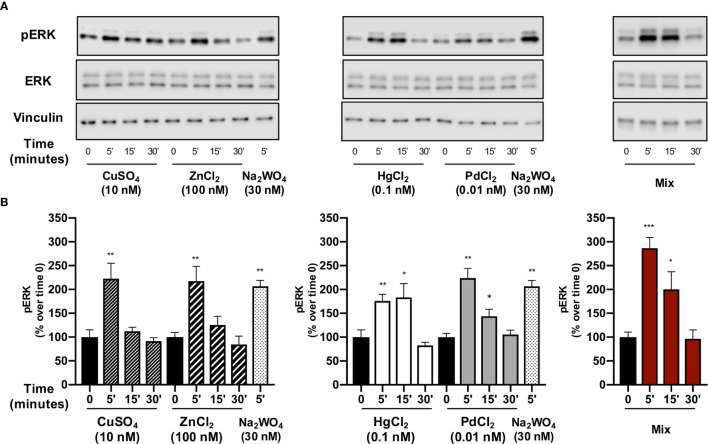
Thyroid cancer incidence is markedly increased in volcanic areas where residents are biocontaminated by chronic lifelong exposure to slightly increased metals in the environment. Metals can influence the biology of living cells by a variety of mechanisms, depending not only on the dose and length of exposure but also on the type and stage of differentiation of target cells. We explored the effect of five heavy metals (Cu, Hg, Pd, W and Zn) at nanomolar concentrations (the biocontamination level in residents of the volcanic area in Sicily where thyroid cancer is increased) on stimulating the proliferation of undifferentiated (thyrospheres) and differentiated human thyroid cells. Thyrosphere proliferation was significantly increased after exposure to each individual metal and a greater stimulating effect was observed when a mixture of the examined metals was used. No effect was seen in differentiated thyrocytes. For all metals, the dose-response curve followed a biphasic pattern that is typical of hormesis. Thyrosphere growth concerned the size rather than number, except with the metal mixture. An altered morphology was also observed in metal-treated thyrospheres. Metal-induced proliferation was due to activation of the ERK1/2 pathway, as confirmed by growth inhibition when ERK1/2 signaling was blocked. These studies show that stem/precursor thyroid cells are sensitive to small increases in environmental metal concentrations that are harmless for differentiated thyrocytes.
甲状腺癌的发病率在火山地区显著增加,这些地区的居民由于长期慢性暴露在环境中,体内的金属含量略有增加而受到生物污染。金属可以通过多种机制影响活细胞的生物学特性,这不仅取决于暴露的剂量和时间长短,还取决于靶细胞的类型和分化阶段。我们研究了五种重金属(Cu、Hg、Pd、W 和 Zn)在纳米摩尔浓度(西西里岛火山地区居民的生物污染水平,那里甲状腺癌的发病率增加)下对未分化(甲状腺球体)和分化的人类甲状腺细胞增殖的影响。暴露于每种金属后,甲状腺球体的增殖明显增加,而当使用所检查的金属混合物时,观察到更强的刺激作用。分化的甲状腺细胞没有观察到这种作用。对于所有金属,剂量-反应曲线呈双相模式,这是适应现象的典型特征。除了金属混合物外,甲状腺球体的生长仅涉及大小而不涉及数量。在金属处理的甲状腺球体中还观察到形态改变。金属诱导的增殖是由于 ERK1/2 途径的激活,这一点通过阻断 ERK1/2 信号通路时的生长抑制得到证实。这些研究表明,干细胞/前体细胞甲状腺对环境中金属浓度的微小增加敏感,而这种增加对分化的甲状腺细胞是无害的。