Researcher of Laboratory of Circulation Pathology, FSBI Research Institute of Complex Problems of Cardiovascular Disease, Kemerovo, Russian Federation.
Head of Department of Polyvascular Disease, FSBI Research Institute of Complex Problems of Cardiovascular Disease, Kemerovo, Russian Federation.
Int J Behav Med. 2022 Feb;29(1):46-56. doi: 10.1007/s12529-021-09992-y. Epub 2021 May 6.
Type D personality is accompanied by a set of negative behavioral patterns: low physical activity, high levels of psychological distress, low adherence to treatment. However, studies regarding predictive value of the type D personality remain inconclusive: the results varied depending on the examined cohort, age, and ethnicity. The aim of the study was to evaluate the influence of type D personality on the 5-year prognosis in patients undergoing coronary artery bypass grafting (CABG) in Russian population.
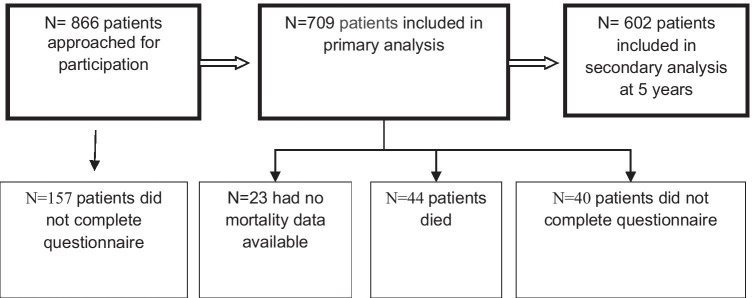
The study included 602 patients with stable coronary artery disease (490 males, 57.7 ± 7.3 years) who had received CABG and were divided into two groups: patients with type D personality (n = 134) and patients without type D (n = 468). The risk of fatal and nonfatal events within 5 years after CABG was assessed.
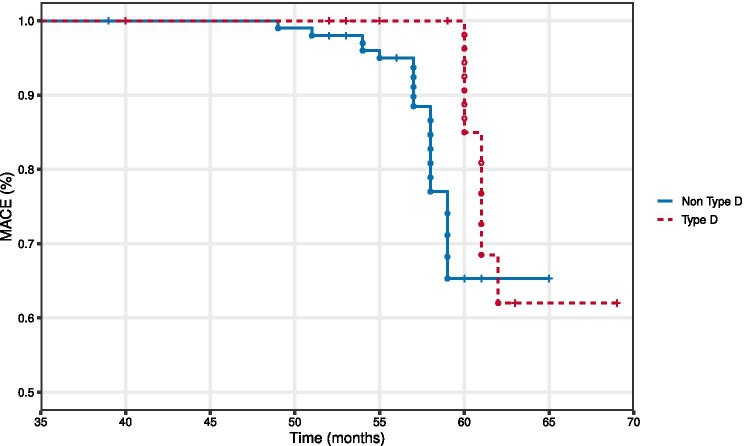
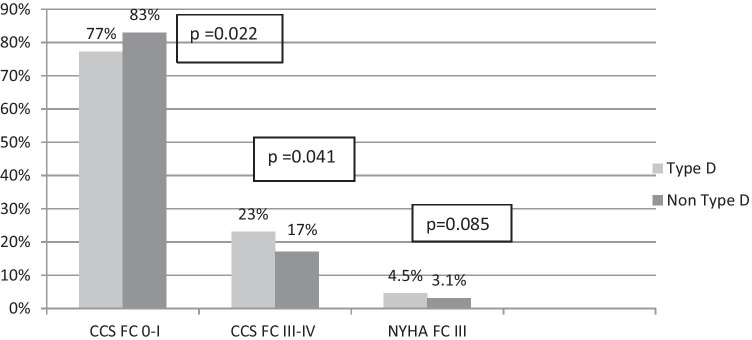
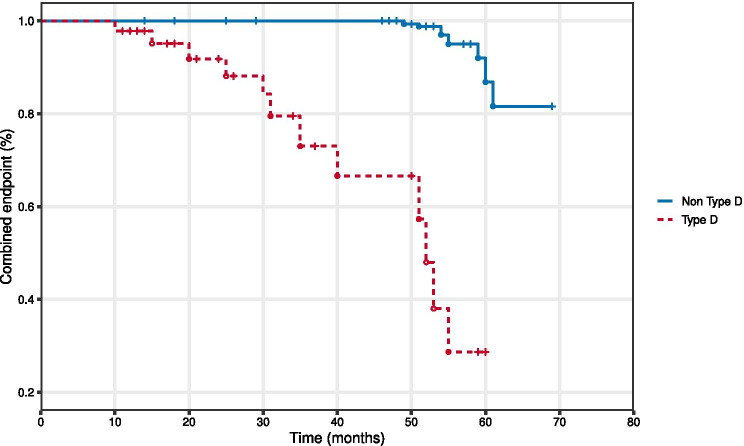
There was no difference in total mortality in patients with type D and without type D (7.9% and 7.7%, respectively) over the 5-year period. The absence of cardiac events was detected much less frequently in patients with type D (28%) compared with patients without type D (82%; p = 0.021). Multivariate analysis found independent association between the unfavorable outcome and presence of diabetes mellitus (p = 0.021), type D personality (p = 0.039), and multifocal atherosclerosis (p = 0.033) regardless of gender, age, previous myocardial infarction, and stroke.
Type D patients had a greater risk for cardiac events over 5 years after CABG compared with non-type D patients. Obtained data indicates that it is reasonable to consider personality type while detecting patients at risk of development of stress induced cardiac complications after CABG.
D 型人格伴随着一系列消极的行为模式:低身体活动、高水平的心理困扰、低治疗依从性。然而,关于 D 型人格的预测价值的研究结果仍不一致:结果因所检查的队列、年龄和种族而异。本研究旨在评估 D 型人格对俄罗斯人群接受冠状动脉旁路移植术(CABG)的患者 5 年预后的影响。
该研究纳入了 602 例稳定性冠状动脉疾病患者(490 名男性,57.7±7.3 岁),他们接受了 CABG,并分为两组:D 型人格患者(n=134)和非 D 型人格患者(n=468)。评估了 CABG 后 5 年内致命和非致命事件的风险。
在 5 年期间,D 型和非 D 型患者的总死亡率无差异(分别为 7.9%和 7.7%)。D 型患者的心脏事件发生率明显低于非 D 型患者(28% vs. 82%;p=0.021)。多变量分析发现,不利结局与糖尿病(p=0.021)、D 型人格(p=0.039)和多灶性动脉粥样硬化(p=0.033)独立相关,而与性别、年龄、既往心肌梗死和中风无关。
与非 D 型患者相比,D 型患者在 CABG 后 5 年内发生心脏事件的风险更高。这些数据表明,在检测 CABG 后发生应激诱导性心脏并发症风险的患者时,考虑人格类型是合理的。