Key Laboratory for Advanced Materials and Joint International Research Laboratory of Precision Chemistry and Molecular Engineering, Feringa Nobel Prize Scientist Joint Research Center, Frontiers Science Center for Materiobiology and Dynamic Chemistry, Institute of Fine Chemicals, School of Chemistry and Molecular Engineering, East China University of Science and Technology, Shanghai, 200237, China.
Centre for Systems Chemistry, Stratingh Institute for Chemistry and Zernike Institute for Advanced Materials, University of Groningen, Nijenborgh 4, 9747, AG, Groningen, The Netherlands.
Angew Chem Int Ed Engl. 2021 Jul 12;60(29):16129-16138. doi: 10.1002/anie.202104285. Epub 2021 Jun 15.
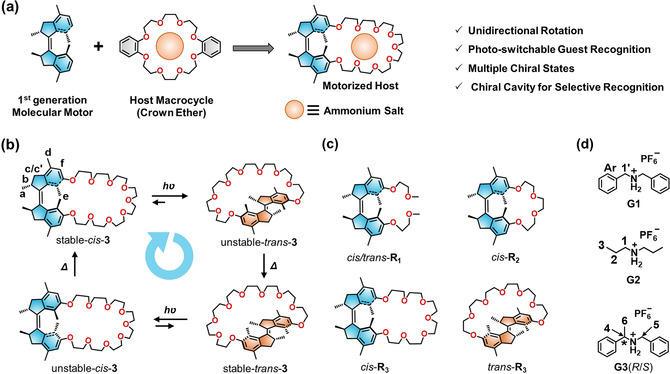
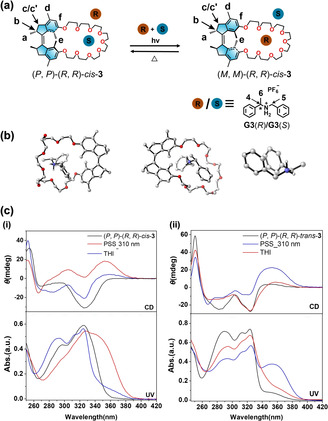
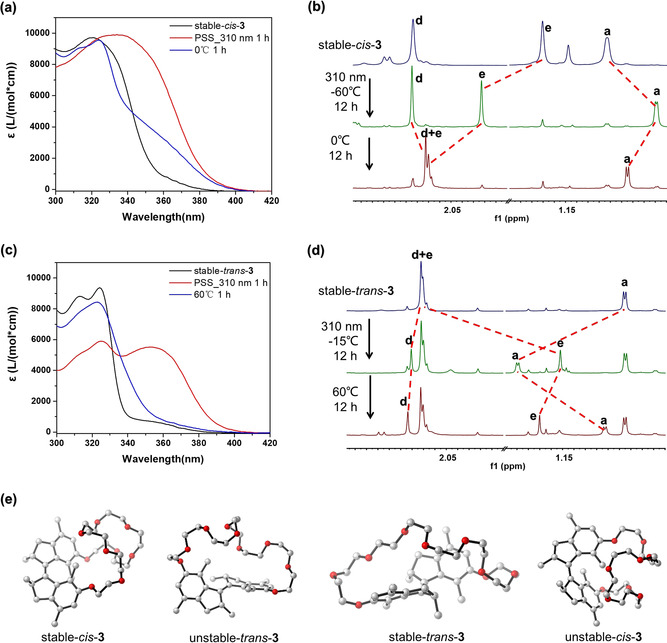
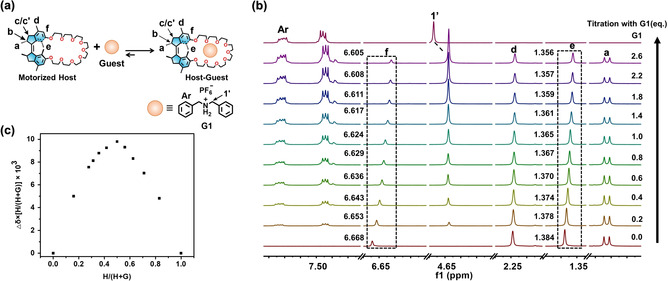
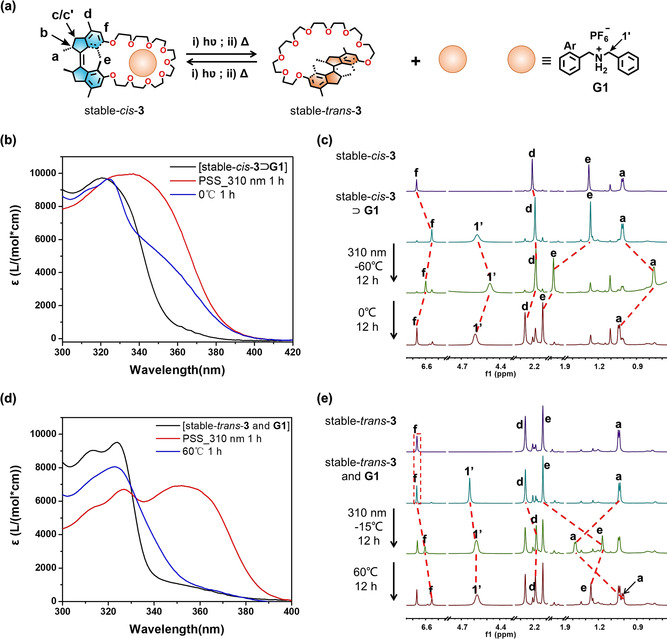
Designing photo-responsive host-guest systems can provide versatile supramolecular tools for constructing smart systems and materials. We designed photo-responsive macrocyclic hosts, modulated by light-driven molecular rotary motors enabling switchable chiral guest recognition. The intramolecular cyclization of the two arms of a first-generation molecular motor with flexible oligoethylene glycol chains of different lengths resulted in crown-ether-like macrocycles with intrinsic motor function. The octaethylene glycol linkage enables the successful unidirectional rotation of molecular motors, simultaneously allowing the 1:1 host-guest interaction with ammonium salt guests. The binding affinity and stereoselectivity of the motorized macrocycle can be reversibly modulated, owing to the multi-state light-driven switching of geometry and helicity of the molecular motors. This approach provides an attractive strategy to construct stimuli-responsive host-guest systems and dynamic materials.
设计光响应主体-客体体系可为构建智能体系和材料提供多功能超分子工具。我们设计了光响应大环主体,受光驱动分子旋转马达调控,实现了手性客体识别的可切换性。第一代分子马达的两个臂的分子内环化,形成了具有内在马达功能的冠醚样大环主体。具有不同长度柔性聚乙二醇链的八乙二醇连接使分子马达的单向旋转成为可能,同时允许与铵盐客体进行 1:1 的主客体相互作用。由于分子马达的几何形状和手性的多态光驱动开关,可以可逆地调节马达化大环的结合亲和力和立体选择性。这种方法为构建刺激响应主体-客体体系和动态材料提供了一种有吸引力的策略。