Department of Otolaryngology-Head and Neck Surgery, School of Medicine, Case Western Reserve University and University Hospitals Cleveland Medical Center, 11100 Euclid Ave., Cleveland, OH, 44106, USA.
Swagelok Center for Surface Analysis of Materials, Case Western Reserve University, Cleveland, OH, 44106, USA.
Sci Rep. 2021 May 6;11(1):9660. doi: 10.1038/s41598-021-88841-0.
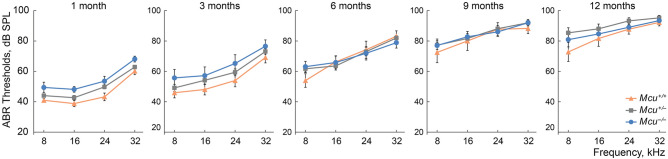
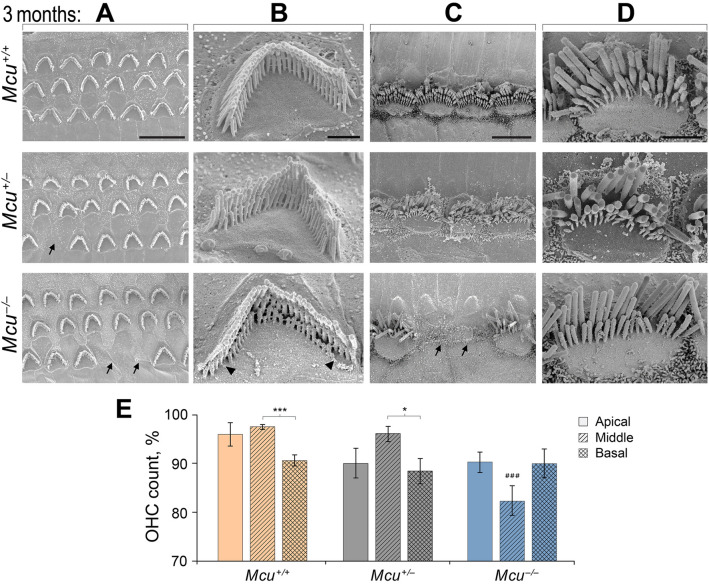
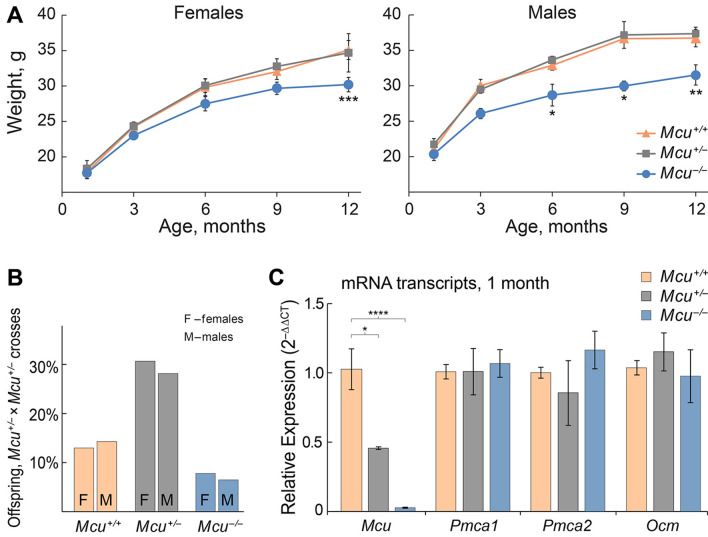
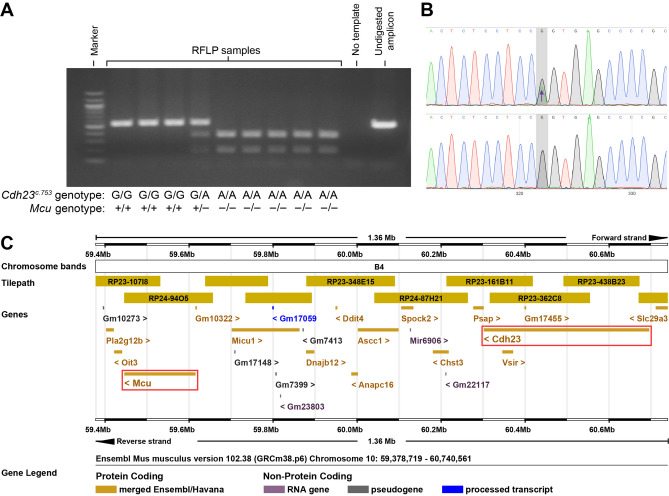
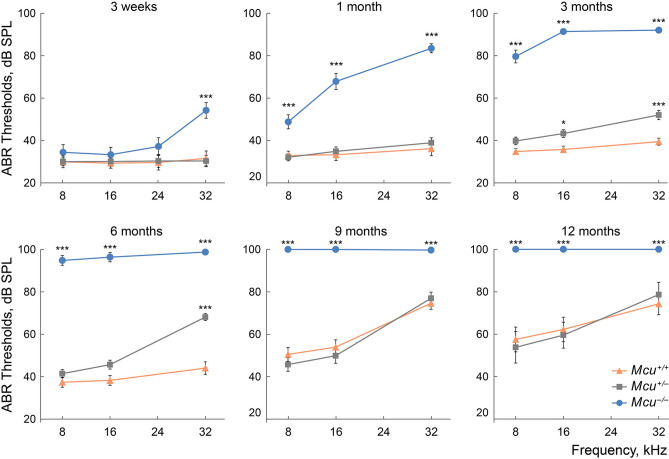
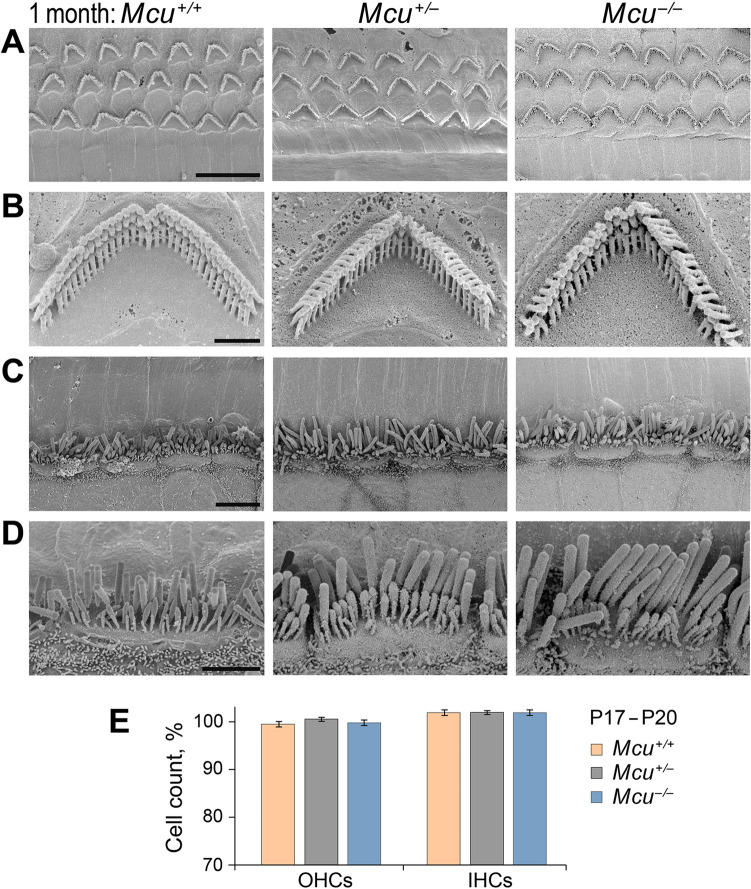
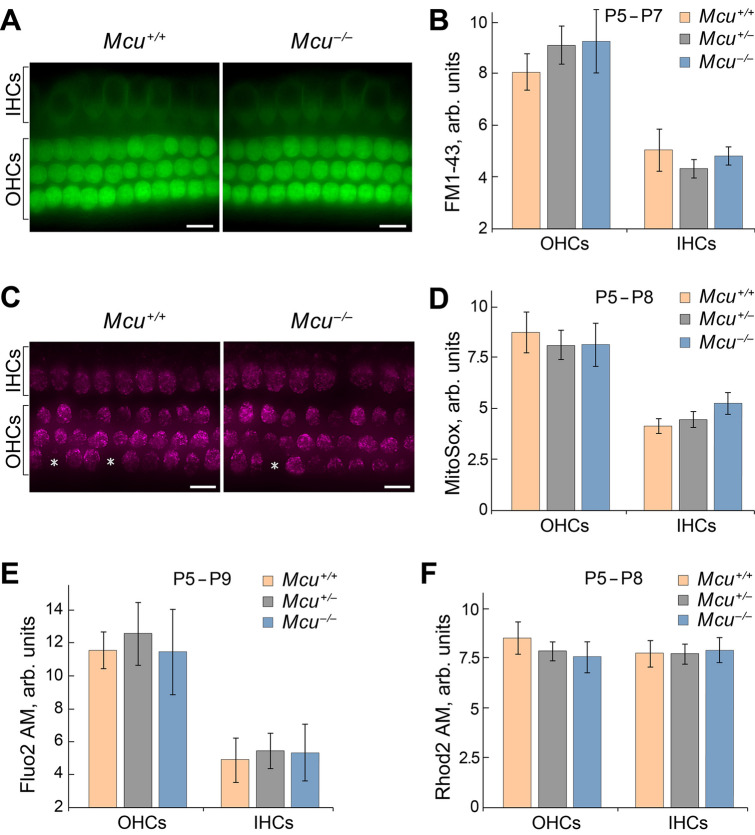
Mitochondrial Ca regulates a wide range of cell processes, including morphogenesis, metabolism, excitotoxicity, and survival. In cochlear hair cells, the activation of mechano-electrical transduction and voltage-gated Ca channels result in a large influx of Ca. The intracellular rise in Ca is partly balanced by the mitochondria which rapidly uptakes Ca via a highly selective channel comprised of the main pore-forming subunit, the mitochondrial Ca uniporter (MCU), and associated regulatory proteins. MCU thus contributes to Ca buffering, ensuring cytosolic homeostasis, and is posited to have a critical role in hair cell function and hearing. To test this hypothesis, Ca homeostasis in hair cells and cochlear function were investigated in FVB/NJ mice carrying the knockout allele of Mcu (Mcu or Mcu). The Mcu knockout allele, which originated in C57BL/6 strain cosegregated along with Cdh23 allele to the FVB/NJ strain, due to the close proximity of these genes. Neither Mcu nor Mcu genotypes affected cochlear development, morphology, or Ca homeostasis of auditory hair cells in the first two postnatal weeks. However, Mcu mice displayed high-frequency hearing impairment as early as 3 weeks postnatal, which then progressed to profound hearing loss at all frequencies in about 6 months. In Mcu mice, significantly elevated ABR thresholds were observed at 6 months and 9 months of age only at 32 kHz frequency. In three-month-old Mcu mice, up to 18% of the outer hair cells and occasionally some inner hair cells were missing in the mid-cochlear region. In conclusion, mitochondrial Ca uniporter is not required for the development of cochlea in mice, but is essential for hearing and hair cell preservation in congenic FVB/NJ mice.
线粒体 Ca2+ 调节着广泛的细胞过程,包括形态发生、代谢、兴奋毒性和存活。在内耳毛细胞中,机械电转导和电压门控 Ca2+ 通道的激活导致大量 Ca2+ 的内流。细胞内 Ca2+ 的增加部分被线粒体平衡,线粒体通过由主要孔形成亚基、线粒体 Ca2+ 单向转运体 (MCU) 和相关调节蛋白组成的高度选择性通道快速摄取 Ca2+。因此,MCU 有助于 Ca2+ 缓冲,确保细胞溶质的动态平衡,并被认为在毛细胞功能和听力中具有关键作用。为了验证这一假设,研究了携带 Mcu 敲除等位基因的 FVB/NJ 小鼠(Mcu 或 Mcu)中的毛细胞 Ca2+ 稳态和耳蜗功能。Mcu 敲除等位基因起源于 C57BL/6 品系,由于这些基因的紧密接近,与 Cdh23 等位基因一起分离到 FVB/NJ 品系中。Mcu 或 Mcu 基因型都不影响出生后前两周的耳蜗发育、形态或听觉毛细胞的 Ca2+ 稳态。然而,Mcu 小鼠在出生后 3 周就表现出高频听力障碍,随后在大约 6 个月时进展为所有频率的深度听力损失。在 Mcu 小鼠中,仅在 32 kHz 频率下,在 6 个月和 9 个月时观察到 ABR 阈值显著升高。在 3 个月大的 Mcu 小鼠中,在内耳中部区域,多达 18%的外毛细胞和偶尔一些内毛细胞缺失。总之,线粒体 Ca2+ 单向转运体对于小鼠耳蜗的发育不是必需的,但对于同基因 FVB/NJ 小鼠的听力和毛细胞保存是必需的。