Department of Food Science and Biotechnology, Kyungpook National University, Daegu, 41566, Republic of Korea.
National Institute for Korean Medicine Development, Kyeongsan, 38540, Republic of Korea.
Sci Rep. 2021 May 6;11(1):9644. doi: 10.1038/s41598-021-88959-1.
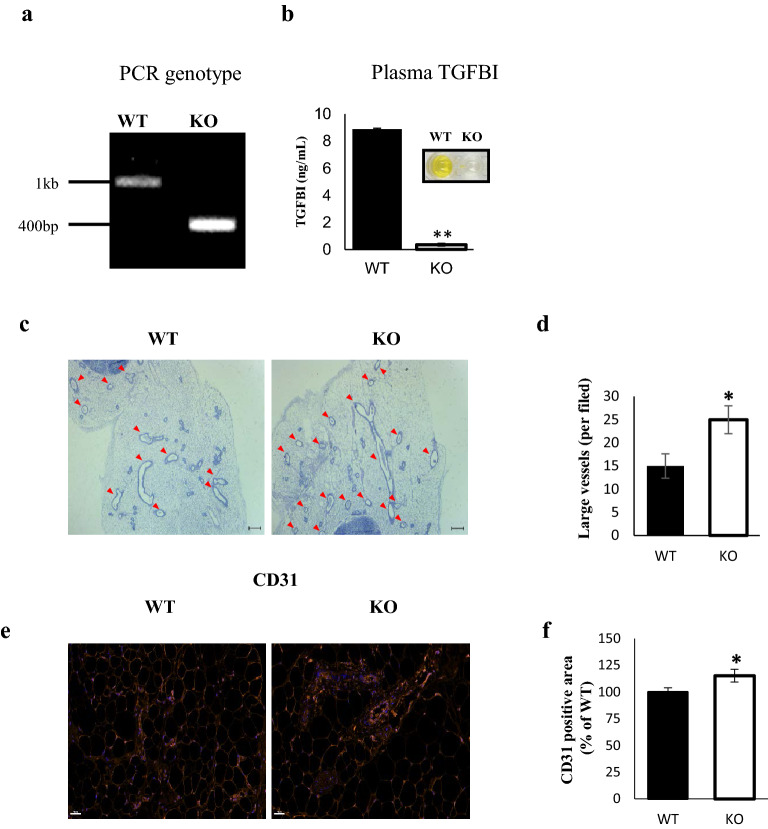
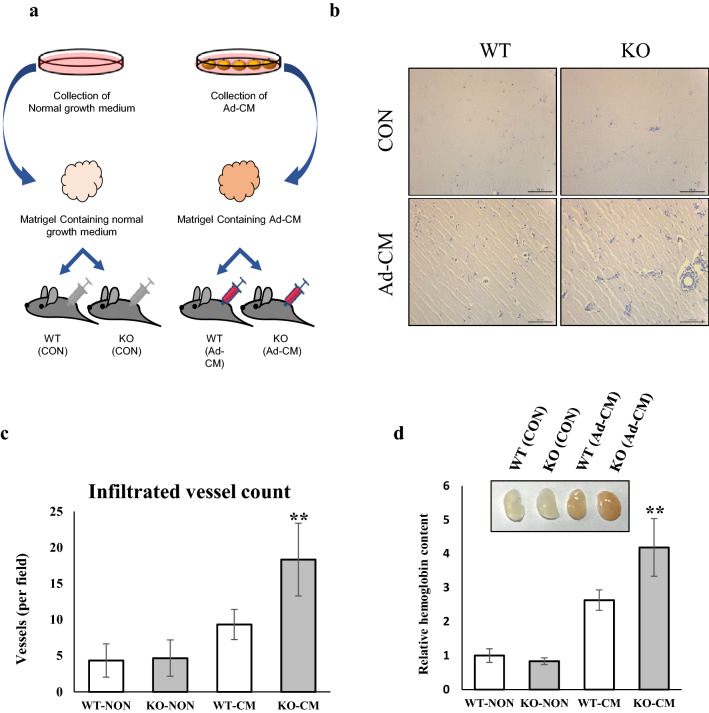
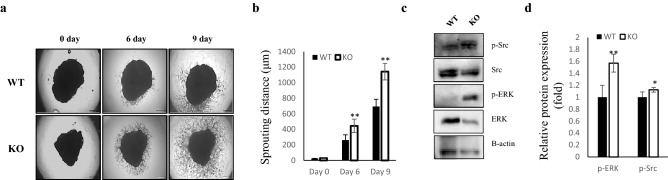
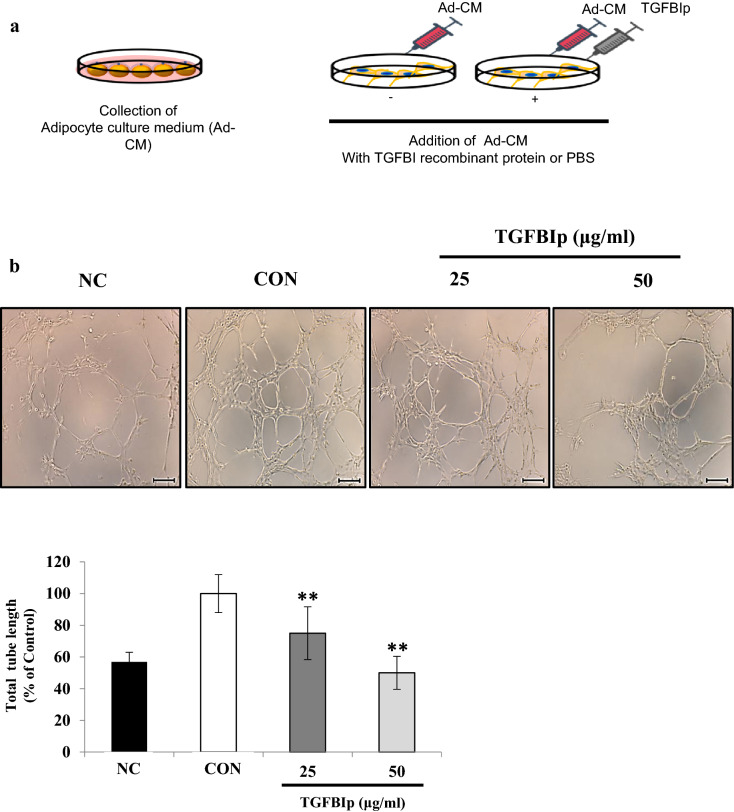
Several studies have suggested that extracellular matrix (ECM) remodeling and the microenvironment are tightly associated with adipogenesis and adipose angiogenesis. In the present study, we demonstrated that transforming growth factor-beta induced (TGFBI) suppresses angiogenesis stimulated by adipocyte-conditioned medium (Ad-CM), both in vitro and in vivo. TGFBI knockout (KO) mice exhibited increased numbers of blood vessels in adipose tissue, and blood vessels from these mice showed enhanced infiltration into Matrigel containing Ad-CM. The treatment of Ad-CM-stimulated SVEC-10 endothelial cells with TGFBI protein reduced migration and tube-forming activity. TGFBI protein suppressed the activation of the Src and extracellular signaling-related kinase signaling pathways of these SVEC-10 endothelial cells. Our findings indicated that TGFBI inhibited adipose angiogenesis by suppressing the activation of Src and ERK signaling pathways, possibly because of the stimulation of the angiogenic activity of endothelial cells.
多项研究表明细胞外基质(ECM)重塑和微环境与脂肪生成和脂肪血管生成密切相关。在本研究中,我们证明转化生长因子-β诱导(TGFBI)可抑制脂肪细胞条件培养基(Ad-CM)刺激的血管生成,无论是在体外还是体内。TGFBI 敲除(KO)小鼠的脂肪组织中血管数量增加,并且这些小鼠的血管显示出对含有 Ad-CM 的 Matrigel 的增强浸润。用 TGFBI 蛋白处理受 Ad-CM 刺激的 SVEC-10 内皮细胞可减少迁移和管状形成活性。TGFBI 蛋白抑制了这些 SVEC-10 内皮细胞中Src 和细胞外信号相关激酶信号通路的激活。我们的研究结果表明,TGFBI 通过抑制Src 和 ERK 信号通路的激活来抑制脂肪血管生成,这可能是因为刺激了内皮细胞的血管生成活性。