Department of Medical, Oral and Biotechnological Sciences, University "G. D'Annunzio", Via dei Vestini 31, 66100, Chieti, Italy.
Department of Molecular, Cellular and Developmental Neurobiology, Instituto Cajal-CSIC, Madrid, Spain.
Sci Rep. 2021 May 6;11(1):9711. doi: 10.1038/s41598-021-89139-x.
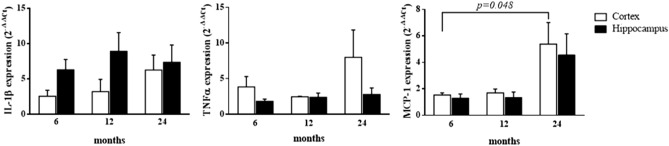
An evaluation of the APPswe/PS1dE9 transgenic AD mouse, presenting with the toxic Aβ1-42 deposition found in human AD, allowed us to characterize time-dependent changes in inflammatory and cholinergic markers present in AD. Astrogliosis was observed in cortex and hippocampus, with cellular loss occurring in the same areas in which Aβ plaques were present. In this setting, we found early significantly elevated levels of IL-1β and TNFα gene expression; with the hippocampus showing the highest IL-1β expression. To investigate the cholinergic anti-inflammatory pathway, the expression of nicotinic receptors (nAChRs) and cholinesterase enzymes also was evaluated. The anti-inflammatory nAChRα7, α4, and β2 were particularly increased at 6 months of age in the hippocampus, potentially as a strategy to counteract Aβ deposition and the ensuing inflammatory state. A time-dependent subunit switch to the α3β4 type occurred. Whether α3, β4 subunits have a pro-inflammatory or an inhibitory effect on ACh stimulation remains speculative. Aβ1-42 deposition, neuronal loss and increased astrocytes were detected, and a time-dependent change in components of the cholinergic anti-inflammatory pathway were observed. A greater understanding of time-dependent Aβ/nAChRs interactions may aid in defining new therapeutic strategies and novel molecular targets.
APPswe/PS1dE9 转基因 AD 小鼠模型可模拟人类 AD 中发现的具有毒性的 Aβ1-42 沉积,我们利用该模型来研究 AD 中炎症和胆碱能标志物的时变特征。在大脑皮质和海马区观察到星形胶质细胞增生,而在 Aβ 斑块存在的相同区域发生了细胞丢失。在这种情况下,我们发现早期 IL-1β 和 TNFα 基因表达水平显著升高;其中海马区的 IL-1β 表达最高。为了研究胆碱能抗炎通路,我们还评估了烟碱型乙酰胆碱受体(nAChRs)和胆碱酯酶的表达。在 6 个月大时,海马体中抗炎型 nAChRα7、α4 和β2 的表达特别增加,这可能是对抗 Aβ 沉积和随之而来的炎症状态的一种策略。出现了烟碱型乙酰胆碱受体亚基向α3β4 型的时变转换。α3、β4 亚基对 ACh 刺激是具有促炎作用还是抑制作用仍有待推测。我们检测到了 Aβ1-42 沉积、神经元丢失和星形胶质细胞增生,并观察到了胆碱能抗炎通路成分的时变变化。深入了解 Aβ/nAChRs 相互作用的时变特征可能有助于确定新的治疗策略和新的分子靶点。