Siegler Eugenia L, Moxley Jerad H, Glesby Marshall J
Division of Geriatrics and Palliative Care, Weill Cornell Medicine, New York, NY, 10065, USA.
Division of Infectious Diseases, Weill Cornell Medicine, New York, NY, 10065, USA.
HIV AIDS (Auckl). 2021 Apr 30;13:467-474. doi: 10.2147/HIV.S306532. eCollection 2021.
People with HIV (PWH) are living longer lives and likely experiencing accentuated aging. Comprehensive geriatric assessment (CGA) has been proposed as a way to identify and help meet each individual patient's needs.
We performed a retrospective review of the results of CGA in an HIV clinic in New York City. CGA included assessment of basic and instrumental activities of daily living, screens for depression, anxiety, frailty, cognition, and quality of life, along with general discussion of concerns and goals. We compared the group of PWH referred for CGA to those of comparable age who were not referred to determine the factors that were associated with referral. We carried out a descriptive analysis of those undergoing CGA, along with regression to determine factors associated with poorer PHQ-2 depression scores and higher VACS score.
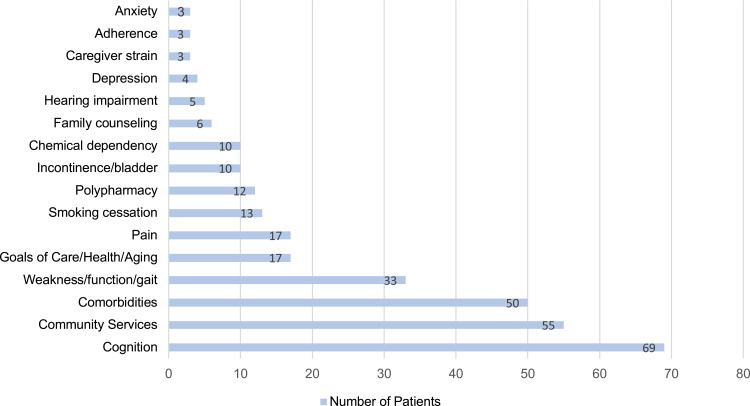
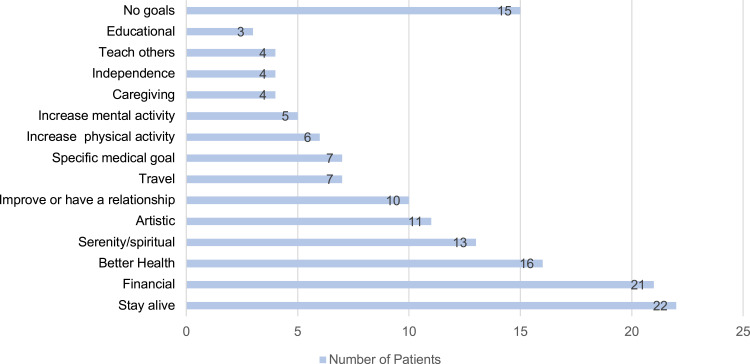
A total of 105 patients underwent full CGA during the study period. Mean age of referred patients was 66.5 years, ranging from 50 to 84 years (SD 7.99). More than 92% were virally suppressed. Compared with their non-referred counterparts over 50, referred patients were older and had more functional comorbidities like cerebrovascular disease, neuropathy, and urinary incontinence. More than half complained of fatigue, and 2/3 noted poor memory. Almost 60% were frail or prefrail. Ninety patients were asked about their goals, and the most commonly cited were related to health or finances; fifteen patients were unable to articulate any goals. Having fewer goals and noting weight loss or fatigue were predictive of higher scores on the PHQ-2 depression screen.
Although most older PWH undergoing CGA can manage their ADL, many have concerns and deficits beyond their comorbidities. CGA offers an important window into the psychosocial concerns and needs of older PWH.
感染艾滋病毒的人(PWH)寿命延长,可能正在经历加速衰老。综合老年评估(CGA)已被提议作为一种识别并满足每位患者个体需求的方法。
我们对纽约市一家艾滋病毒诊所的CGA结果进行了回顾性研究。CGA包括对日常生活基本活动和工具性活动的评估、抑郁、焦虑、虚弱、认知和生活质量筛查,以及对担忧和目标的一般性讨论。我们将接受CGA的PWH组与未接受CGA的年龄相仿者进行比较,以确定与转诊相关的因素。我们对接受CGA的患者进行了描述性分析,并进行回归分析以确定与较差的PHQ-2抑郁评分和较高的VACS评分相关的因素。
在研究期间,共有105名患者接受了全面的CGA。转诊患者的平均年龄为66.5岁,范围在50至84岁之间(标准差7.99)。超过92%的患者病毒得到抑制。与50岁以上未转诊的患者相比,转诊患者年龄更大,患有更多功能性合并症,如脑血管疾病、神经病变和尿失禁。超过一半的患者抱怨疲劳,三分之二的患者指出记忆力差。近60%的患者虚弱或处于虚弱前期。90名患者被问及他们的目标,最常提到的与健康或财务有关;15名患者无法明确表达任何目标。目标较少以及出现体重减轻或疲劳预示着在PHQ-2抑郁筛查中得分较高。
尽管大多数接受CGA的老年PWH能够自理日常生活活动,但许多人除了合并症外还有担忧和缺陷。CGA为了解老年PWH的心理社会担忧和需求提供了一个重要窗口。