Wang Shou-Mei, Yang Pei-Wei, Feng Xiao-Jun, Zhu Yi-Wei, Qiu Feng-Jun, Hu Xu-Dong, Zhang Shu-Hui
Department of Pathology, Yueyang Hospital of Integrated Traditional Chinese and Western Medicine, Shanghai University of Chinese Medicine, Shanghai, China.
Department of Biology, School of Basic Medical Sciences, Shanghai University of Traditional Chinese Medicine, Shanghai, China.
Front Oncol. 2021 Apr 6;11:657665. doi: 10.3389/fonc.2021.657665. eCollection 2021.
Apigenin, as a natural flavonoid, has low intrinsic toxicity and has potential pharmacological effects against hepatocellular carcinoma (HCC). However, the molecular mechanisms involving microRNAs (miRNAs) and their target genes regulated by apigenin in the treatment of HCC have not been addressed.
In this study, the molecular mechanisms of apigenin involved in the prevention and treatment of HCC were explored and using miRNA transcriptomic sequencing to determine the basis for the clinical applications of apigenin in the treatment of HCC.
The effects of apigenin on the proliferation, cell cycle progression, apoptosis, and invasion of human hepatoma cell line Huh7 and Hep3B were studied , and the effects on the tumorigenicity of Huh7 cells were assessed . Then, a differential expression analysis of miRNAs regulated by apigenin in Huh7 cells was performed using next-generation RNA sequencing and further validated by qRT-PCR. The potential genes targeted by the differentially expressed miRNAs were identified using a curated miRTarBase miRNA database and their molecular functions were predicted using Gene Ontology and KEGG signaling pathway analysis.
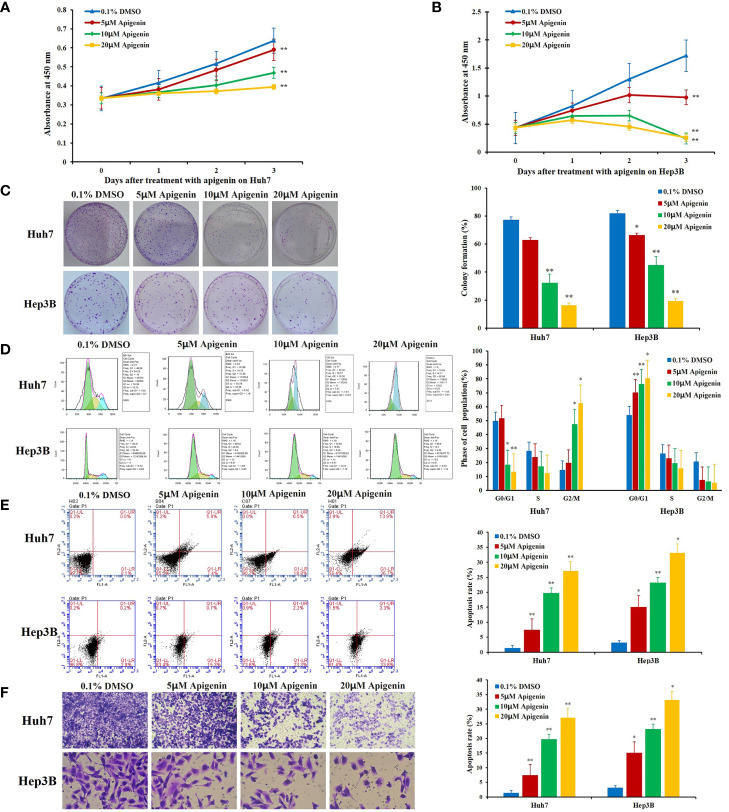
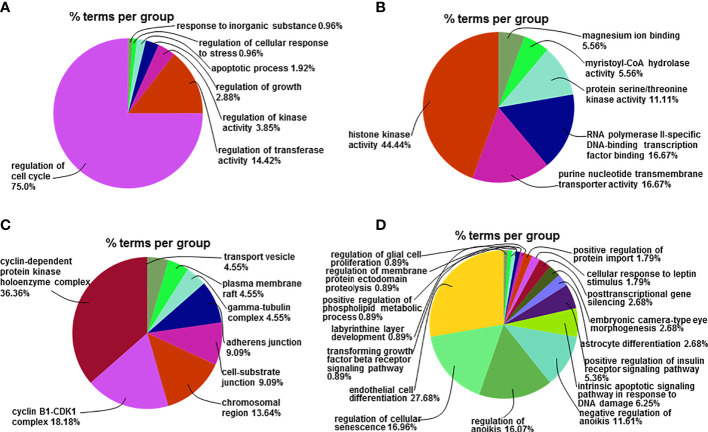
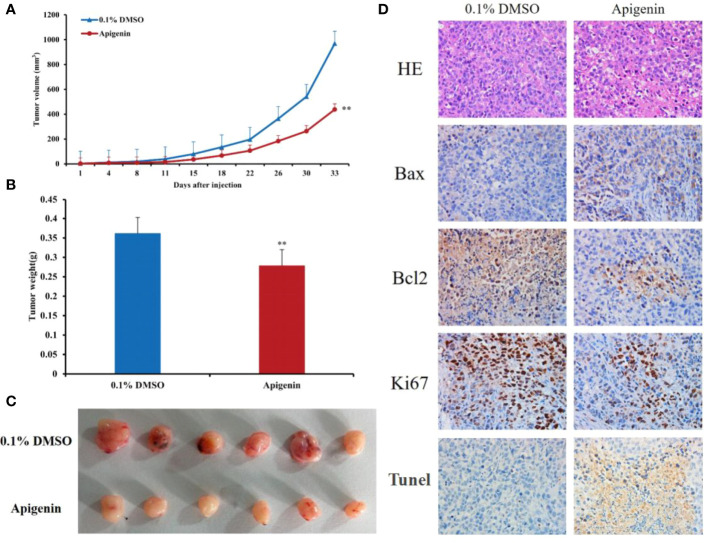
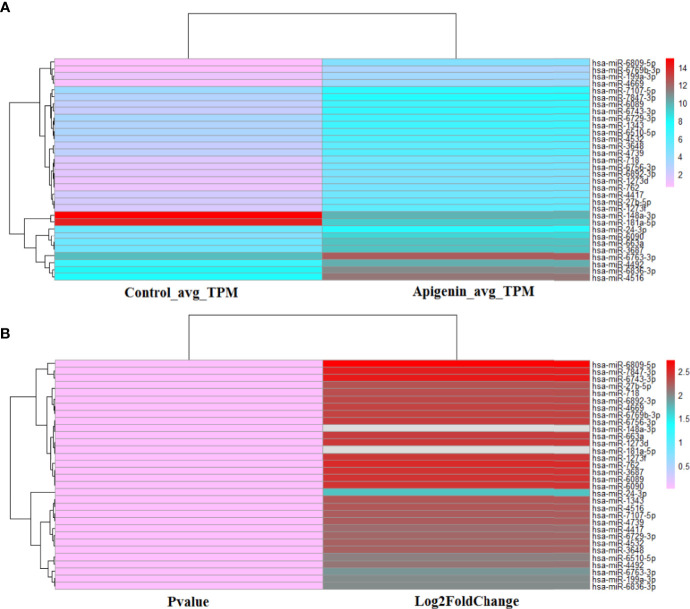
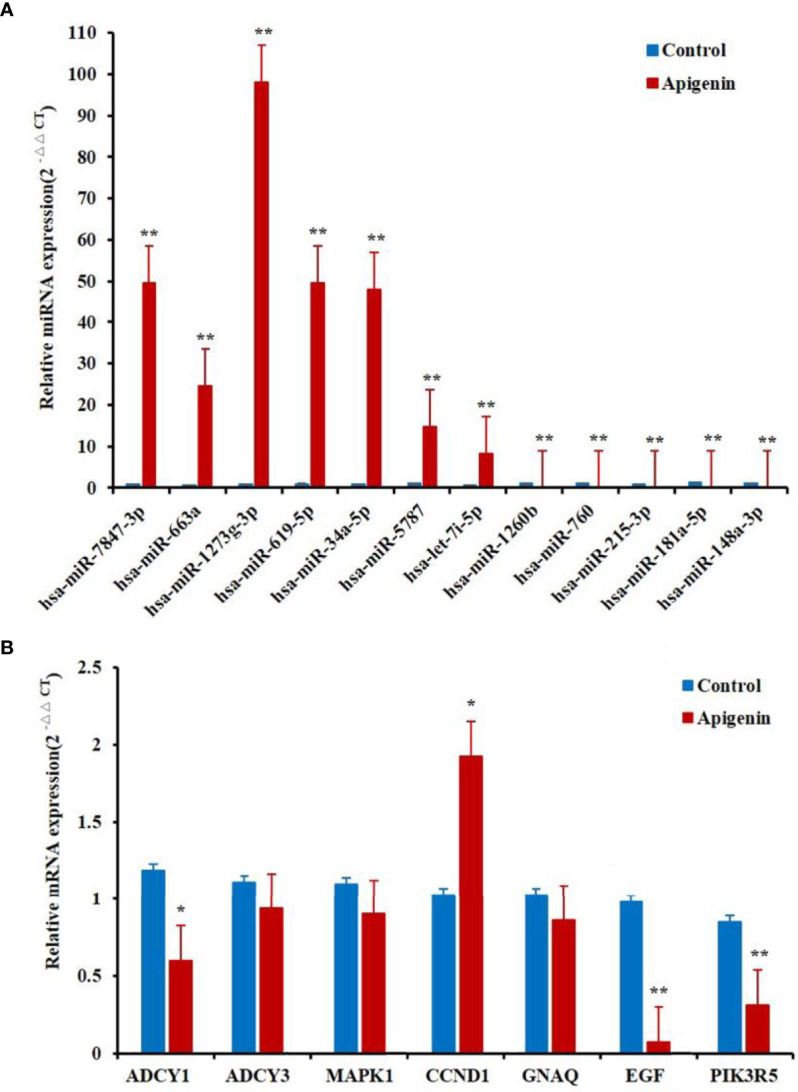
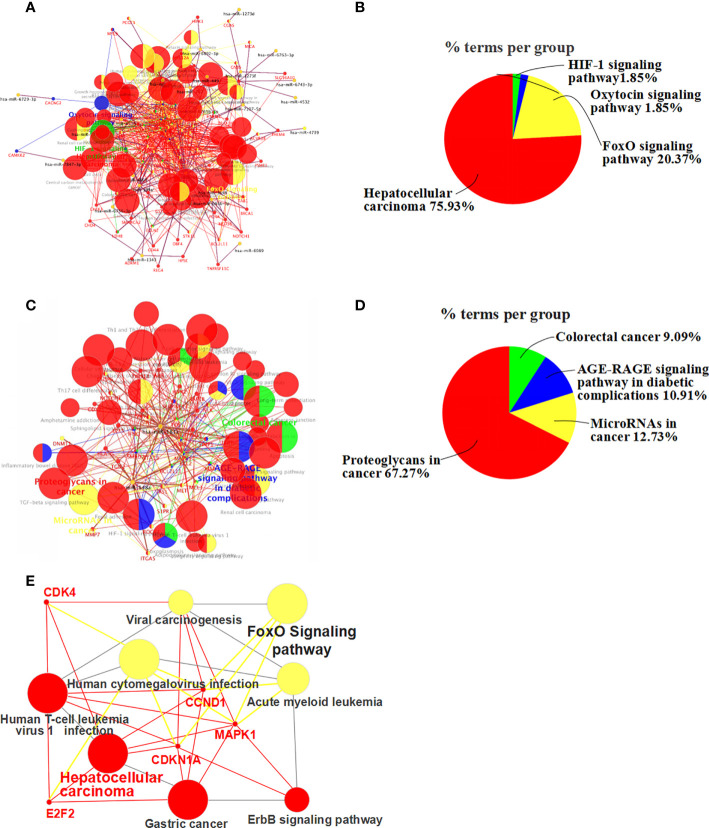
Compared with the control treatment group, apigenin significantly inhibited Huh7 cell proliferation, cell cycle, colony formation, and cell invasion in a concentration-dependent manner. Moreover, apigenin reduced tumor growth, promoted tumor cell necrosis, reduced the expression of Ki67, and increased the expression of Bax and Bcl-2 in the xenograft tumors of Huh7 cells. Bioinformatics analysis of the miRNA transcriptome showed that hsa-miR-24, hsa-miR-6769b-3p, hsa-miR-6836-3p, hsa-miR-199a-3p, hsa-miR-663a, hsa-miR-4739, hsa-miR-6892-3p, hsa-miR-7107-5p, hsa-miR-1273g-3p, hsa-miR-1343, and hsa-miR-6089 were the most significantly up-regulated miRNAs, and their key gene targets were MAPK1, PIK3CD, HRAS, CCND1, CDKN1A, E2F2, etc. The core regulatory pathways of the up-regulated miRNAs were associated with the hepatocellular carcinoma pathway. The down-regulated miRNAs were hsa-miR-181a-5p and hsa-miR-148a-3p, and the key target genes were MAPK1, HRAS, STAT3, FOS, BCL2, SMAD2, PPP3CA, IFNG, MET, and VAV2, with the core regulatory pathways identified as proteoglycans in cancer pathway.
Apigenin can inhibit the growth of HCC cells, which may be mediated by up-regulation or down-regulation of miRNA molecules and their related target genes.
芹菜素作为一种天然黄酮类化合物,具有低内在毒性,对肝细胞癌(HCC)具有潜在的药理作用。然而,芹菜素在治疗HCC中涉及的微小RNA(miRNA)及其靶基因的分子机制尚未得到阐明。
本研究探讨芹菜素参与预防和治疗HCC的分子机制,并利用miRNA转录组测序确定芹菜素在治疗HCC临床应用的依据。
研究芹菜素对人肝癌细胞系Huh7和Hep3B增殖、细胞周期进程、凋亡及侵袭的影响,并评估其对Huh7细胞致瘤性的影响。然后,利用下一代RNA测序对芹菜素在Huh7细胞中调控的miRNA进行差异表达分析,并通过qRT-PCR进一步验证。使用经过整理的miRTarBase miRNA数据库鉴定差异表达miRNA的潜在靶基因,并利用基因本体论和KEGG信号通路分析预测其分子功能。
与对照治疗组相比,芹菜素以浓度依赖性方式显著抑制Huh7细胞增殖、细胞周期、集落形成和细胞侵袭。此外,芹菜素可减少肿瘤生长,促进肿瘤细胞坏死,降低异种移植瘤中Ki67的表达,并增加Bax和Bcl-2的表达。miRNA转录组的生物信息学分析表明,hsa-miR-24、hsa-miR-6769b-3p、hsa-miR-6836-3p、hsa-miR-199a-3p、hsa-miR-663a、hsa-miR-4739,、hsa-miR-6892-3p、hsa-miR-7107-5p、hsa-miR-1273g-3p、hsa-miR-1343和hsa-miR-6089是上调最显著的miRNA,其关键基因靶点为MAPK1、PIK3CD、HRAS、CCND1、CDKN1A、E2F2等。上调miRNA的核心调控途径与肝细胞癌途径相关。下调的miRNA为hsa-miR-181a-5p和hsa-miR-148a-3p,关键靶基因是MAPK1、HRAS、STAT3、FOS、BCL2、SMAD2、PPP3CA、IFNG、MET和VAV2,核心调控途径被确定为癌症途径中的蛋白聚糖。
芹菜素可抑制HCC细胞生长,这可能是由miRNA分子及其相关靶基因的上调或下调介导的。