Suzuki Chie, Kosugi Mutsumi, Magata Yasuhiro
Preeminent Medical Photonics Education and Research Center, Hamamatsu University School of Medicine, 1-20-1 Handayama, Higashi-ku, Hamamatsu, Shizuoka, 431-3192, Japan.
EJNMMI Res. 2021 May 8;11(1):46. doi: 10.1186/s13550-021-00787-6.
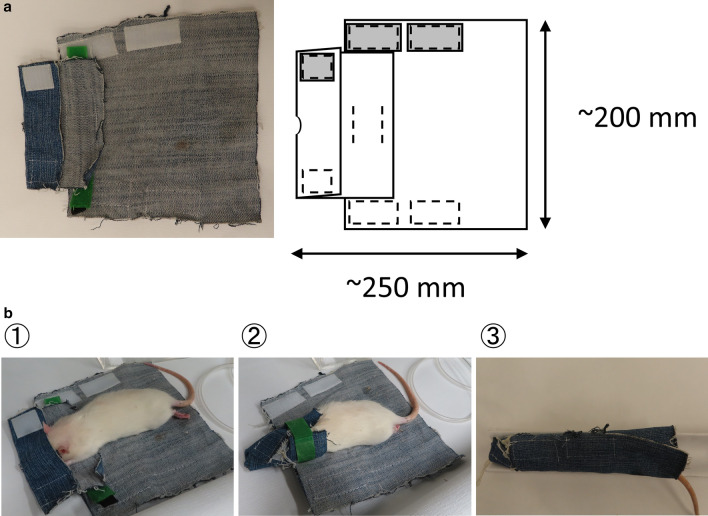
Animal brain functions evaluated by in vivo imaging under anesthesia can be affected by anesthetic agents, resulting in incorrect assessment of physiological brain function. We therefore performed dynamic positron emission tomography (PET) imaging of conscious rats using recently reported soft immobilization to validate the efficacy of the immobilization for brain function assessments. We also determined the effects of six anesthetic agents-a mixed anesthetic agent (MMB), ketamine + xylazine (KX), chloral hydrate (Chloral), pentobarbital (PTB), propofol (PF), and isoflurane (IFL)-on brain function by comparison with conscious rats.
The immobilization enabled 45-min dynamic [F]FDG-PET acquisition with arterial blood sampling using conscious rats without the use of special techniques or invasive surgery. The spatial resolution and quantitativity of [F]FDG-PET were not significantly lower for conscious rats than for anesthetized rats. While MMB, Chloral, PTB, and PF showed ubiquitous reduction in the cerebral metabolic rates of glucose (CMR) in brain regions, KX and IFL showed higher reductions in cerebellum and interbrain, and cerebellum, respectively. Cerebral blood flow (CBF) was reduced by MMB, KX, PTB, and PF; increased by IFL; and unaltered by Chloral. The magnitude of decrease in CMR and CBF for MMB were not larger than for other five anesthetic agents, although blood glucose levels and body temperature can be easily affected by MMB.
The six anesthetic agents induced various effects on CMR and CBF. The immobilization technique presented here is a promising tool for noninvasive brain functional imaging using conscious rats to avoid the effects of anesthetic agents.
在麻醉状态下通过活体成像评估的动物脑功能可能会受到麻醉剂的影响,从而导致对生理脑功能的评估不准确。因此,我们使用最近报道的软固定方法对清醒大鼠进行了动态正电子发射断层扫描(PET)成像,以验证该固定方法在脑功能评估中的有效性。我们还通过与清醒大鼠比较,确定了六种麻醉剂——一种混合麻醉剂(MMB)、氯胺酮+赛拉嗪(KX)、水合氯醛(Chloral)、戊巴比妥(PTB)、丙泊酚(PF)和异氟烷(IFL)——对脑功能的影响。
该固定方法能够在不使用特殊技术或侵入性手术的情况下,对清醒大鼠进行45分钟的动态[F]FDG-PET采集并采集动脉血样。清醒大鼠的[F]FDG-PET空间分辨率和定量分析与麻醉大鼠相比无显著降低。虽然MMB、Chloral、PTB和PF在脑区均表现出葡萄糖脑代谢率(CMR)普遍降低,但KX和IFL分别在小脑和间脑以及小脑中表现出更高的降低。脑血流量(CBF)在MMB、KX、PTB和PF作用下降低;在IFL作用下增加;在Chloral作用下无变化。尽管血糖水平和体温容易受到MMB的影响,但MMB导致的CMR和CBF降低幅度并不大于其他五种麻醉剂。
六种麻醉剂对CMR和CBF产生了不同的影响。本文介绍的固定技术是一种有前景的工具,可用于对清醒大鼠进行无创脑功能成像,以避免麻醉剂的影响。