Department of Neurosurgery, The First Affiliated Hospital, Zhejiang University School of Medicine, #79 Qingchun Road, 310003, Hangzhou, Zhejiang Province, P.R. China.
J Exp Clin Cancer Res. 2021 May 8;40(1):160. doi: 10.1186/s13046-021-01954-2.
The immunosuppressive tumour microenvironment is a critical factor in the initiation and progression of glioblastoma (GBM), which is characterized by an abundance of tumour-associated macrophages (TAMs) but a paucity of infiltrating T cells. In this research, we studied whether epithelial membrane protein 3 (EMP3) plays a crucial role in immune modulation in GBM.
TCGA and CGGA transcriptomic profiles of wild-type IDH1 GBM were used for bioinformatic analysis. The role of EMP3 in GBM was validated through in vivo and in vitro experiments. Human GBM specimens were collected and evaluated using immunofluorescence analysis.
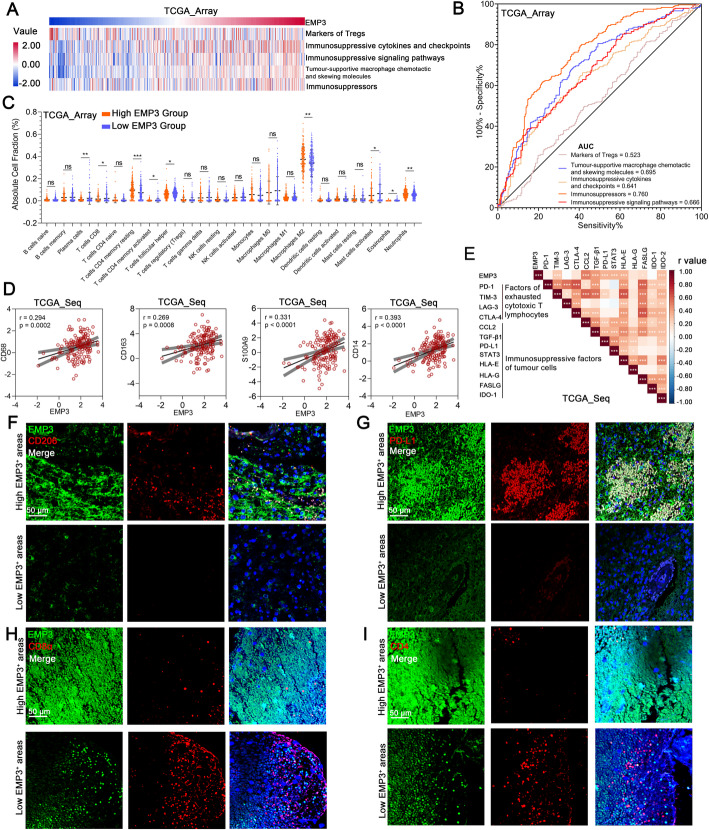
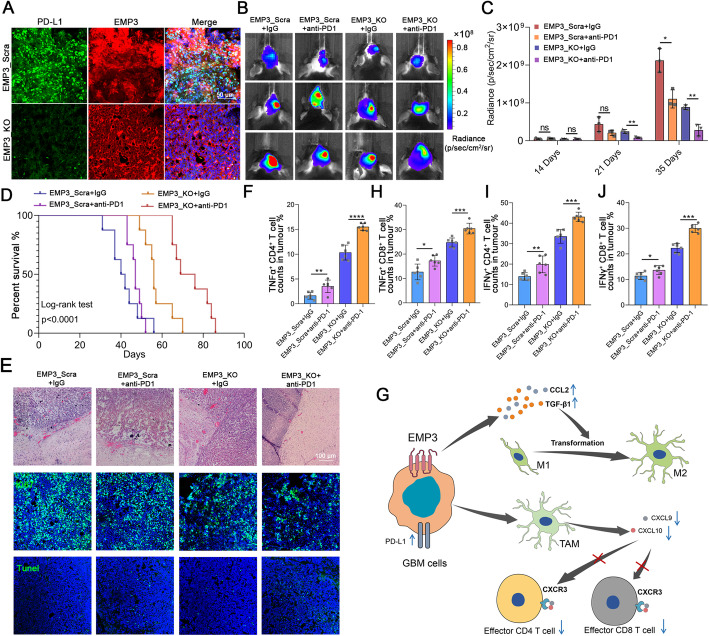
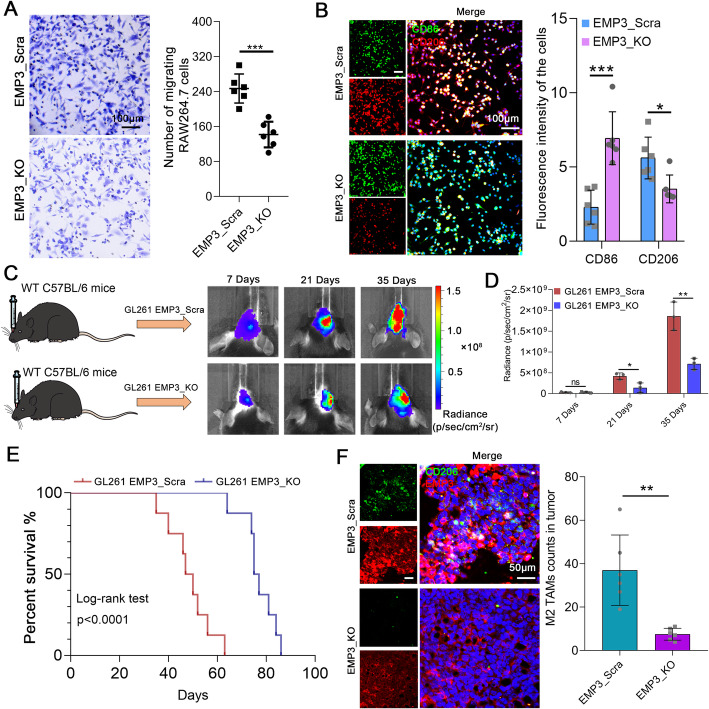
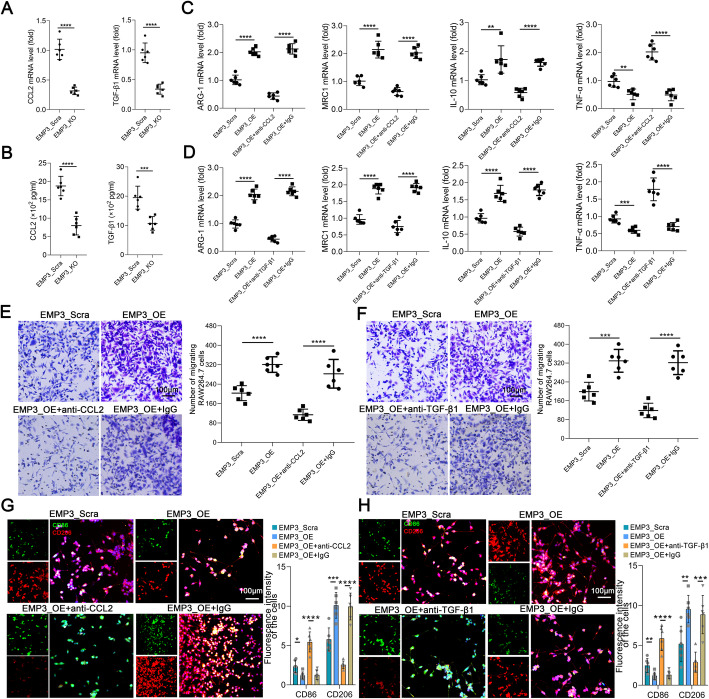
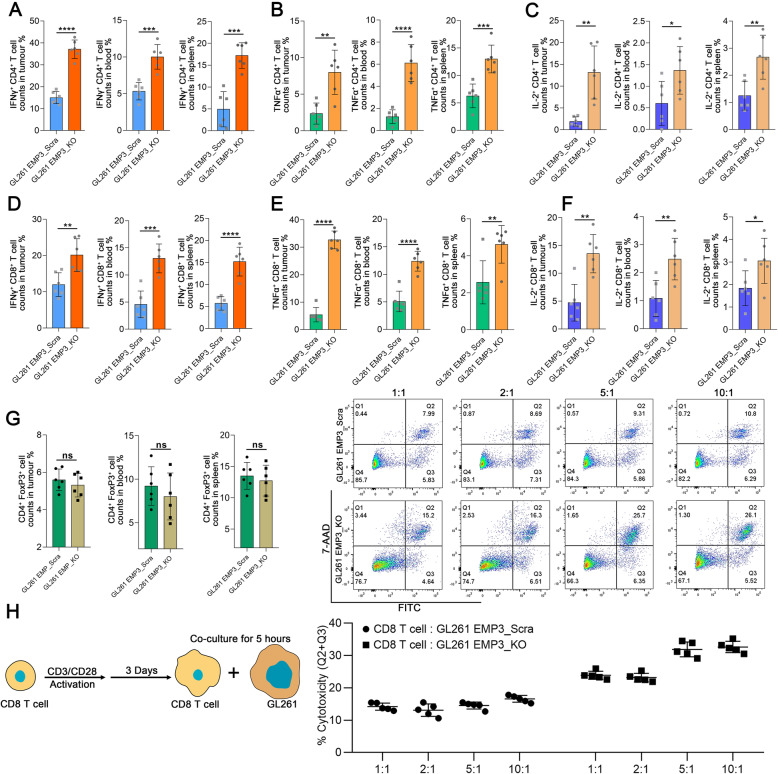
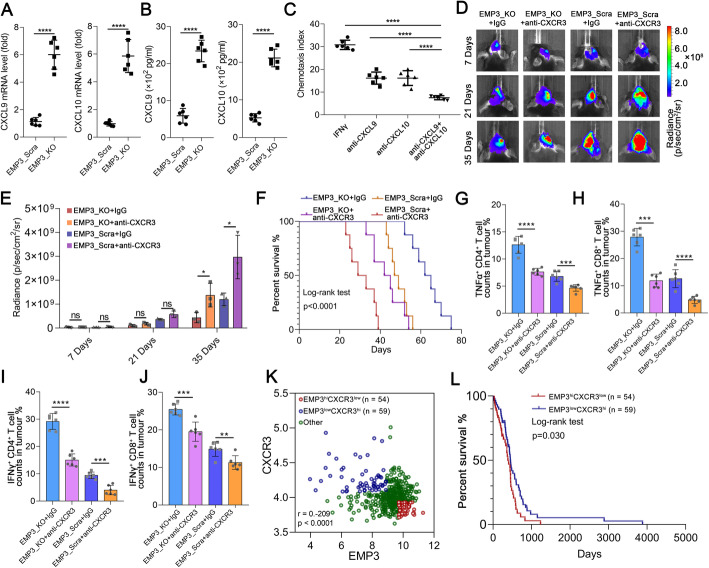
EMP3 was associated with immunosuppression in GBM. Elevated EMP3 in GBM areas was accompanied by high expression of PD-L1 and abundant M2 TAM recruitment but a lake of T cell infiltration. We found that EMP3 was a potent protein in M2 TAM polarization and recruitment that impaired the ability of GBM cells to secrete CCL2 and TGF-β1. Furthermore, EMP3 suppressed T cell infiltration into GBM tumours by inhibiting the secretion of CXCL9 and CXCL10 by macrophages and led to an effective response to anti-PD1 therapy.
EMP3 is thus a critical immunosuppressive factor for recruiting TAMs in GBM and suppressing intratumoural T cell infiltration to facilitate tumour progression and is a potential therapeutic target.
免疫抑制性肿瘤微环境是胶质母细胞瘤(GBM)发生和进展的关键因素,其特征是富含肿瘤相关巨噬细胞(TAMs),但浸润性 T 细胞很少。在这项研究中,我们研究了上皮膜蛋白 3(EMP3)是否在 GBM 的免疫调节中发挥关键作用。
使用 TCGA 和 CGGA 野生型 IDH1 GBM 的转录组谱进行生物信息学分析。通过体内和体外实验验证 EMP3 在 GBM 中的作用。使用免疫荧光分析收集和评估人 GBM 标本。
EMP3 与 GBM 中的免疫抑制有关。GBM 区域中 EMP3 的升高伴随着 PD-L1 的高表达和大量 M2 TAM 募集,但 T 细胞浸润不足。我们发现 EMP3 是 M2 TAM 极化和募集的有效蛋白,削弱了 GBM 细胞分泌 CCL2 和 TGF-β1 的能力。此外,EMP3 通过抑制巨噬细胞分泌 CXCL9 和 CXCL10 来抑制 T 细胞浸润 GBM 肿瘤,从而导致对抗 PD1 治疗的有效反应。
因此,EMP3 是 GBM 中招募 TAMs 和抑制肿瘤内 T 细胞浸润以促进肿瘤进展的关键免疫抑制因子,是一个潜在的治疗靶点。