Ruschil Christoph, Dubois Evelyn, Stefanou Maria-Ioanna, Kowarik Markus Christian, Ziemann Ulf, Schittenhelm Marcus, Krumbholz Markus, Bischof Felix
Department of Neurology & Stroke, Eberhard-Karls University, Tübingen, Germany.
Hertie Institute for Clinical Brain Research, Eberhard-Karls University, Tübingen, Germany.
Neurol Res Pract. 2021 May 10;3(1):25. doi: 10.1186/s42466-021-00121-4.
All-trans retinoic acid (ATRA) is an acid derivative of vitamin A which is discussed as a promising candidate to ameliorate the disease course of multiple sclerosis (MS) by immunomodulation or even by promoting regeneration in progressive MS. Here we report a patient who significantly improved for MS related disability following administration of chemotherapy including ATRA for mitoxantrone-related acute promyelocytic leukemia and assess the effect of high-dose ATRA in three additional patients with progressive MS.
Patients with progressive MS who had failed previous therapies were treated with high-dose ATRA. Patients underwent clinical and routine laboratory monitoring. Additionally, PBMCs were analyzed by flow cytometry for lymphocyte subsets.
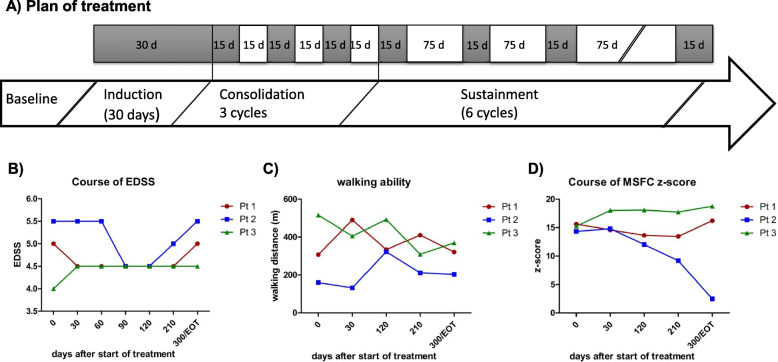
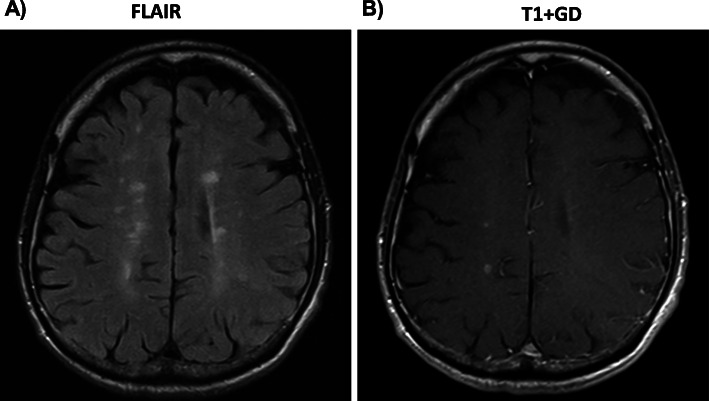
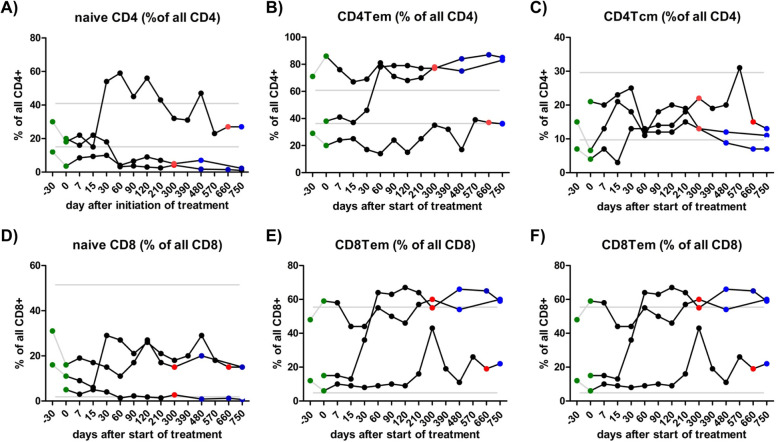
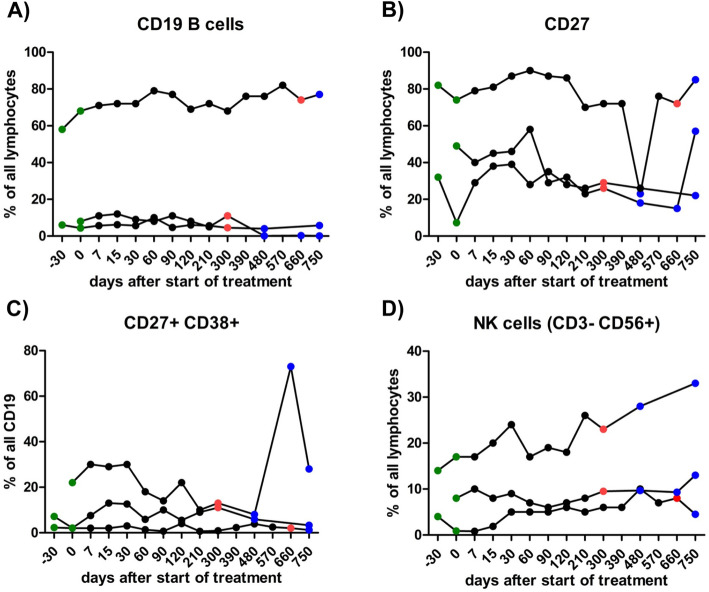
ATRA was well tolerated and no pathological laboratory abnormalities were observed. After initial mild (not statistically significant) improvement of EDSS and mean MSFC z-score, ongoing disease progression was observed. One patient subacutely experienced severe cognitive and motor worsening. Cerebral MRI revealed persistent gadolinium-enhancing lesions. Flow cytometric alterations of peripheral blood naïve, central memory and effector memory CD4 and CD8 T cells, B lymphocytes, plasma cells, memory B cells, plasmablasts and natural killer (NK) cells did not reach statistical significance.
Stand-alone therapy with ATRA did not ameliorate progressive MS in our limited cohort and we did not observe consistent alterations of T and B cell subsets. Intriguingly, application of ATRA may have caused marked disease exacerbation in one patient.
全反式维甲酸(ATRA)是维生素A的一种酸性衍生物,被认为是一种有前景的候选药物,可通过免疫调节甚至促进进展型多发性硬化症(MS)的再生来改善其病程。在此,我们报告一名患者,在接受包括ATRA在内的化疗治疗米托蒽醌相关的急性早幼粒细胞白血病后,其MS相关残疾显著改善,并评估了另外三名进展型MS患者接受高剂量ATRA的效果。
对先前治疗失败的进展型MS患者给予高剂量ATRA治疗。患者接受临床和常规实验室监测。此外,通过流式细胞术分析外周血单个核细胞(PBMC)的淋巴细胞亚群。
ATRA耐受性良好,未观察到病理性实验室异常。在EDSS和平均MSFC z评分最初出现轻度(无统计学意义)改善后,观察到疾病持续进展。一名患者亚急性经历了严重的认知和运动功能恶化。脑部MRI显示钆增强病变持续存在。外周血初始、中枢记忆和效应记忆CD4和CD8 T细胞、B淋巴细胞、浆细胞、记忆B细胞、浆母细胞和自然杀伤(NK)细胞的流式细胞术改变未达到统计学意义。
在我们有限的队列中,单独使用ATRA治疗并未改善进展型MS,且我们未观察到T和B细胞亚群的一致改变。有趣的是,ATRA的应用可能在一名患者中导致了明显的疾病加重。