Liu Sitong, Shi Jiafu, Wang Jiao, Dai Yexin, Li Hongyu, Li Jiayao, Liu Xianhua, Chen Xiaochen, Wang Zhiyun, Zhang Pingping
School of Environmental Science and Engineering, Tianjin University, Tianjin, China.
Fujian Provincial Engineering Research Center of Rural Waste Recycling Technology, College of Environment and Resources, Fuzhou University, Fuzhou, China.
Front Microbiol. 2021 Apr 22;12:652520. doi: 10.3389/fmicb.2021.652520. eCollection 2021.
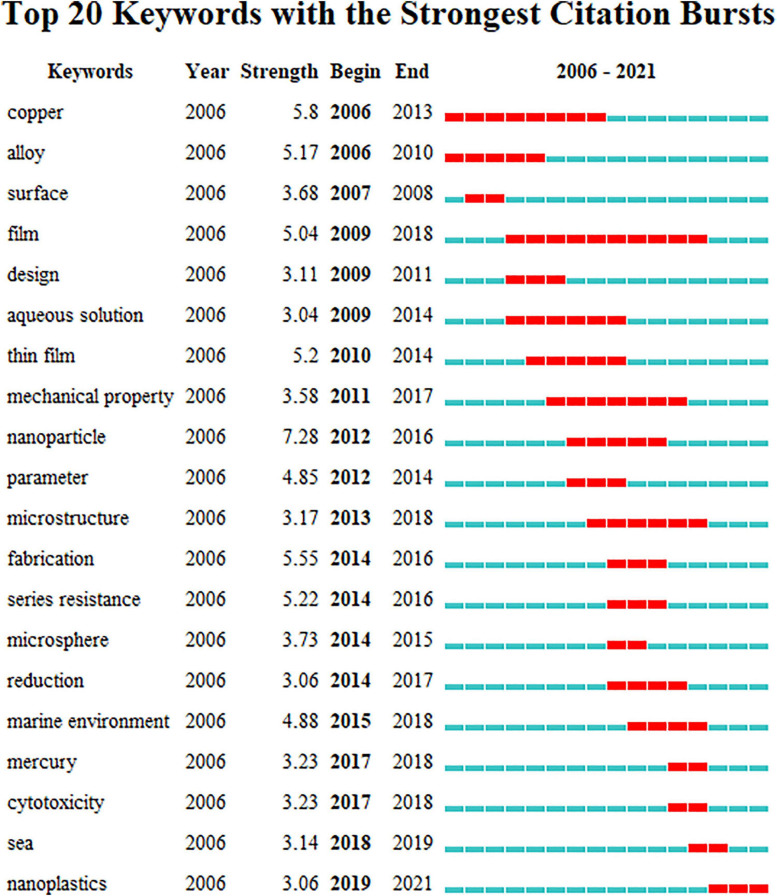
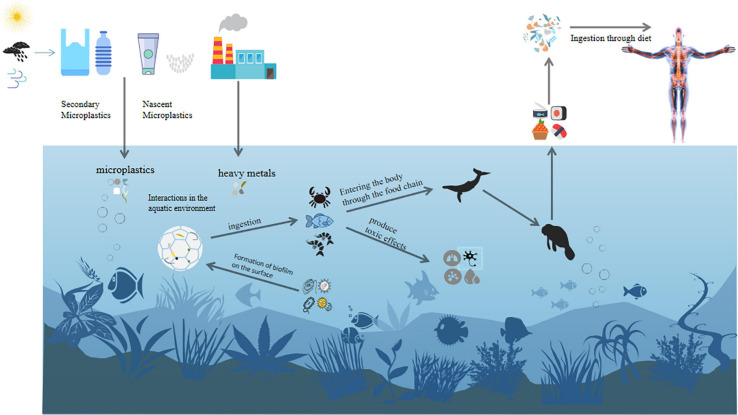
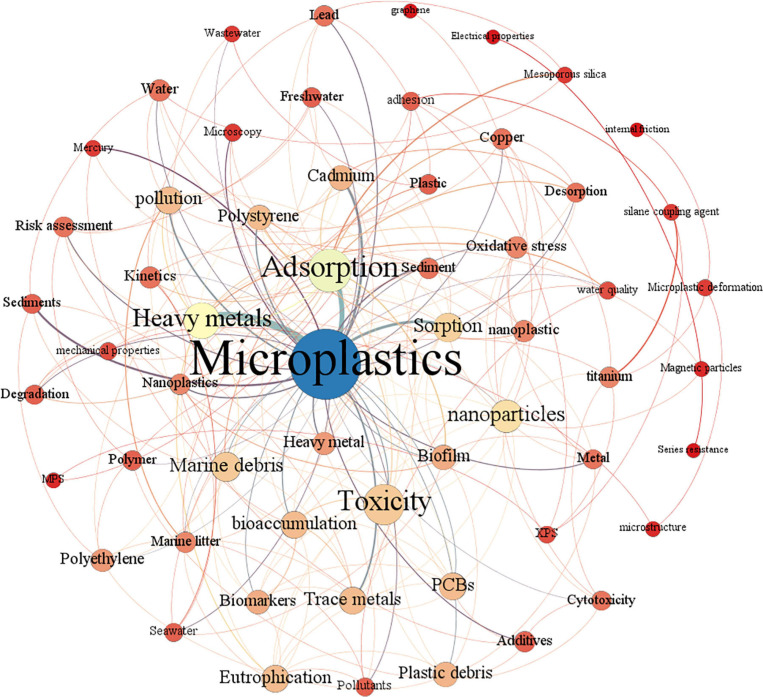
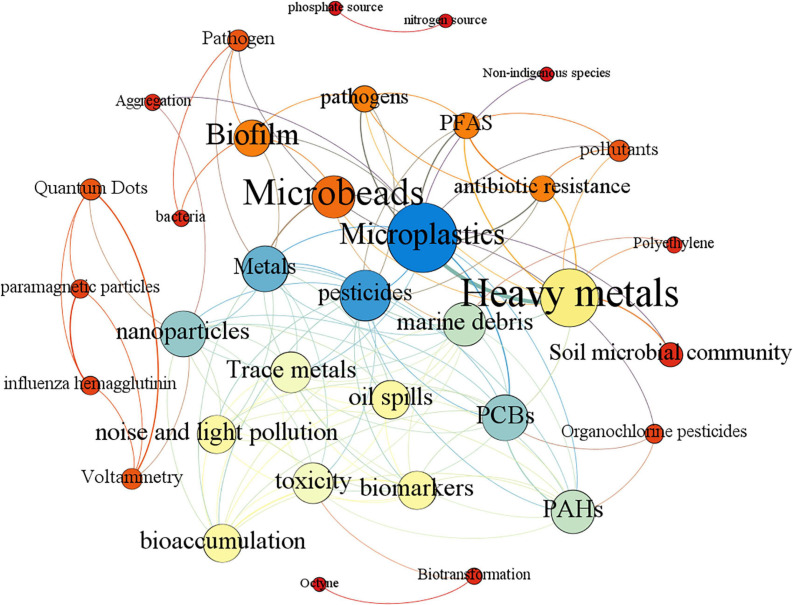
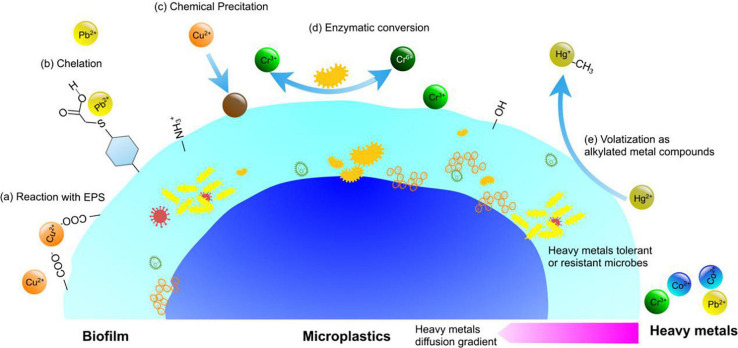
Microplastics (MPs), tiny particles broken down from larger pieces of plastics, have accumulated everywhere on the earth. As an inert carbon stream in aquatic environment, they have been reported as carriers for heavy metals and exhibit diverse interactive effects. However, these interactions are still poorly understood, especially mechanisms driving these interactions and how they pose risks on living organisms. In this mini review, a bibliometric analysis in this field was conducted and then the mechanisms driving these interactions were examined, especially emphasizing the important roles of microorganisms on the interactions. Their combined toxic effects and the potential hazards to human health were also discussed. Finally, the future research directions in this field were suggested. This review summarized the recent research progress in this field and highlighted the essential roles of the microbes on the interactions between MPs and heavy metals with the hope to promote more studies to unveil action mechanisms and reduce/eliminate the risks associated with MP presence.
微塑料(MPs)是从较大塑料碎片分解而来的微小颗粒,已在地球上各处累积。作为水生环境中的一种惰性碳流,它们已被报道为重金属的载体,并表现出多种相互作用效应。然而,这些相互作用仍知之甚少,尤其是驱动这些相互作用的机制以及它们如何对生物体构成风险。在这篇小型综述中,对该领域进行了文献计量分析,然后研究了驱动这些相互作用的机制,特别强调了微生物在这些相互作用中的重要作用。还讨论了它们的联合毒性效应以及对人类健康的潜在危害。最后,提出了该领域未来的研究方向。本综述总结了该领域的最新研究进展,并强调了微生物在微塑料与重金属相互作用中的重要作用,希望能促进更多研究以揭示作用机制并降低/消除与微塑料存在相关的风险。