Wang Song, Jiang Ning, Shi Wenhao, Yin Hang, Chi Xiaojuan, Xie Yanhui, Hu Jingyun, Zhang Yanwei, Li Huangping, Chen Ji-Long
Key Laboratory of Fujian-Taiwan Animal Pathogen Biology, College of Animal Sciences, Fujian Agriculture and Forestry University, Fuzhou, China.
Front Microbiol. 2021 Apr 21;12:670688. doi: 10.3389/fmicb.2021.670688. eCollection 2021.
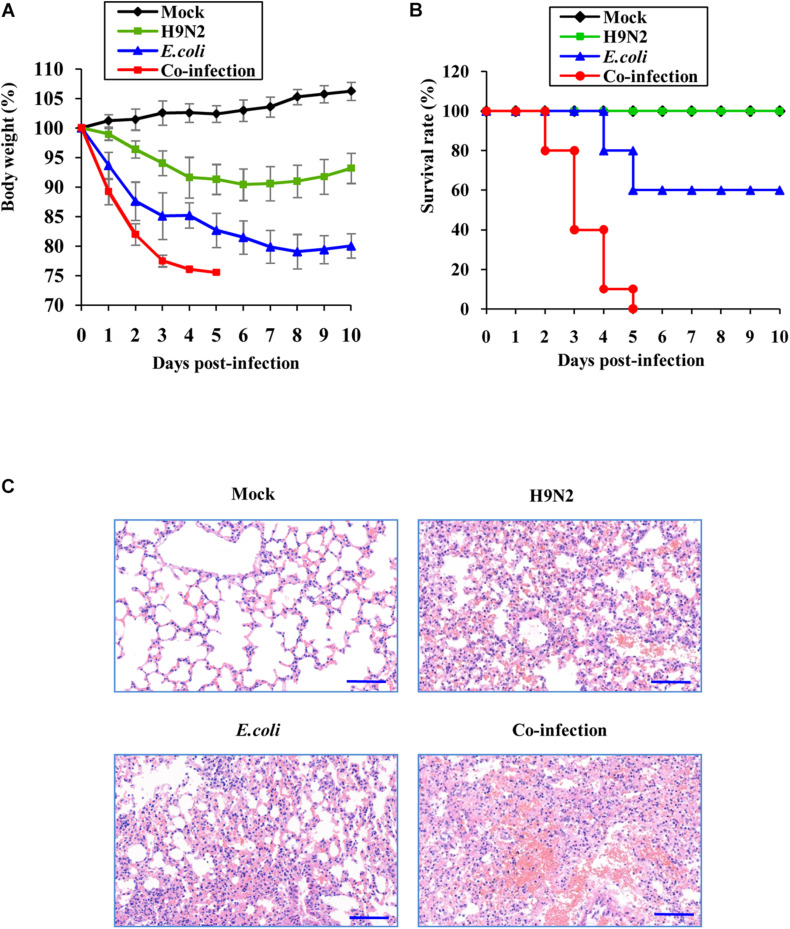
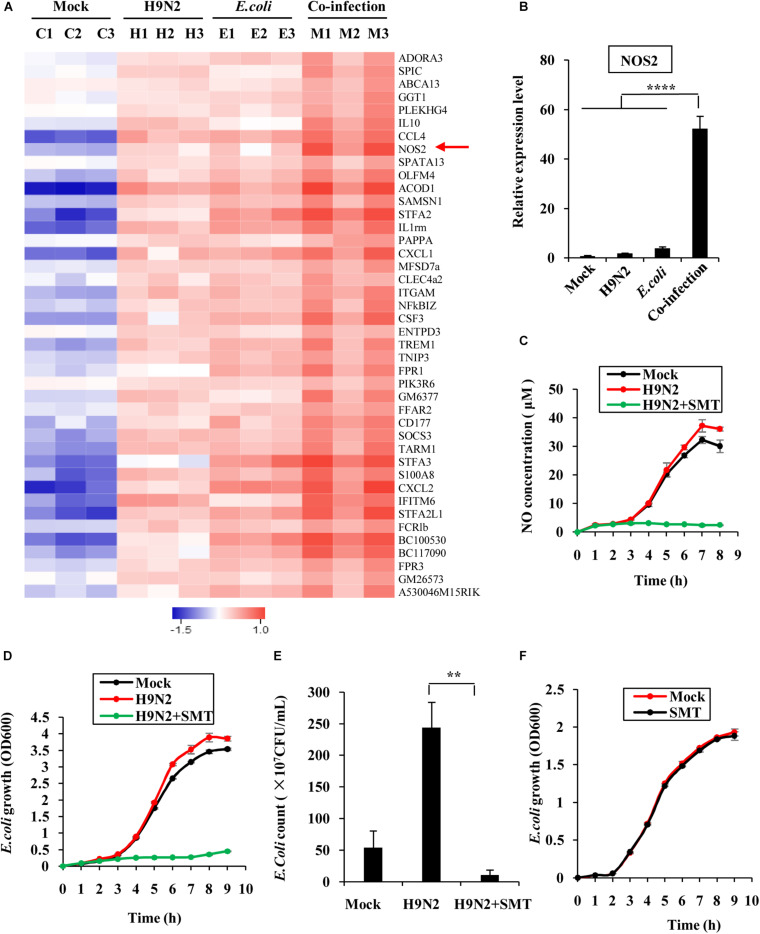
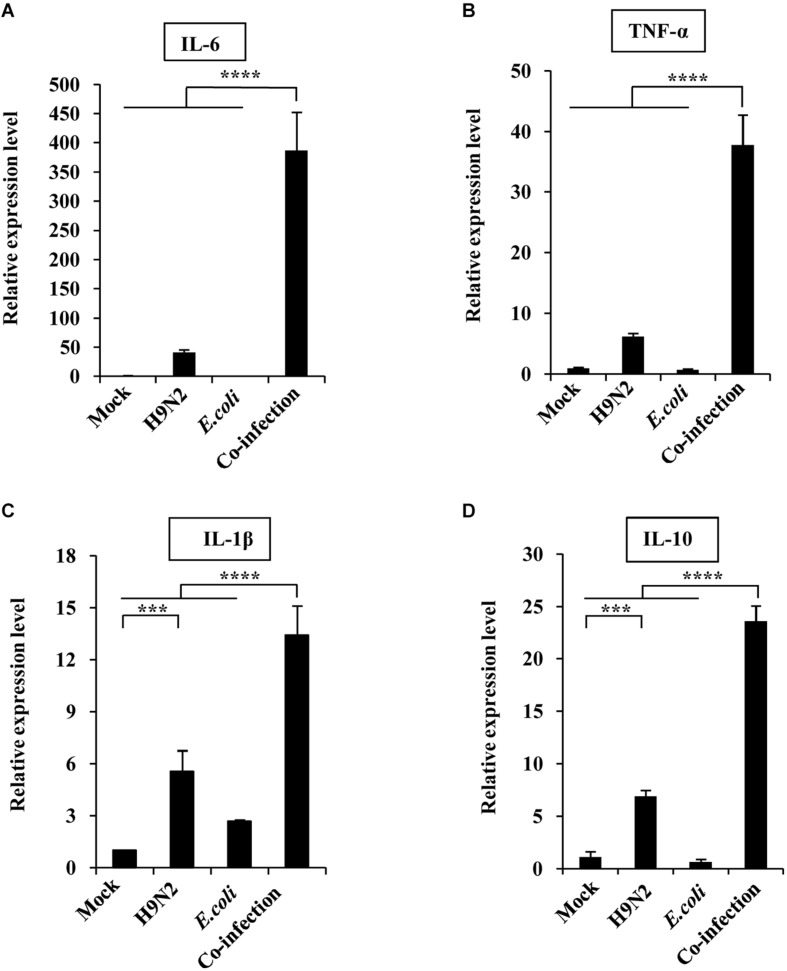
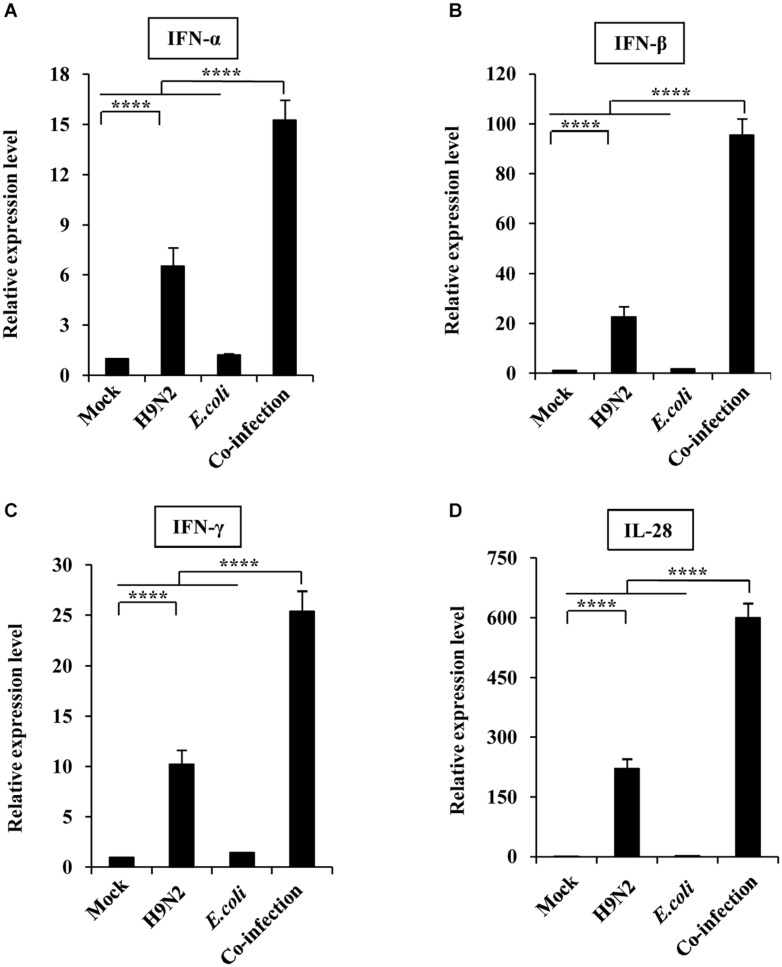
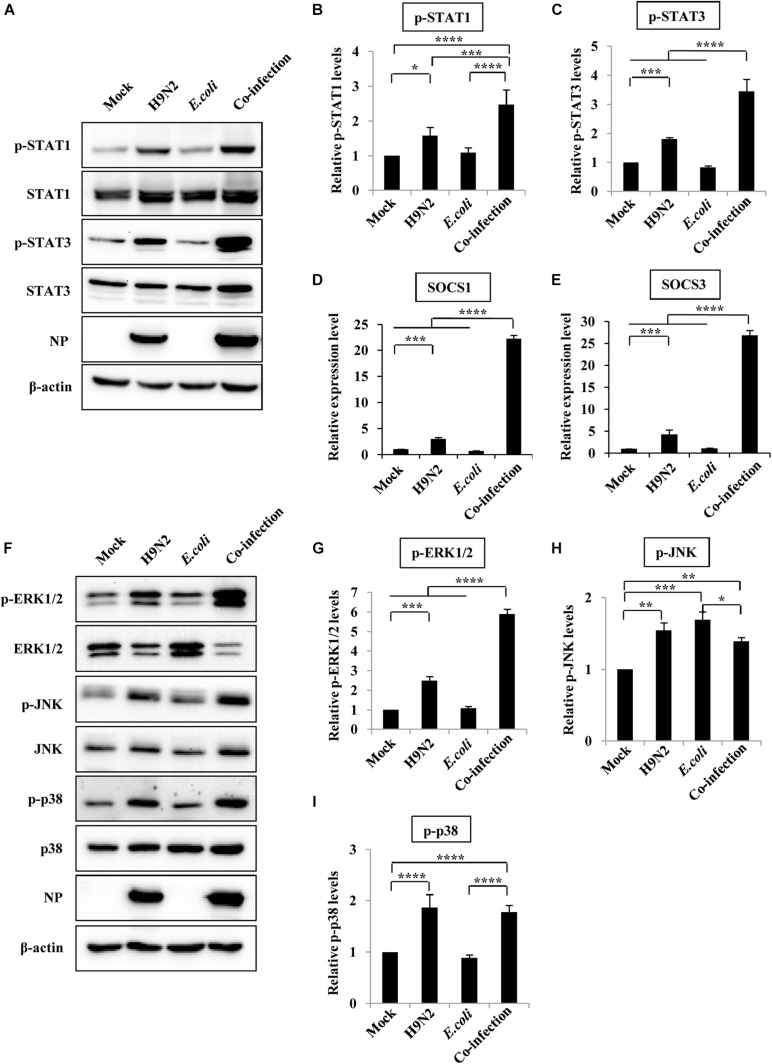
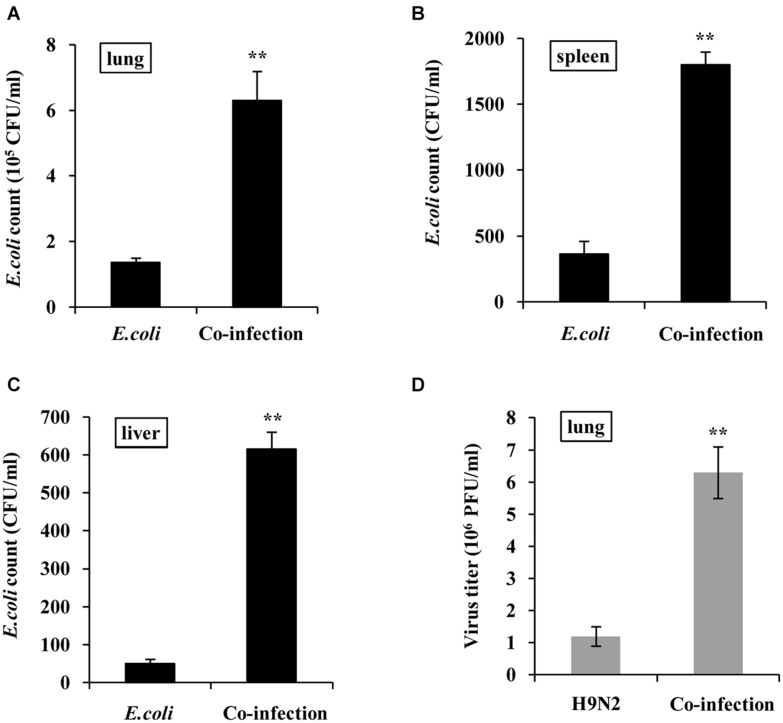
Pathogens that cause respiratory diseases in poultry are highly diversified, and co-infections with multiple pathogens are prevalent. The H9N2 strain of avian influenza virus (AIV) and () are common poultry pathogens that limit the development of the poultry industry. This study aimed to clarify the interaction between these two pathogens and their pathogenic mechanism using a mouse model. Co-infection with H9N2 AIV and significantly increased the mortality rate of mice compared to single viral or bacterial infections. It also led to the development of more severe lung lesions compared to single viral or bacterial infections. Co-infection further causes a storm of cytokines, which aggravates the host's disease by dysregulating the JAK/STAT/SOCS and ERK1/2 pathways. Moreover, co-infection mutually benefited the virus and the bacteria by increasing their pathogen loads. Importantly, nitric oxide synthase 2 (NOS2) expression was also significantly enhanced by the co-infection. It played a key role in the rapid proliferation of in the presence of the co-infecting H9N2 virus. Therefore, our study underscores the role of NOS2 as a determinant for bacteria growth and illustrates its importance as an additional mechanism that enhances influenza virus-bacteria synergy. It further provides a scientific basis for investigating the synergistic infection mechanism between viruses and bacteria.
引起家禽呼吸道疾病的病原体高度多样化,多种病原体的共感染很普遍。H9N2亚型禽流感病毒(AIV)和(此处原文缺失内容)是限制家禽业发展的常见家禽病原体。本研究旨在使用小鼠模型阐明这两种病原体之间的相互作用及其致病机制。与单一病毒或细菌感染相比,H9N2 AIV和(此处原文缺失内容)的共感染显著提高了小鼠的死亡率。与单一病毒或细菌感染相比,它还导致更严重的肺部病变。共感染进一步引发细胞因子风暴,通过失调JAK/STAT/SOCS和ERK1/2途径加重宿主疾病。此外,共感染通过增加病毒和细菌的病原体载量使它们相互受益。重要的是,共感染也显著增强了一氧化氮合酶2(NOS2)的表达。在共感染的H9N2病毒存在的情况下,它在(此处原文缺失内容)的快速增殖中起关键作用。因此,我们的研究强调了NOS2作为细菌生长决定因素的作用,并阐明了其作为增强流感病毒-细菌协同作用的额外机制的重要性。它进一步为研究病毒与细菌之间的协同感染机制提供了科学依据。