Department of Pediatrics, Pediatric Rheumatology, Medical Faculty, RWTH Aachen University, Aachen, Germany.
Front Immunol. 2021 Apr 23;12:633845. doi: 10.3389/fimmu.2021.633845. eCollection 2021.
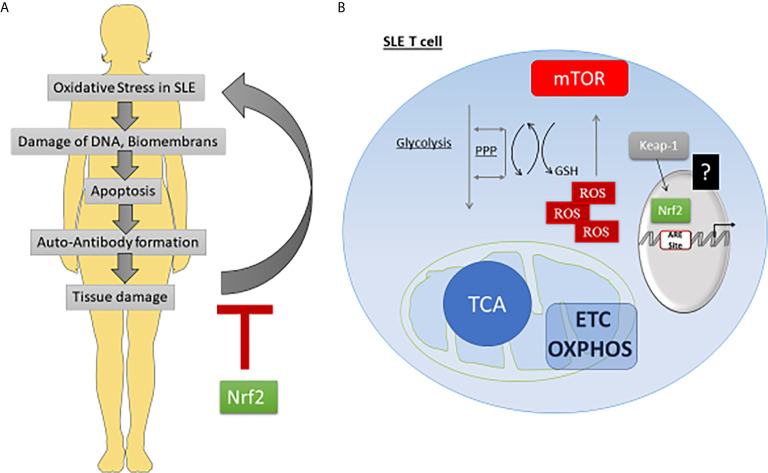
Oxidative stress is a major component of cellular damage in T cells from patients with systemic lupus erythematosus (SLE) resulting amongst others in the generation of pathogenic Th17 cells. The NRF2/Keap1 pathway is the most important antioxidant system protecting cells from damage due to oxidative stress. Activation of NRF2 therefore seems to represent a putative therapeutic target in SLE, which is nevertheless challenged by several findings suggesting tissue and cell specific differences in the effect of NRF2 expression. This review focusses on the current understanding of oxidative stress in SLE T cells and its pathophysiologic and therapeutic implications.
氧化应激是系统性红斑狼疮 (SLE) 患者 T 细胞细胞损伤的主要组成部分,导致致病性 Th17 细胞的产生等。NRF2/Keap1 途径是保护细胞免受氧化应激损伤的最重要的抗氧化系统。因此,NRF2 的激活似乎代表了 SLE 的一个潜在治疗靶点,但有几项发现表明 NRF2 表达的作用在组织和细胞上具有特异性差异,这对其构成了挑战。本文综述了 SLE T 细胞氧化应激及其病理生理和治疗意义的最新认识。