Chartoumpekis Dionysios V, Fu Chun-Yan, Ziros Panos G, Sykiotis Gerasimos P
Service of Endocrinology and Diabetology, Lausanne University Hospital, and Faculty of Biology and Medicine, University of Lausanne, 1011 Lausanne, Switzerland.
Division of Endocrinology, Department of Internal Medicine, University of Patras, 26504 Patras, Greece.
Antioxidants (Basel). 2020 Nov 17;9(11):1138. doi: 10.3390/antiox9111138.
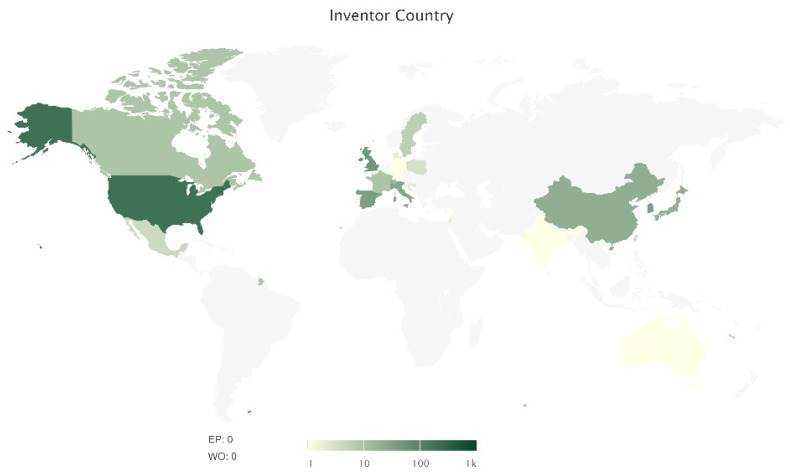
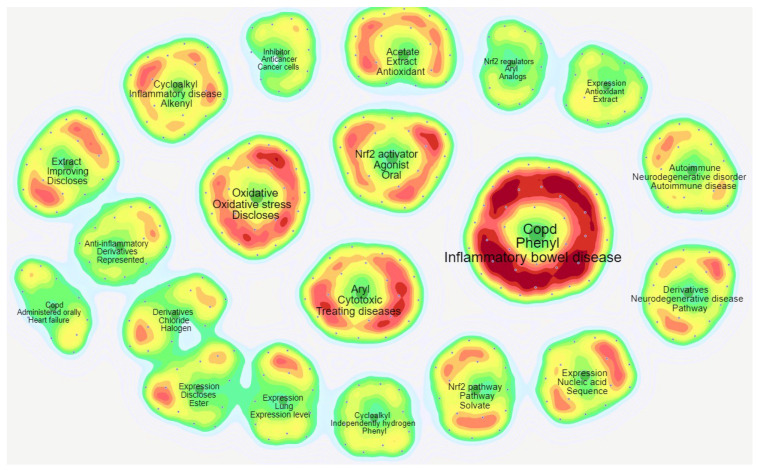
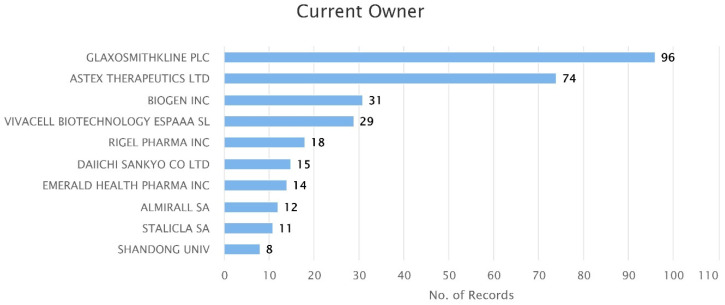
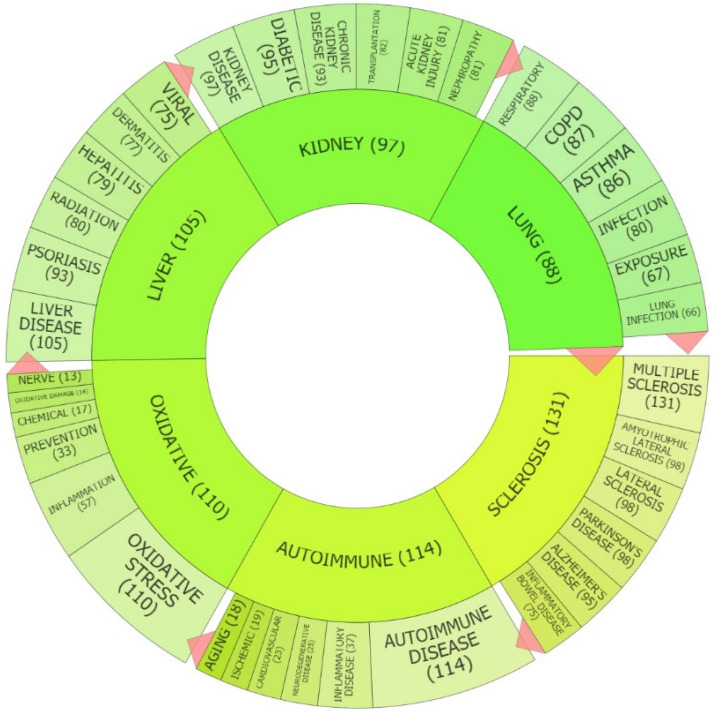
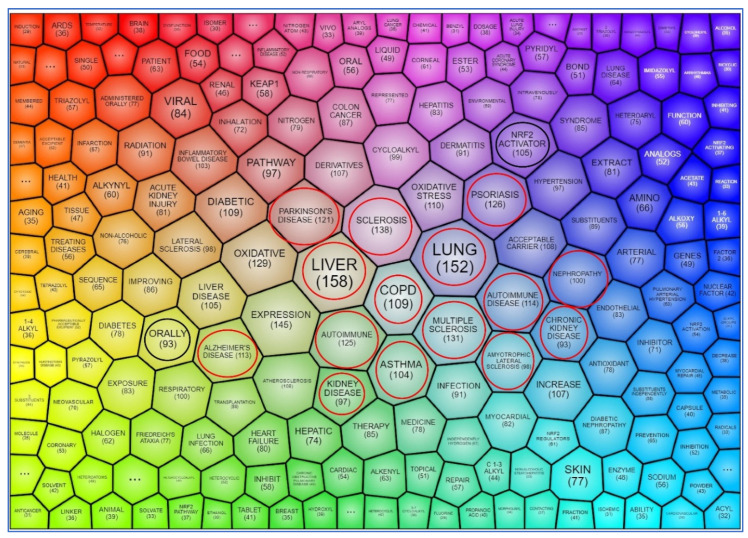
Research on the antioxidant pathway comprising the transcription factor nuclear factor erythroid 2-related factor 2 (Nrf2) and its cytoplasmic inhibitor Kelch-like ECH-associated protein 1 (Keap1) is ever increasing. As modulators of this pathway have started to be used in clinical trials and clinical practice, Nrf2 has become the subject of several patents. To assess the patent landscape of the last three years on Nrf2 and evaluate the main fields they refer to, we used the web-based tool PatSeer Pro to identify patents mentioning the Nrf2 pathway between January 2017 and May 2020. This search resulted in 509 unique patents that focus on topics such as autoimmune, neurodegenerative, liver, kidney, and lung diseases and refer to modulators (mainly activators) of the Nrf2 pathway as potential treatments. Autoimmunity emerged as the main theme among the topics of Nrf2 patents, including a broad range of diseases, such as systemic sclerosis, systemic lupus erythematosus, multiple sclerosis, inflammatory bowel diseases, Hashimoto's thyroiditis, etc.; however, there was a dearth of experimental support for the respective patents' claims. Given that chronic inflammation is the main element of the pathophysiology of most autoimmune diseases, the majority of patents referring to activation of Nrf2 as a method to treat autoimmune diseases base their claims on the well-established anti-inflammatory role of Nrf2. In conclusion, there is strong interest in securing intellectual property rights relating to the potential use of Nrf2 pathway activators in a variety of diseases, and this trend parallels the rise in related research publications. However, in the case of autoimmunity, more research is warranted to support the potential beneficial effects of Nrf2 modulation in each disease.
对由转录因子核因子红系 2 相关因子 2(Nrf2)及其细胞质抑制剂 Kelch 样 ECH 相关蛋白 1(Keap1)组成的抗氧化途径的研究日益增多。随着该途径的调节剂已开始用于临床试验和临床实践,Nrf2 已成为多项专利的主题。为了评估过去三年关于 Nrf2 的专利情况,并评估它们所涉及的主要领域,我们使用基于网络的工具 PatSeer Pro 来识别 2017 年 1 月至 2020 年 5 月期间提及 Nrf2 途径的专利。此次检索共得到 509 项独特专利,这些专利聚焦于自身免疫性疾病、神经退行性疾病、肝脏疾病、肾脏疾病和肺部疾病等主题,并将 Nrf2 途径的调节剂(主要是激活剂)作为潜在治疗方法。自身免疫性疾病成为 Nrf2 专利主题中的主要内容,包括多种疾病,如系统性硬化症、系统性红斑狼疮、多发性硬化症、炎症性肠病、桥本甲状腺炎等;然而,这些专利的主张缺乏实验支持。鉴于慢性炎症是大多数自身免疫性疾病病理生理学的主要因素,大多数将 Nrf2 激活作为治疗自身免疫性疾病方法的专利,其主张基于 Nrf2 已确立的抗炎作用。总之,人们对确保与 Nrf2 途径激活剂在多种疾病中的潜在用途相关的知识产权有着浓厚兴趣,这一趋势与相关研究出版物的增加并行。然而,在自身免疫性疾病方面,需要更多研究来支持 Nrf2 调节在每种疾病中的潜在有益作用。