KU Leuven Department of Microbiology, Immunology and Transplantation, Laboratory of Virology and Chemotherapy, Rega Institute, Leuven, Belgium.
Department of Microbiology, Immunology and Transplantation, Laboratory of Adaptive Immunology, KU Leuven, Leuven, Belgium.
Front Immunol. 2021 Apr 21;12:650731. doi: 10.3389/fimmu.2021.650731. eCollection 2021.
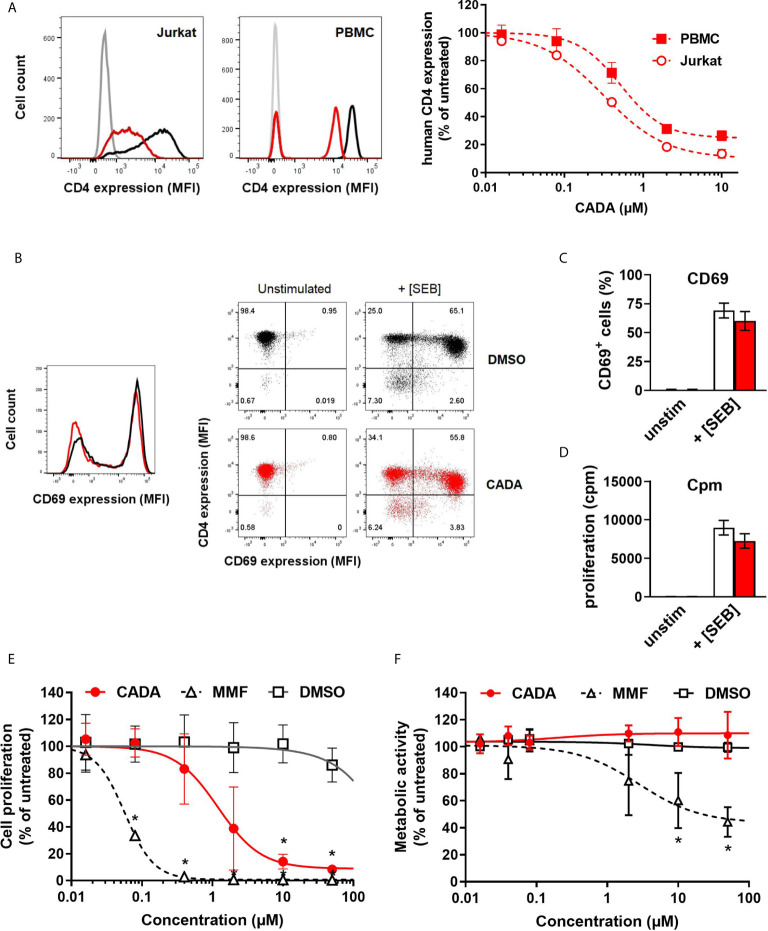
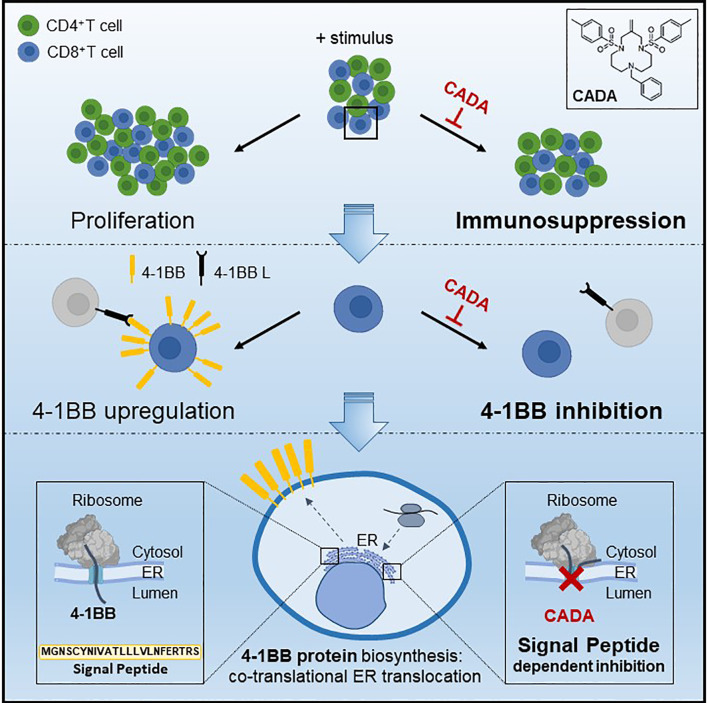
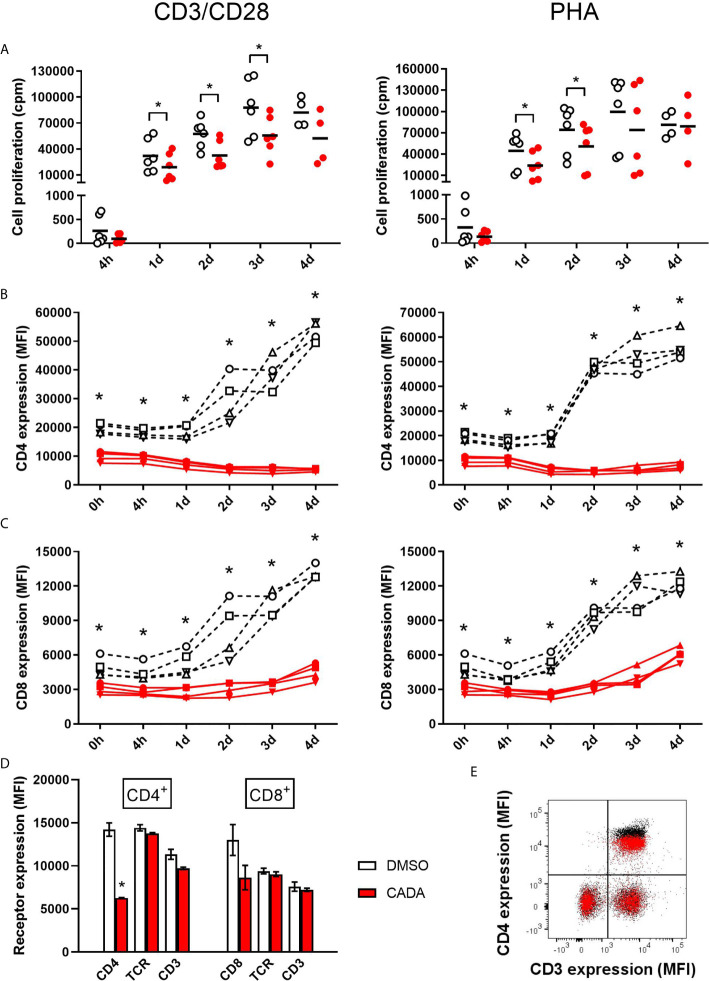
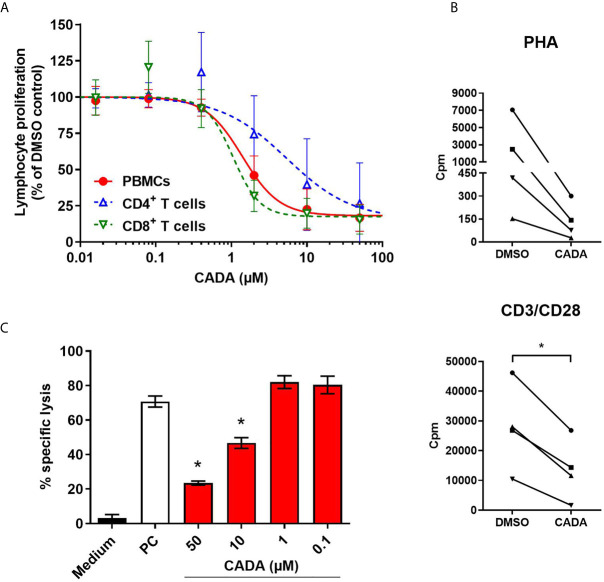
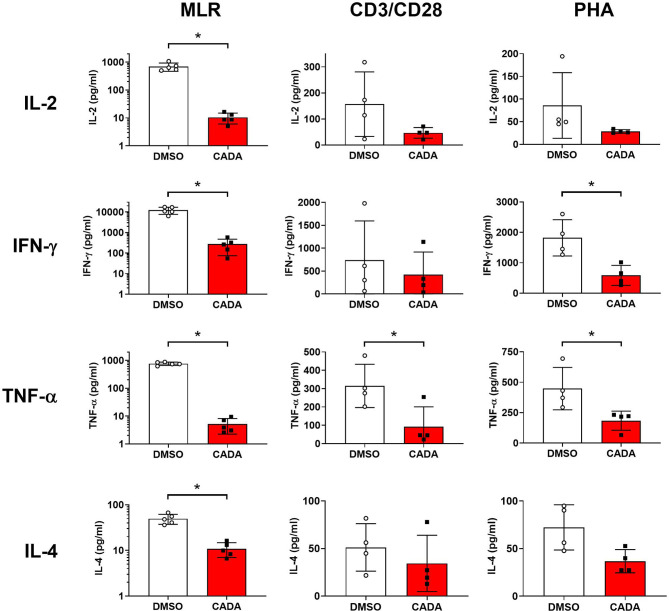
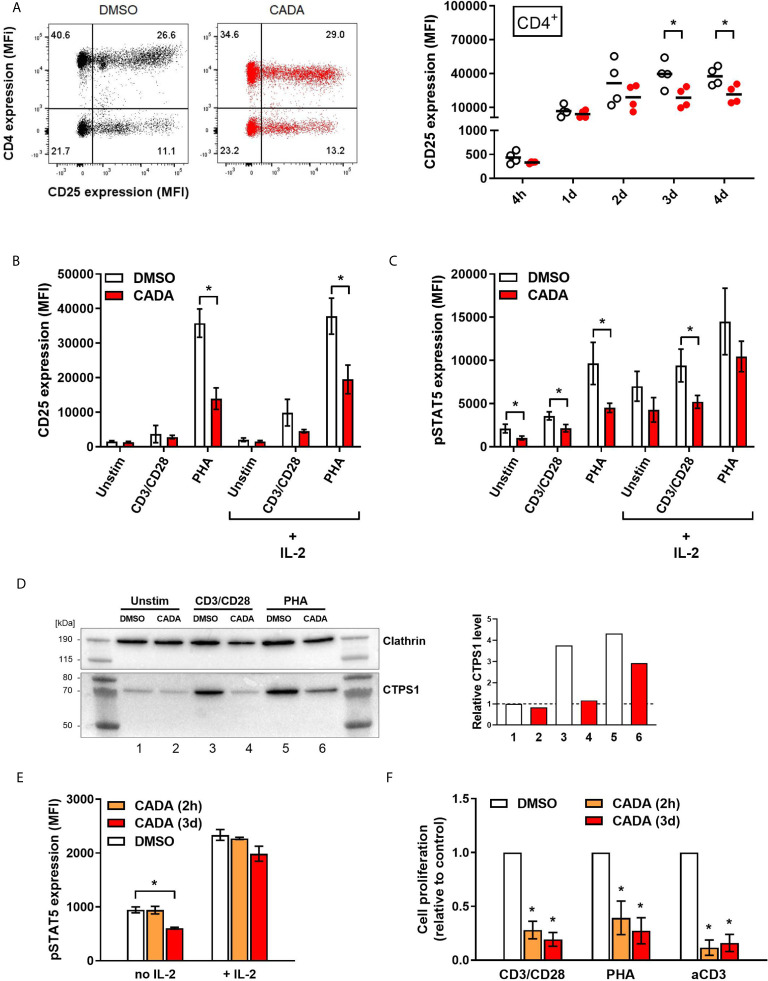
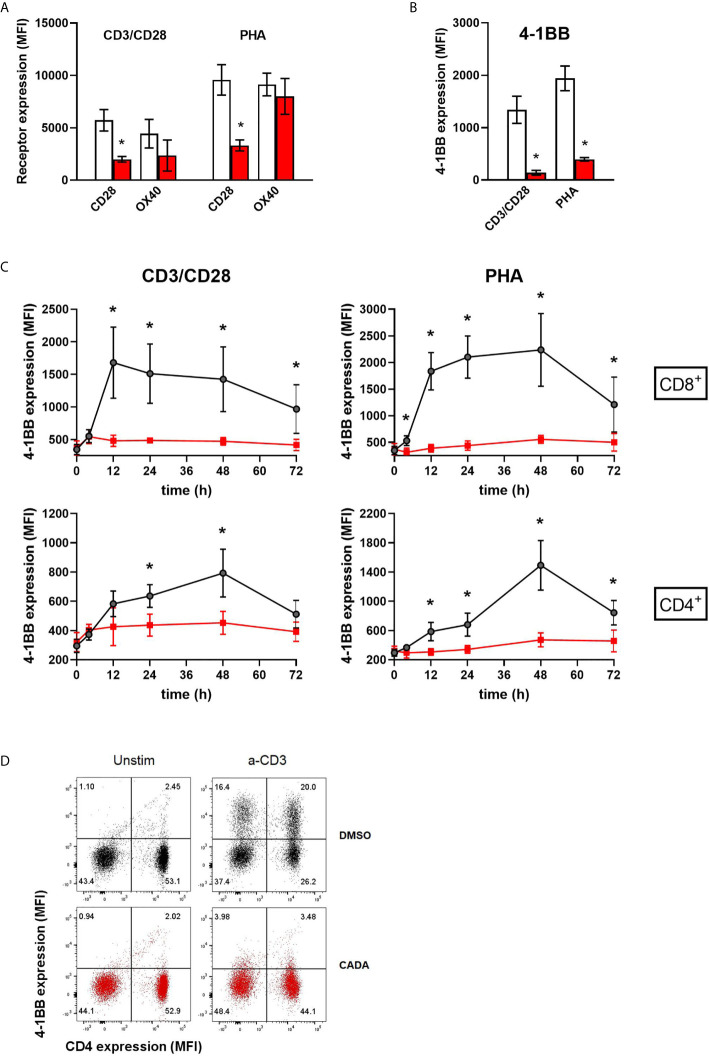
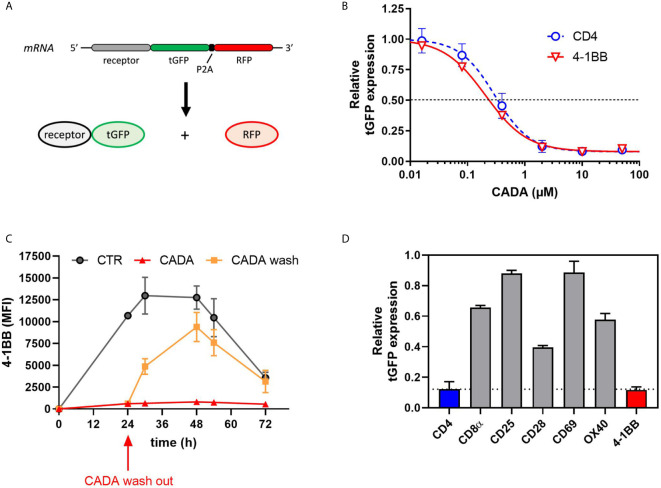
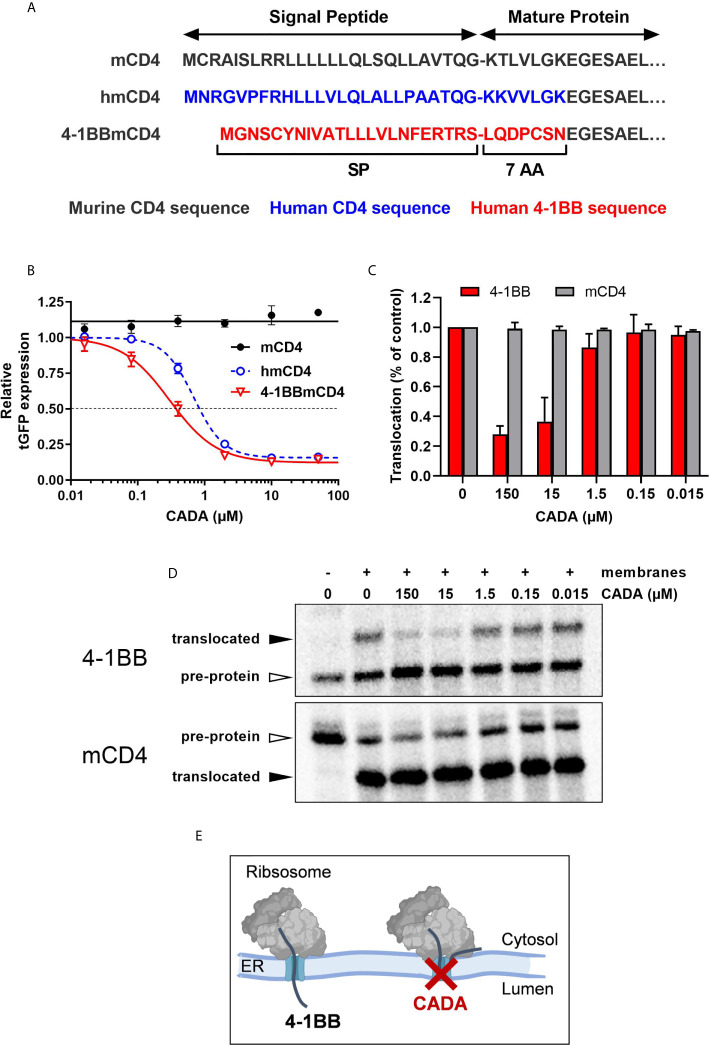
The small molecule cyclotriazadisulfonamide (CADA) down-modulates the human CD4 receptor, an important factor in T cell activation. Here, we addressed the immunosuppressive potential of CADA using different activation models. CADA inhibited lymphocyte proliferation with low cellular toxicity in a mixed lymphocyte reaction, and when human PBMCs were stimulated with CD3/CD28 beads, phytohemagglutinin or anti-CD3 antibodies. The immunosuppressive effect of CADA involved both CD4 and CD8 T cells but was, surprisingly, most prominent in the CD8 T cell subpopulation where it inhibited cell-mediated lympholysis. Immunosuppression by CADA was characterized by suppressed secretion of various cytokines, and reduced CD25, phosphoSTAT5 and CTPS-1 levels. We discovered a direct down-modulatory effect of CADA on 4-1BB (CD137) expression, a survival factor for activated CD8 T cells. More specifically, CADA blocked 4‑1BB protein biosynthesis by inhibition of its co-translational translocation into the ER in a signal peptide-dependent way. Taken together, this study demonstrates that CADA, as potent down-modulator of human CD4 and 4‑1BB receptor, has promising immunomodulatory characteristics. This would open up new avenues toward chemotherapeutics that act as selective protein down-modulators to treat various human immunological disorders.
小分子环三嗪二磺酰胺(CADA)下调人 CD4 受体,这是 T 细胞激活的重要因素。在这里,我们使用不同的激活模型来研究 CADA 的免疫抑制潜力。CADA 在混合淋巴细胞反应中以低细胞毒性抑制淋巴细胞增殖,当用 CD3/CD28 珠、植物血球凝集素或抗 CD3 抗体刺激人 PBMCs 时,也会产生同样的效果。CADA 的免疫抑制作用涉及 CD4 和 CD8 T 细胞,但令人惊讶的是,在 CD8 T 细胞亚群中最为明显,它抑制细胞介导的淋巴溶解。CADA 的免疫抑制作用的特征是各种细胞因子的分泌受到抑制,CD25、磷酸化 STAT5 和 CTPS-1 水平降低。我们发现 CADA 对 4-1BB(CD137)表达具有直接的下调作用,4-1BB 是激活的 CD8 T 细胞的生存因子。更具体地说,CADA 通过信号肽依赖性方式抑制其共翻译易位进入内质网,从而阻断 4-1BB 蛋白的生物合成。总之,这项研究表明,CADA 作为人 CD4 和 4-1BB 受体的有效下调剂,具有有前途的免疫调节特性。这将为作为选择性蛋白质下调剂的化学疗法开辟新途径,以治疗各种人类免疫性疾病。