San Raffaele Telethon Institute for Gene Therapy (SR-Tiget), IRCCS San Raffaele Scientific Institute, Milan 20132, Italy.
Translational and Molecular Medicine (DIMET), University of Milano-Bicocca, Monza 20900, Italy.
Dis Model Mech. 2021 May 1;14(5). doi: 10.1242/dmm.048940. Epub 2021 May 10.
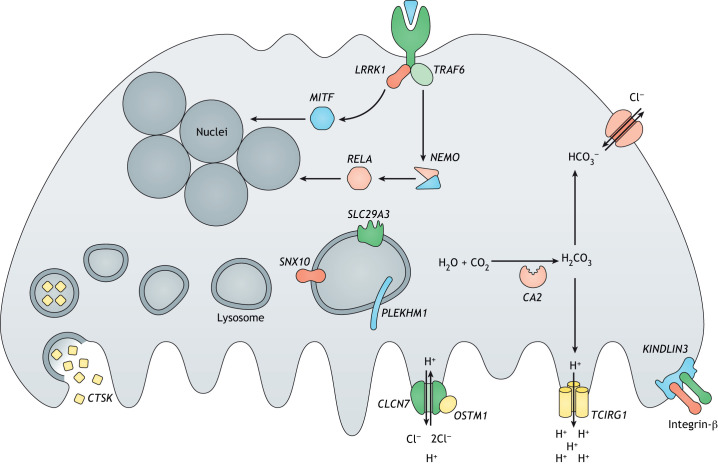
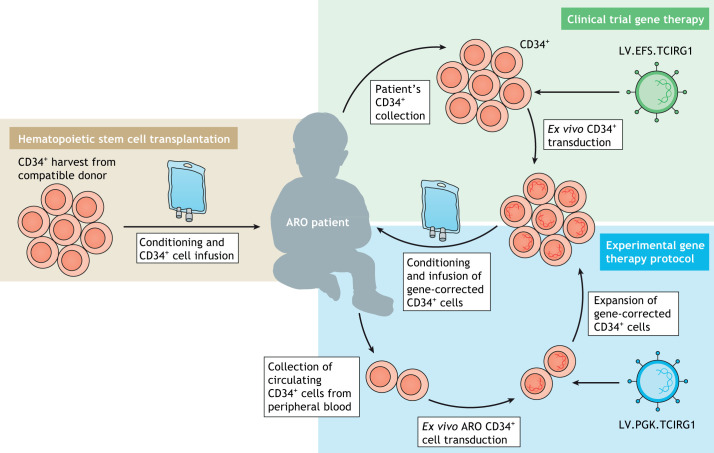
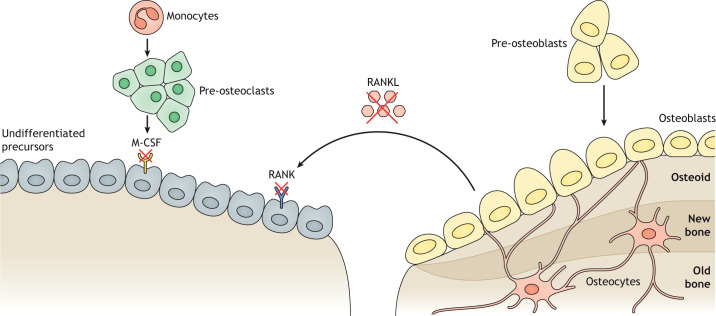
Autosomal recessive osteopetrosis (ARO) is a severe inherited bone disease characterized by defective osteoclast resorption or differentiation. Clinical manifestations include dense and brittle bones, anemia and progressive nerve compression, which hamper the quality of patients' lives and cause death in the first 10 years of age. This Review describes the pathogenesis of ARO and highlights the strengths and weaknesses of the current standard of care, namely hematopoietic stem cell transplantation (HSCT). Despite an improvement in the overall survival and outcomes of HSCT, transplant-related morbidity and the pre-existence of neurological symptoms significantly limit the success of HSCT, while the availability of human leukocyte antigen (HLA)-matched donors still remains an open issue. Novel therapeutic approaches are needed for ARO patients, especially for those that cannot benefit from HSCT. Here, we review preclinical and proof-of-concept studies, such as gene therapy, systematic administration of deficient protein, in utero HSCT and gene editing.
常染色体隐性骨硬化症(ARO)是一种严重的遗传性骨疾病,其特征为破骨细胞吸收或分化功能缺陷。临床表现包括骨骼致密脆弱、贫血和进行性神经压迫,这些症状降低了患者的生活质量,并导致患者在 10 岁之前死亡。本综述描述了 ARO 的发病机制,并强调了目前标准治疗方法(即造血干细胞移植(HSCT))的优缺点。尽管 HSCT 提高了整体生存率和治疗效果,但移植相关发病率和预先存在的神经症状严重限制了 HSCT 的成功,而人类白细胞抗原(HLA)匹配供体的可用性仍然是一个悬而未决的问题。ARO 患者需要新的治疗方法,特别是对于那些不能从 HSCT 中获益的患者。在这里,我们回顾了临床前和概念验证研究,如基因治疗、缺陷蛋白的系统给药、子宫内 HSCT 和基因编辑。