From the Department of Orthopaedic Surgery, Harbor-UCLA Medical Center, Torrance, CA (Dr. Lullo); Keck School of Medicine, University of Southern California (Dr. Nazareth, Dr. Illingworth, Dr. Abousamra, and Dr. Kay); the Children's Hospital of Los Angeles (Ms. Rethlefsen, Dr. Abousamra, and Dr. Kay); and the Children's Orthopaedic Center, Children's Hospital Los Angeles (Dr. Illingworth), Los Angeles, CA.
J Am Acad Orthop Surg Glob Res Rev. 2020 May;4(5):e2000044. doi: 10.5435/JAAOSGlobal-D-20-00044.
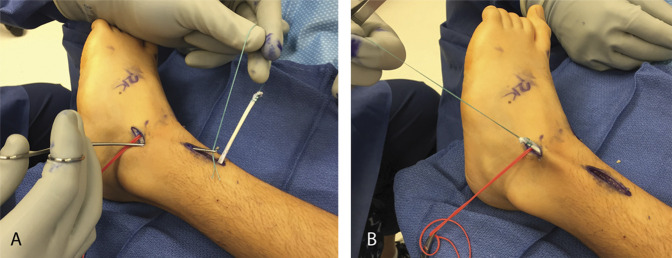
The study purpose was to determine the safety/efficacy of a split anterior tibialis tendon transfer (SPLATT) to the peroneus tertius or brevis in children with static encephalopathy and varus feet.
A retrospective review of short- and long-term complications, change in ankle range of motion, strength, and gait kinematics. Predictors of postoperative varus or valgus were examined.
One hundred thirty-three patients were included (average age [SD] 10.3 [3.7]), with an average follow-up of 3.9 (3.4) years. Forefoot/hindfoot eversion range of motion improved (P ≤ 0.05), dorsiflexor strength was maintained or improved in 76.9% of patients, and dorsiflexion in swing phase was maintained. Complications occurred in 6 of 133 patients (4.5%) and included 1 transfer failure, 1 wound dehiscence, and four pressure areas from casts. Successful correction was achieved in 77% of patients. Later onset of recurrent varus (14.4%, 10.6% requiring revision surgery) and pes valgus (8.7%, 4.8% requiring revision surgery) occurred. The length of the follow-up predicted the development of the pes valgus (odds ratio 1.28, 95% CI 1.0 to 1.6).
SPLATT to the peroneus tertius or brevis is effective, and complications are rare. Subsequent valgus or recurrent varus deformities may occur, possibly requiring repeat surgery.
本研究旨在确定将胫骨前肌劈开转移(SPLATT)至腓骨长短肌用于治疗伴有静态脑病和内翻足的儿童的安全性/疗效。
回顾性分析短期和长期并发症、踝关节活动范围、力量和步态运动学的变化。检查了术后内翻或外翻的预测因素。
共纳入 133 例患者(平均年龄[标准差]为 10.3[3.7]岁),平均随访 3.9(3.4)年。前足/后足外翻活动范围改善(P≤0.05),76.9%的患者背屈肌力量保持或改善,摆动期背屈保持。133 例患者中有 6 例(4.5%)发生并发症,包括 1 例转移失败、1 例伤口裂开和 4 例石膏压疮。77%的患者获得成功矫正。迟发性复发性内翻(14.4%,10.6%需要再次手术)和足外翻(8.7%,4.8%需要再次手术)的发生率较高。随访时间的长短预测了足外翻的发生(比值比 1.28,95%CI 1.0 至 1.6)。
SPLATT 至腓骨长短肌是有效的,并发症罕见。随后可能会出现内翻或复发性外翻畸形,可能需要再次手术。