Department of Neurosurgery, Tangdu Hospital, The Fourth Military Medical University, Xi'an, Shaanxi, China.
State Key Laboratory of Cancer Biology and Xijing Hospital of Digestive Diseases, Xijing Hospital, The Fourth Military Medical University, Xi'an, Shaanxi, China.
Autophagy. 2021 Oct;17(10):2923-2938. doi: 10.1080/15548627.2020.1848128. Epub 2020 Dec 1.
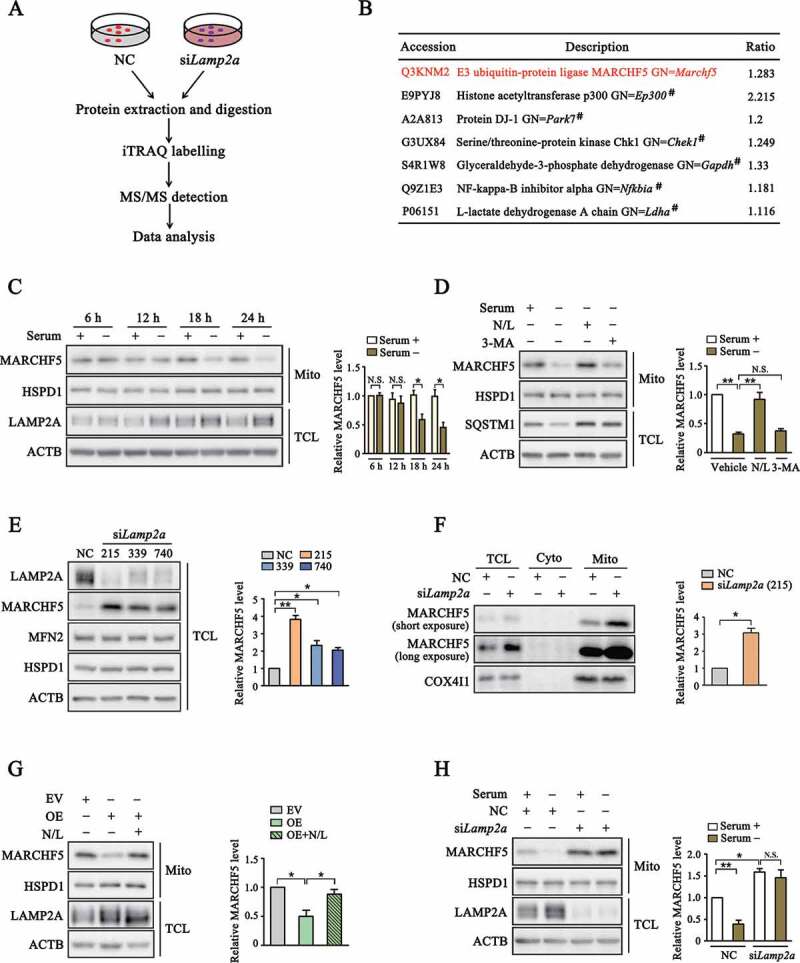
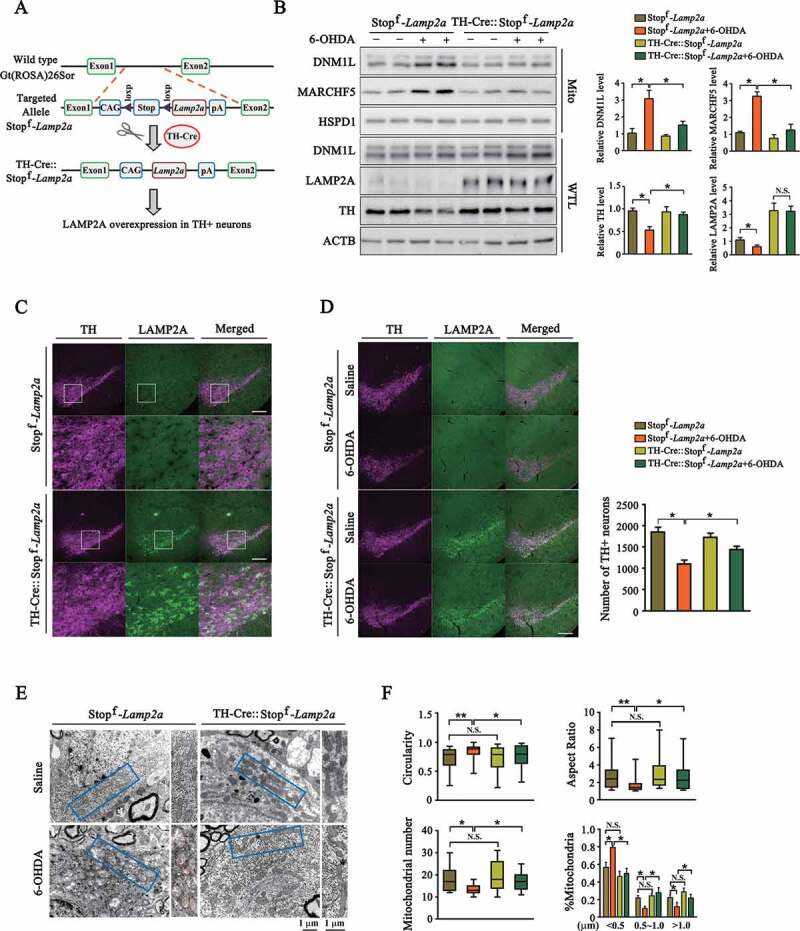
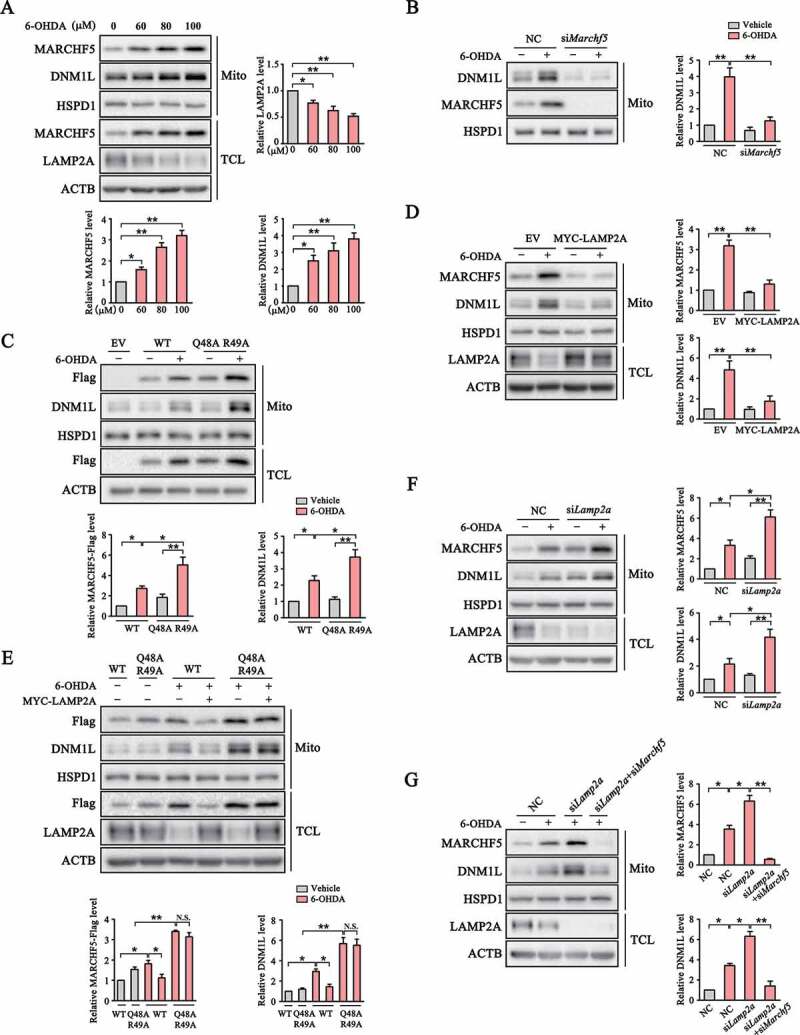
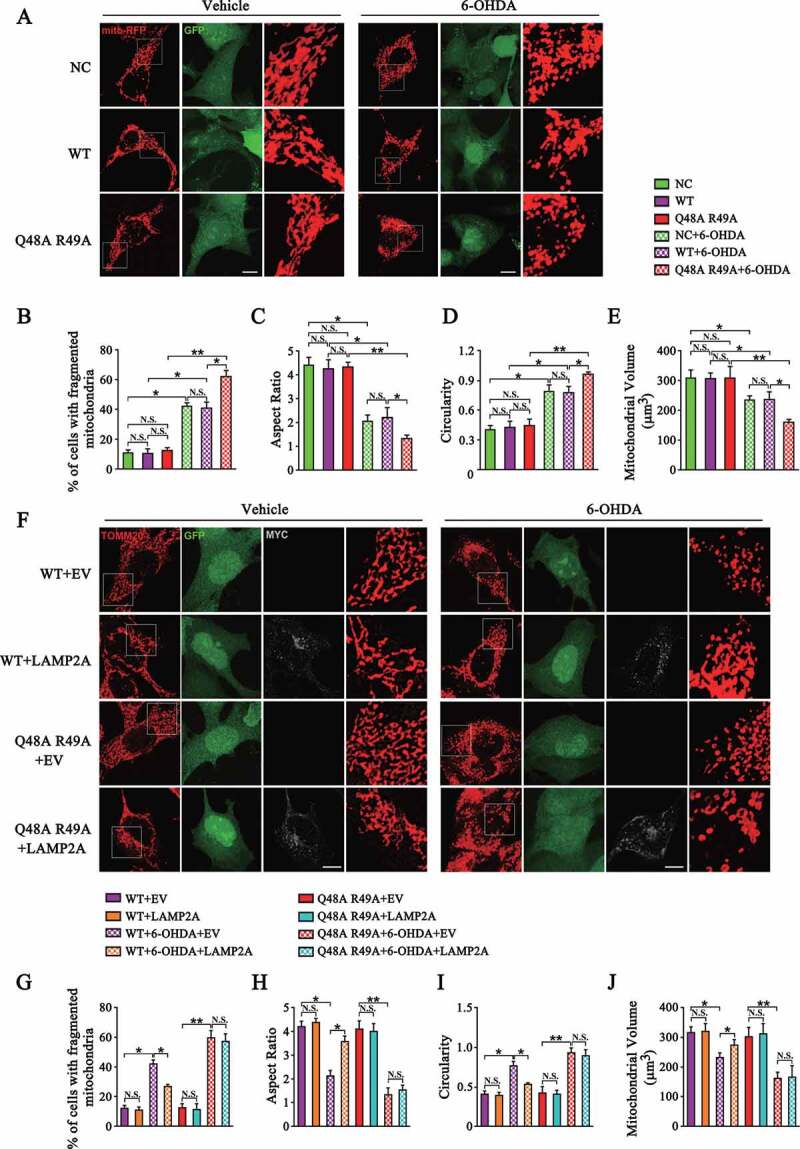
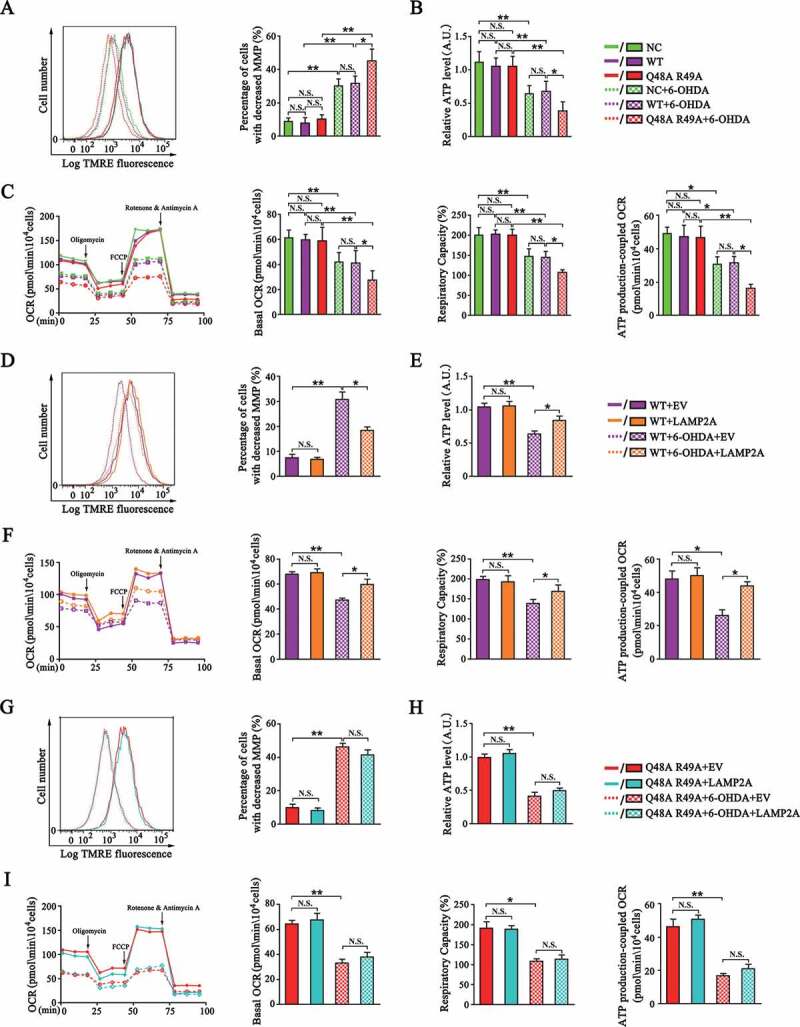
As a highly dynamic organelle, mitochondria undergo constant fission and fusion to change their morphology and function, coping with various stress conditions. Loss of the balance between fission and fusion leads to impaired mitochondria function, which plays a critical role in the pathogenesis of Parkinson disease (PD). Yet the mechanisms behind mitochondria dynamics regulation remain to be fully illustrated. Chaperone-mediated autophagy (CMA) is a lysosome-dependent process that selectively degrades proteins to maintain cellular proteostasis. In this study, we demonstrated that MARCHF5, an E3 ubiquitin ligase required for mitochondria fission, is a CMA substrate. MARCHF5 interacted with key CMA regulators and was degraded by lysosomes. Severe oxidative stress compromised CMA activity and stabilized MARCHF5, which facilitated DNM1L translocation and led to excessive fission. Increase of CMA activity promoted MARCHF5 turnover, attenuated DNM1L translocation, and reduced mitochondria fragmentation, which alleviated mitochondrial dysfunction under oxidative stress. Furthermore, we showed that conditional expression of LAMP2A, the key CMA regulator, in dopaminergic (DA) neurons helped maintain mitochondria morphology and protected DA neuronal viability in a rodent PD model. Our work uncovers a critical role of CMA in maintaining proper mitochondria dynamics, and loss of this regulatory control may occur in PD and underlie its pathogenic process. CMA: chaperone-mediated autophagy; DA: dopaminergic; DNM1L: dynamin 1 like; FCCP: carbonyl cyanide 4-(trifluoromethoxy) phenylhydrazone; HSPA8: heat shock protein family A (Hsp70) member 8; LAMP2A: lysosomal associated membrane protein 2A; MARCHF5: membrane-associated ring-CH-type finger 5; MMP: mitochondria membrane potential; OCR: oxygen consumption rate; 6-OHDA: 6-hydroxydopamine; PD: Parkinson disease; SNc: substantia nigra pars compacta; TEM: transmission electron microscopy; TH: tyrosine hydroxylase; TMRE: tetramethylrhodamine ethyl ester perchlorate; WT: wild type.
作为一个高度动态的细胞器,线粒体不断经历分裂和融合以改变其形态和功能,从而应对各种应激条件。分裂和融合之间的平衡丧失会导致线粒体功能受损,这在帕金森病(PD)的发病机制中起着关键作用。然而,线粒体动力学调节的机制仍有待充分阐明。伴侣介导的自噬(CMA)是一种溶酶体依赖性过程,可选择性降解蛋白质以维持细胞蛋白质稳态。在这项研究中,我们证明了需要线粒体分裂的 E3 泛素连接酶 MARCHF5 是 CMA 的底物。MARCHF5 与关键的 CMA 调节剂相互作用,并被溶酶体降解。严重的氧化应激会降低 CMA 活性并稳定 MARCHF5,从而促进 DNM1L 易位并导致过度分裂。增加 CMA 活性可促进 MARCHF5 周转,减弱 DNM1L 易位,并减少氧化应激下的线粒体碎片化,从而减轻线粒体功能障碍。此外,我们表明,关键的 CMA 调节剂 LAMP2A 在多巴胺能(DA)神经元中的条件表达有助于维持线粒体形态并在啮齿动物 PD 模型中保护 DA 神经元的活力。我们的工作揭示了 CMA 在维持适当的线粒体动力学中的关键作用,并且这种调节控制的丧失可能发生在 PD 中,并构成其发病机制。CMA:伴侣介导的自噬;DA:多巴胺能;DNM1L:动力蛋白 1 样;FCCP:羰基氰化物 4-(三氟甲氧基)苯腙;HSPA8:热休克蛋白家族 A(Hsp70)成员 8;LAMP2A:溶酶体相关膜蛋白 2A;MARCHF5:膜相关环-CH 型手指 5;MMP:线粒体膜电位;OCR:耗氧量;6-OHDA:6-羟多巴胺;PD:帕金森病;SNc:黑质致密部;TEM:透射电子显微镜;TH:酪氨酸羟化酶;TMRE:四甲基罗丹明乙酯过氯酸盐;WT:野生型。