Discovery Science Division, Amicus Therapeutics, Inc., Philadelphia, Pennsylvania, USA.
Pediatrics & Rare Diseases Group, Sanford Research, Sioux Falls, South Dakota, USA.
J Biol Chem. 2021 Jan-Jun;296:100769. doi: 10.1016/j.jbc.2021.100769. Epub 2021 May 8.
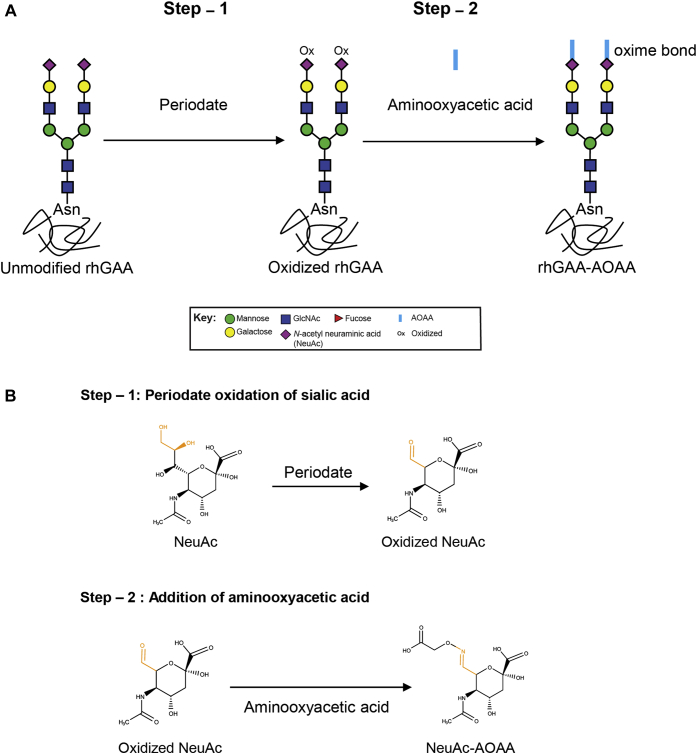
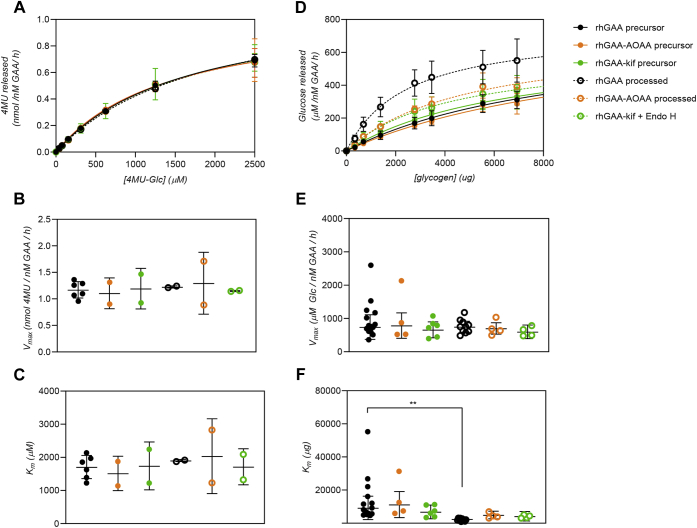
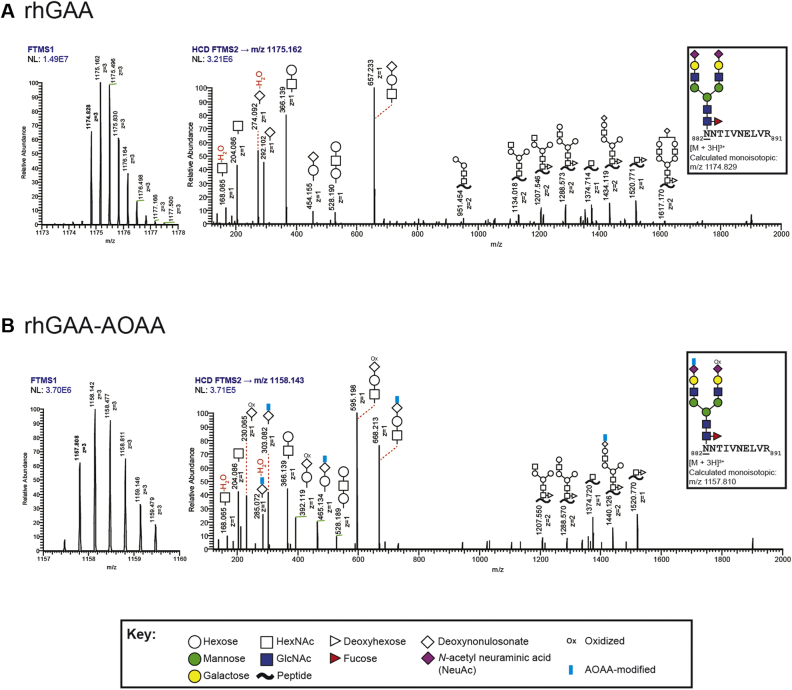
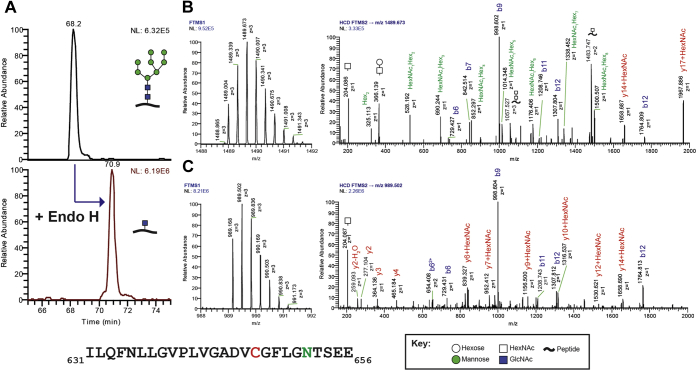
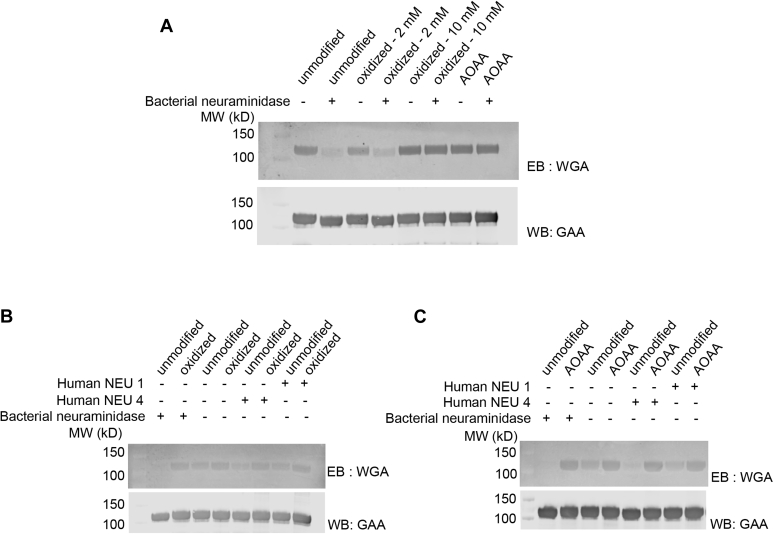
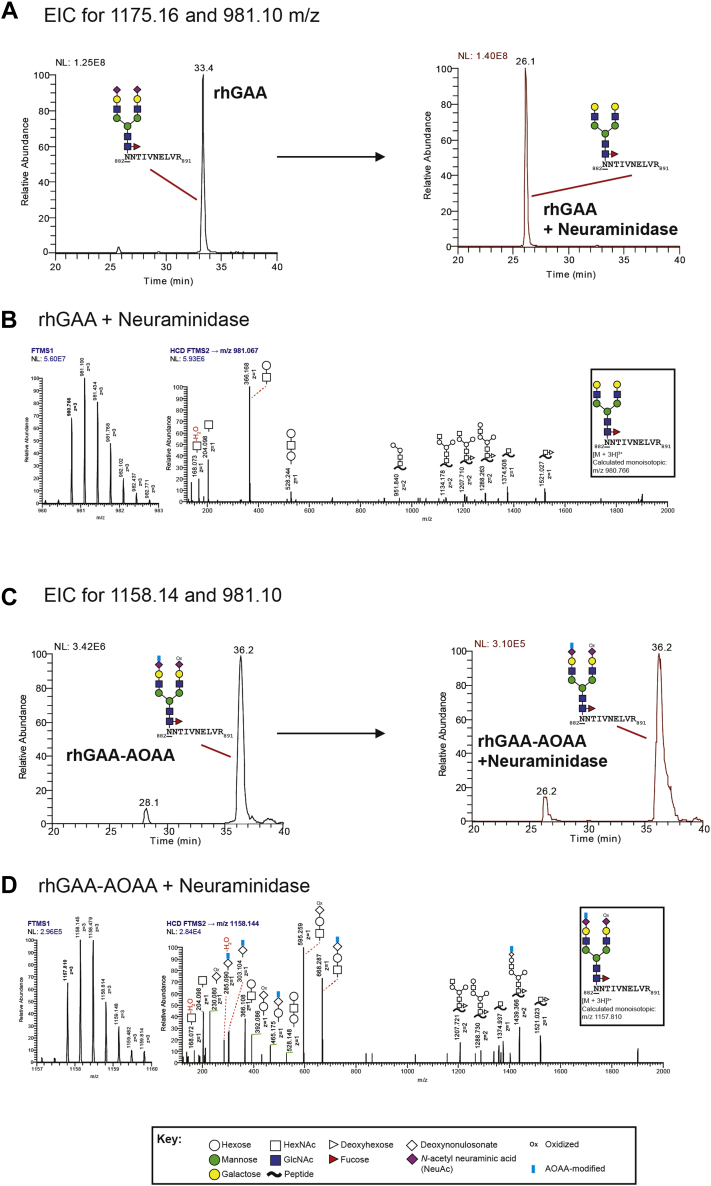
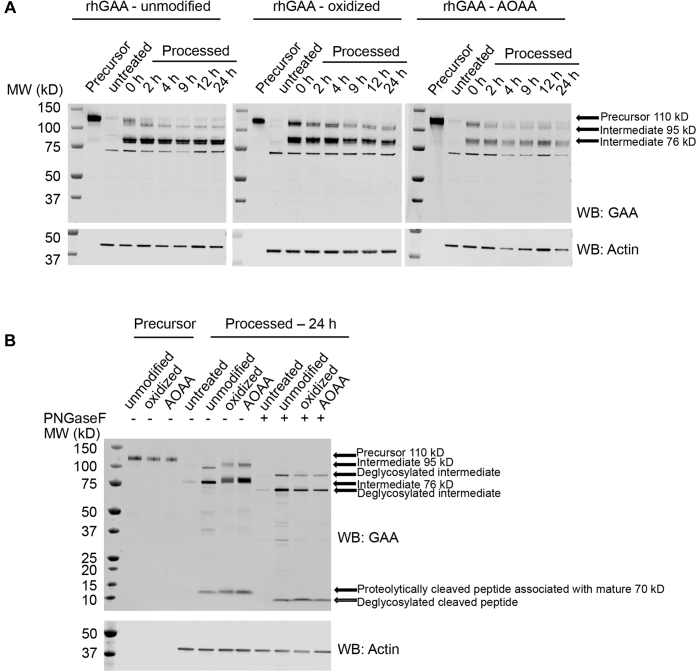
Acid alpha-glucosidase (GAA) is a lysosomal glycogen-catabolizing enzyme, the deficiency of which leads to Pompe disease. Pompe disease can be treated with systemic recombinant human GAA (rhGAA) enzyme replacement therapy (ERT), but the current standard of care exhibits poor uptake in skeletal muscles, limiting its clinical efficacy. Furthermore, it is unclear how the specific cellular processing steps of GAA after delivery to lysosomes impact its efficacy. GAA undergoes both proteolytic cleavage and glycan trimming within the endolysosomal pathway, yielding an enzyme that is more efficient in hydrolyzing its natural substrate, glycogen. Here, we developed a tool kit of modified rhGAAs that allowed us to dissect the individual contributions of glycan trimming and proteolysis on maturation-associated increases in glycogen hydrolysis using in vitro and in cellulo enzyme processing, glycopeptide analysis by MS, and high-pH anion-exchange chromatography with pulsed amperometric detection for enzyme kinetics. Chemical modifications of terminal sialic acids on N-glycans blocked sialidase activity in vitro and in cellulo, thereby preventing downstream glycan trimming without affecting proteolysis. This sialidase-resistant rhGAA displayed only partial activation after endolysosomal processing, as evidenced by reduced catalytic efficiency. We also generated enzymatically deglycosylated rhGAA that was shown to be partially activated despite not undergoing proteolytic processing. Taken together, these data suggest that an optimal rhGAA ERT would require both N-glycan and proteolytic processing to attain the most efficient enzyme for glycogen hydrolysis and treatment of Pompe disease. Future studies should examine the amenability of next-generation ERTs to both types of cellular processing.
酸性α-葡萄糖苷酶(GAA)是溶酶体糖原分解酶,其缺乏会导致庞贝病。庞贝病可以通过系统的重组人 GAA(rhGAA)酶替代疗法(ERT)进行治疗,但目前的标准护理在骨骼肌中的摄取效果不佳,限制了其临床疗效。此外,尚不清楚 GAA 递送至溶酶体后特定的细胞内加工步骤如何影响其疗效。GAA 在内溶酶体途径中经历蛋白水解切割和聚糖修剪,产生一种更有效地水解其天然底物糖原的酶。在这里,我们开发了一套改良的 rhGAA 工具包,使我们能够通过体外和细胞内酶加工、MS 糖肽分析以及用于酶动力学的高 pH 阴离子交换色谱与脉冲安培检测,剖析聚糖修剪和蛋白水解对成熟相关糖原水解增加的各自贡献。N-糖链末端唾液酸的化学修饰在体外和细胞内阻断了唾液酸酶的活性,从而阻止了下游的聚糖修剪,而不影响蛋白水解。这种唾液酸酶抗性 rhGAA 在经过内溶酶体加工后仅显示部分激活,这表明催化效率降低。我们还生成了酶促去糖基化的 rhGAA,尽管没有经历蛋白水解加工,但显示出部分激活。总之,这些数据表明,最佳的 rhGAA ERT 需要 N-糖链和蛋白水解加工,以获得最有效的糖原水解酶,并治疗庞贝病。未来的研究应检查下一代 ERT 对这两种细胞加工的适应性。