Zhang Yu, Geng Rulin, Tu Qiuyun
Department of Geriatrics, The Fifth Affiliated Hospital of Sun Yat-Sen University, Zhuhai 519000, China.
Aging (Albany NY). 2021 May 10;13(9):13359-13371. doi: 10.18632/aging.202994.
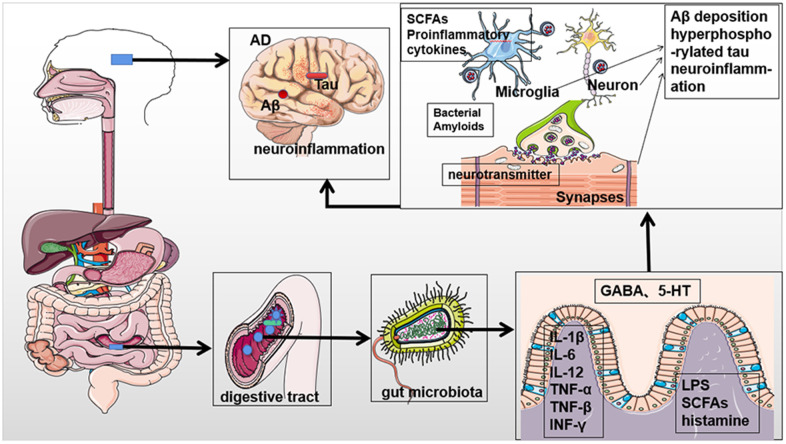
Alzheimer's disease (AD) is a chronic, progressive neurodegenerative disease characterized by memory loss, inability to carry out everyday daily life, and noticeable behavioral changes. The essential neuropathologic criteria for an AD diagnosis are extracellular β-amyloid deposition and intracellular accumulation of hyperphosphorylated tau. However, the exact pathogenic mechanisms underlying AD remain elusive, and current treatment options show only limited success. New research indicates that the gut microbiota contributes to AD development and progression by accelerating neuroinflammation, promoting senile plaque formation, and modifying neurotransmitter production. This review highlights laboratory and clinical evidence for the pathogenic role of gut dysbiosis on AD and provides potential cues for improved AD diagnostic criteria and therapeutic interventions based on the gut microbiota.
阿尔茨海默病(AD)是一种慢性进行性神经退行性疾病,其特征为记忆力丧失、无法进行日常生活以及明显的行为改变。AD诊断的基本神经病理学标准是细胞外β-淀粉样蛋白沉积和细胞内过度磷酸化tau蛋白的积累。然而,AD的确切致病机制仍不清楚,目前的治疗方案仅取得了有限的成功。新研究表明,肠道微生物群通过加速神经炎症、促进老年斑形成和改变神经递质产生,促进AD的发生和发展。本综述强调了肠道菌群失调对AD致病作用的实验室和临床证据,并为基于肠道微生物群改进AD诊断标准和治疗干预提供了潜在线索。