CARTaGENE, CHU Ste-Justine Research Center, 3175 Chemin de la Côte-Sainte-Catherine, Montréal, H3T1C5, Canada.
Université de Montréal, Montréal, Canada.
BMC Infect Dis. 2021 May 10;21(1):435. doi: 10.1186/s12879-021-06002-0.
By mid-July 2020, more than 108,000 COVID-19 cases had been diagnosed in Canada with more than half in the province of Quebec. In this context, we launched a study to analyze the epidemiological characteristics and the socio-economic impact of the spring outbreak in the population.
We conducted an online survey of the participants of the CARTaGENE population-based cohort, composed of middle-aged and older adults. We collected information on socio-demographic, lifestyle, health condition, COVID-19 related symptoms and COVID-19 testing. We studied the association between these factors and two outcomes: the status of having been tested for SARS-CoV-2 and the status of having received a positive test. These associations were measured with univariate and multivariate analyses using a hybrid tree-based regression model.
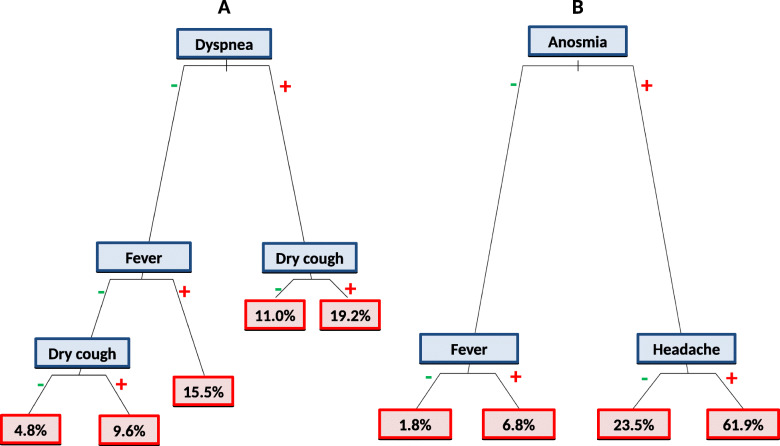
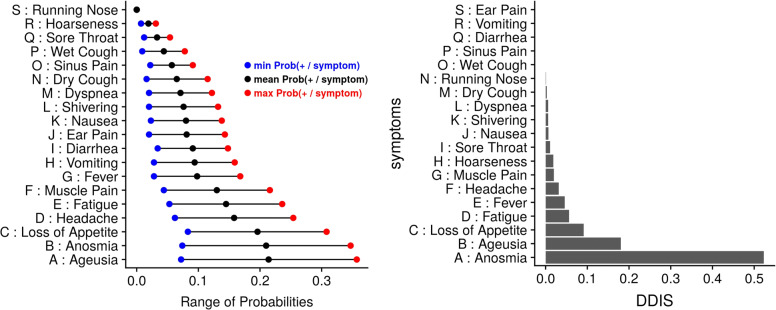
Among the 8,129 respondents from the CARTaGENE cohort, 649 were tested for COVID-19 and 41 were positive. Medical workers and individuals having a contact with a COVID-19 patient had the highest probabilities of being tested (32% and 42.4%, respectively) and of being positive (17.2% and 13.0%, respectively) among those tested. Approximately 8% of the participants declared that they have experienced at least one of the four COVID-19 related symptoms chosen by the Public Health authorities (fever, cough, dyspnea, anosmia) but were not tested. Results from the tree-based model analyses adjusted on exposure factors showed that the combination of dyspnea, dry cough and fever was highly associated with being tested whereas anosmia, fever, and headache were the most discriminant factors for having a positive test among those tested. During the spring outbreak, more than one third of the participants have experienced a decrease in access to health services. There were gender and age differences in the socio-economic and emotional impacts of the pandemic.
We have shown some discrepancies between the symptoms associated with being tested and being positive. In particular, the anosmia is a major discriminant symptom for positivity whereas ear-nose-throat symptoms seem not to be COVID-19 related. The results also emphasize the need of increasing the accessibility of testing for the general population.
截至 2020 年 7 月中旬,加拿大已诊断出超过 108000 例 COVID-19 病例,其中一半以上在魁北克省。在这种情况下,我们开展了一项研究,以分析春季疫情在人群中的流行病学特征和社会经济影响。
我们对基于人群的 CARTaGENE 队列的参与者进行了在线调查,该队列由中老年人组成。我们收集了社会人口统计学、生活方式、健康状况、COVID-19 相关症状和 COVID-19 检测等信息。我们研究了这些因素与两个结果之间的关系:接受 SARS-CoV-2 检测的状态和检测呈阳性的状态。使用基于树的混合回归模型,对这些关联进行了单变量和多变量分析。
在 CARTaGENE 队列的 8129 名受访者中,有 649 人接受了 COVID-19 检测,41 人检测结果呈阳性。医疗工作者和与 COVID-19 患者有接触的人接受检测的概率最高(分别为 32%和 42.4%),检测结果呈阳性的概率也最高(分别为 17.2%和 13.0%)。约 8%的参与者表示,他们至少经历过公共卫生当局选择的四种 COVID-19 相关症状中的一种(发烧、咳嗽、呼吸困难、嗅觉丧失),但未接受检测。基于暴露因素调整后的树状模型分析结果表明,呼吸困难、干咳和发烧的组合与接受检测高度相关,而嗅觉丧失、发烧和头痛是接受检测者中检测结果呈阳性的最具鉴别力的因素。在春季疫情期间,超过三分之一的参与者表示,他们获得医疗服务的机会减少了。性别和年龄差异对大流行的社会经济和情绪影响有影响。
我们发现与接受检测和检测结果呈阳性相关的症状之间存在一些差异。特别是,嗅觉丧失是阳性的主要鉴别症状,而耳鼻喉症状似乎与 COVID-19 无关。研究结果还强调了需要增加普通人群接受检测的机会。