Department of Psychology, University of Illinois at Urbana-Champaign, Champaign, IL 61820.
Department of Psychology, University of Illinois at Urbana-Champaign, Champaign, IL 61820;
Proc Natl Acad Sci U S A. 2021 May 18;118(20). doi: 10.1073/pnas.2101937118.
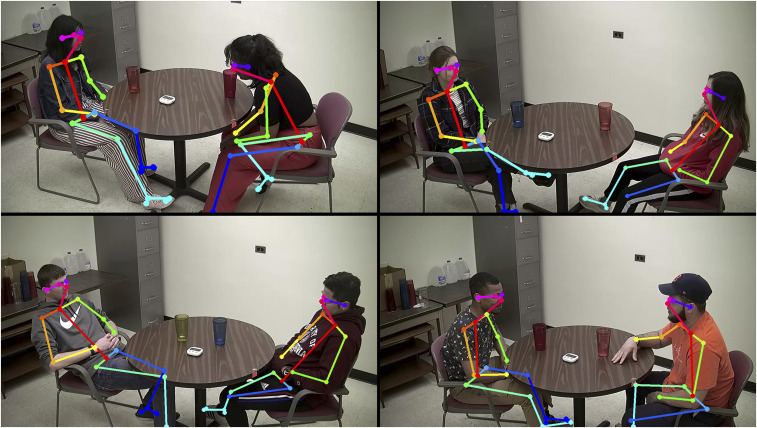
Pandemic management is likely to represent a global reality for years to come, but the roadmap for how to approach pandemic restrictions is as yet unclear. Of the restrictions enacted during COVID-19, among the more controversial surround alcohol. Like many infectious diseases, the principal mode of transmission for COVID-19 is direct respiration of droplets emitted during close social contact, and health officials warn that alcohol consumption may lead to decreased adherence to physical distancing guidelines. Governing bodies have acted to close bars before restaurants and have also specifically restricted alcohol sales, while at the same time those in the nightlife industry have labeled such actions unfounded and discriminatory. Complicating such debates is the lack of evidence on alcohol's effects on physical distance. In the current study we employed a randomized alcohol-administration design paired with computer-vision measures, analyzing over 20,000 proximity readings derived from video to examine the effect of alcohol consumption on physical distance during social interaction. Results indicated that alcohol caused individuals to draw significantly closer to an unfamiliar interaction partner during social exchange, reducing physical proximity at a rate with potentially important implications for public health. In contrast, alcohol had no effect on physical distance with a familiar interaction partner. Findings suggest that alcohol might act to overcome a natural caution people feel towards strangers and thus promote virus transmission between previously unconnected social groups.
大流行管理很可能在未来几年成为全球现实,但如何应对大流行限制的路线图尚不清楚。在 COVID-19 期间实施的限制措施中,最具争议的是围绕酒精的限制。与许多传染病一样,COVID-19 的主要传播途径是近距离社交接触时直接呼吸飞沫,卫生官员警告说,饮酒可能导致人们减少遵守身体距离准则的意愿。管理机构已采取行动,在餐厅之前关闭酒吧,并特别限制酒精销售,而与此同时,夜生活行业的人则将这些行动标记为毫无根据和歧视性的。使这些争论复杂化的是缺乏关于酒精对身体距离影响的证据。在当前的研究中,我们采用了随机酒精给药设计,并结合计算机视觉测量,分析了超过 20000 个来自视频的接近读数,以检查饮酒对社交互动中身体距离的影响。结果表明,酒精会导致个体在社交交流中与不熟悉的互动伙伴明显靠近,以潜在的重要公共卫生意义降低身体接近度。相比之下,酒精对熟悉的互动伙伴的身体距离没有影响。研究结果表明,酒精可能会克服人们对陌生人的自然警惕,从而促进先前没有联系的社会群体之间的病毒传播。