Rosato Daniel A, Thornton Mason, Sosa Jonathan, Bachman Christian, Goodwin Gabriel B, Ahmed Kareem A
Propulsion and Energy Research Laboratory, Department of Mechanical and Aerospace Engineering, University of Central Florida, Orlando, FL 32816.
Naval Center for Space Technology, US Naval Research Laboratory, Washington, DC 20375.
Proc Natl Acad Sci U S A. 2021 May 18;118(20). doi: 10.1073/pnas.2102244118.
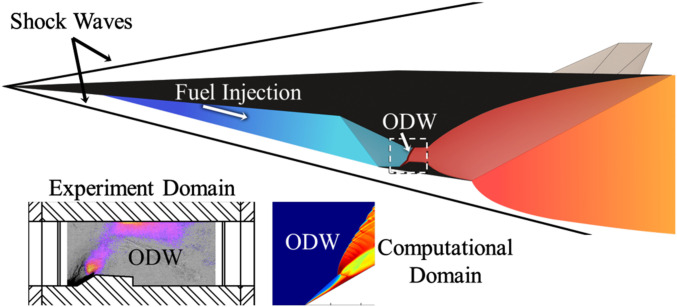
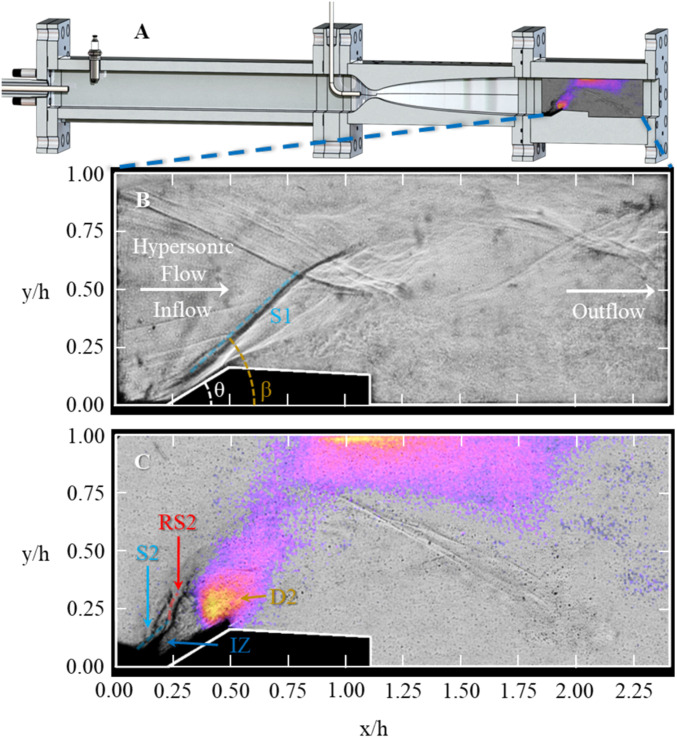
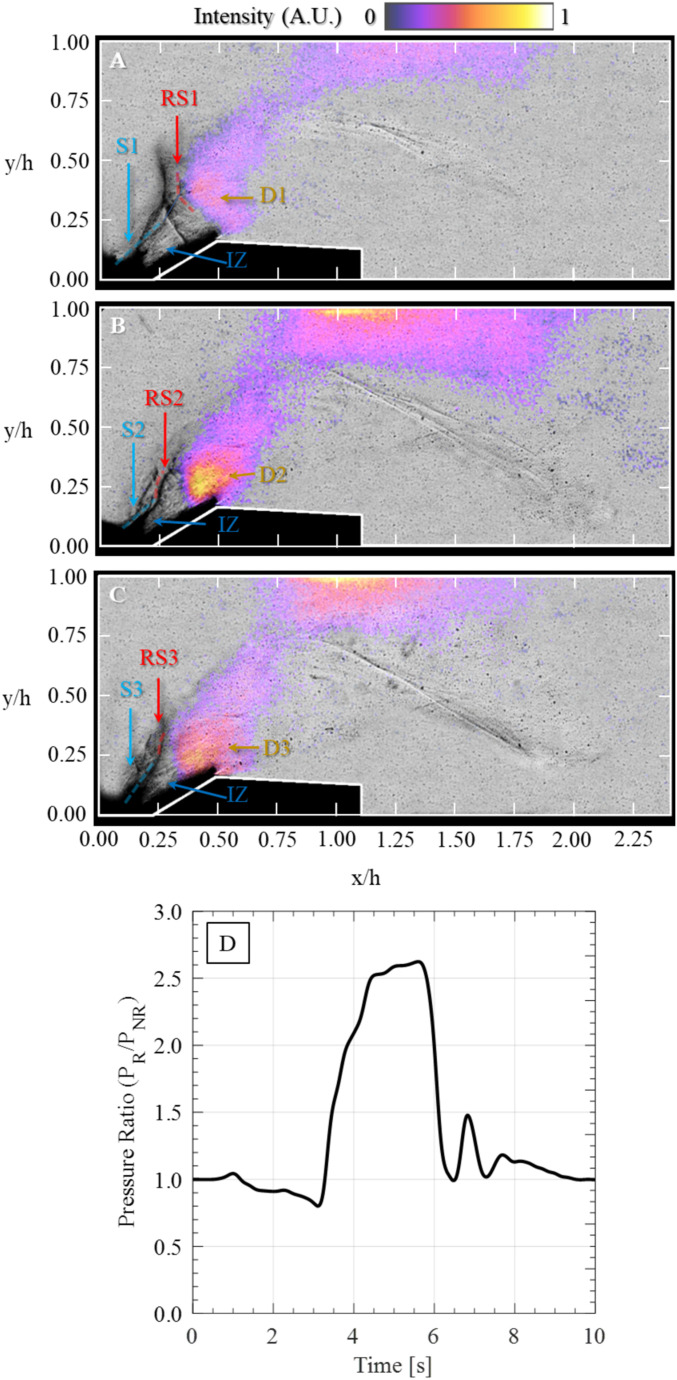
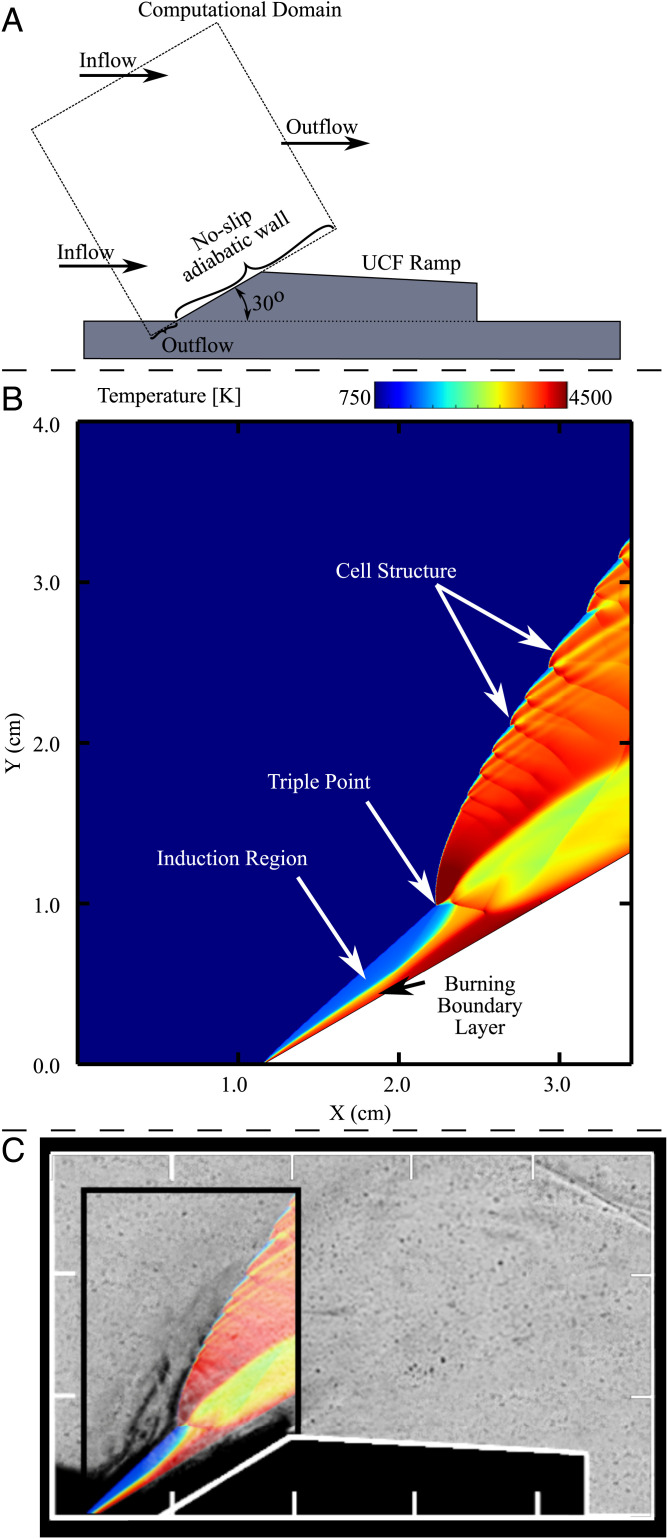
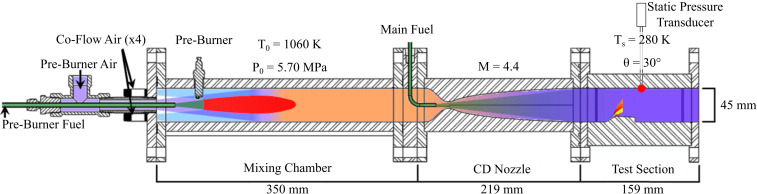
Future terrestrial and interplanetary travel will require high-speed flight and reentry in planetary atmospheres by way of robust, controllable means. This, in large part, hinges on having reliable propulsion systems for hypersonic and supersonic flight. Given the availability of fuels as propellants, we likely will rely on some form of chemical or nuclear propulsion, which means using various forms of exothermic reactions and therefore combustion waves. Such waves may be deflagrations, which are subsonic reaction waves, or detonations, which are ultrahigh-speed supersonic reaction waves. Detonations are an extremely efficient, highly energetic mode of reaction generally associated with intense blast explosions and supernovas. Detonation-based propulsion systems are now of considerable interest because of their potential use for greater propulsion power compared to deflagration-based systems. An understanding of the ignition, propagation, and stability of detonation waves is critical to harnessing their propulsive potential and depends on our ability to study them in a laboratory setting. Here we present a unique experimental configuration, a hypersonic high-enthalpy reaction facility that produces a detonation that is fixed in space, which is crucial for controlling and harnessing the reaction power. A standing oblique detonation wave, stabilized on a ramp, is created in a hypersonic flow of hydrogen and air. Flow diagnostics, such as high-speed shadowgraph and chemiluminescence imaging, show detonation initiation and stabilization and are corroborated through comparison to simulations. This breakthrough in experimental analysis allows for a possible pathway to develop and integrate ultra-high-speed detonation technology enabling hypersonic propulsion and advanced power systems.
未来的地球和星际旅行将需要通过强大、可控的方式进行高速飞行并重新进入行星大气层。这在很大程度上取决于拥有用于高超音速和超音速飞行的可靠推进系统。鉴于有燃料可作为推进剂,我们可能会依赖某种形式的化学或核推进,这意味着要利用各种形式的放热反应,从而产生燃烧波。这种波可能是爆燃,即亚音速反应波,也可能是爆轰,即超高速超音速反应波。爆轰是一种极其高效、能量极高的反应模式,通常与强烈的爆炸和超新星有关。基于爆轰的推进系统目前备受关注,因为与基于爆燃的系统相比,它们具有更大推进功率的潜在用途。了解爆轰波的点火、传播和稳定性对于发挥其推进潜力至关重要,这取决于我们在实验室环境中对其进行研究的能力。在此,我们展示了一种独特的实验配置,即一个高超音速高焓反应设施,它能产生固定在空间中的爆轰,这对于控制和利用反应能量至关重要。在氢气和空气的高超音速流中,在斜坡上形成了一个稳定的斜立爆轰波。流动诊断技术,如高速阴影图和化学发光成像,展示了爆轰的起始和稳定过程,并通过与模拟结果的比较得到了证实。实验分析中的这一突破为开发和集成超高速爆轰技术开辟了一条可能的途径,从而实现高超音速推进和先进动力系统。