Department of Occupational Health, University of Brescia, Piazzale Spedali Civili, 1, 25123, Brescia, BS, Italy.
Department of Molecular and Translational Medicine, University of Brescia, Brescia, Italy.
Sci Rep. 2021 May 10;11(1):9898. doi: 10.1038/s41598-021-88969-z.
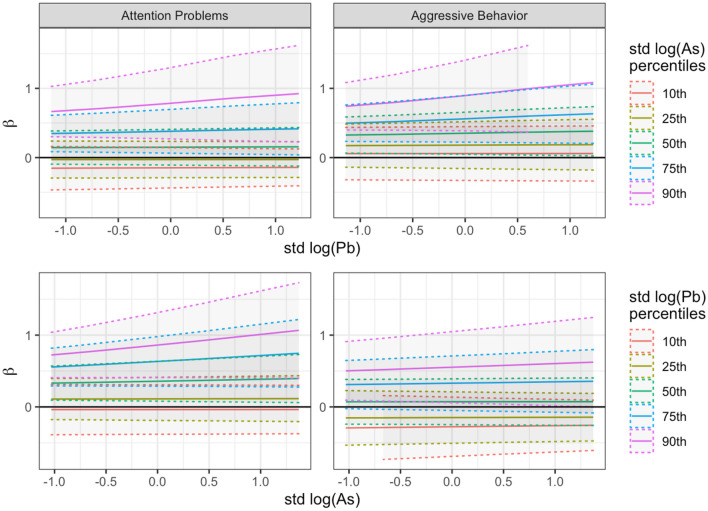
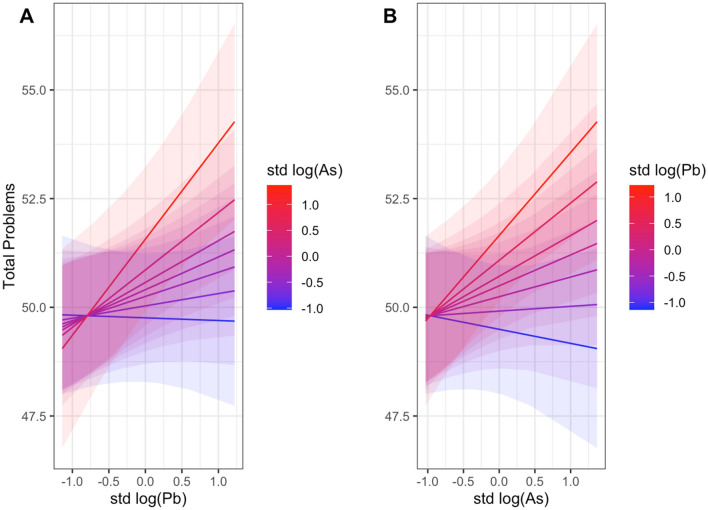
Neurodevelopmental disorders are constantly increasing on a global scale. Some elements like heavy metals are known to be neurotoxic. In this cross-sectional study we assessed the neurobehavioral effect of the exposure to trace elements including lead, mercury, cadmium, manganese, arsenic and selenium and their interactions among 299 schoolchildren residing in the heavily polluted Taranto area in Italy. Whole blood, urine and hair were collected for metal analyses, while the Child Behavior Checklist and the Social Responsiveness Scale, administered to the main teacher and the mothers were considered to identify behavioral problems in children. Blood lead mainly influenced social problems, aggressive behavior, externalizing and total problems. Urinary arsenic showed an impact on anxiety and depression, somatic problems, attention problems and rule breaking behavior. A significant interaction between lead and arsenic was observed, with a synergistic effect of the two metals increasing the risk of attention problems, aggressive behavior, externalizing problems and total problems. Overall, we were able to test that higher blood lead, urinary arsenic concentrations and their interaction increase the risk of neurobehavioral problems. This is in line with the U.S. Environmental Protection Agency's priority list of hazardous substances where arsenic and lead are ranked as first and second respectively.
神经发育障碍在全球范围内不断增加。一些元素,如重金属,已知具有神经毒性。在这项横断面研究中,我们评估了暴露于痕量元素(包括铅、汞、镉、锰、砷和硒)对 299 名居住在意大利重污染塔兰托地区的学童的神经行为影响,以及它们之间的相互作用。采集全血、尿液和头发进行金属分析,同时向主要教师和母亲发放儿童行为检查表和社交反应量表,以确定儿童的行为问题。血铅主要影响社会问题、攻击行为、外化问题和总问题。尿砷显示出对焦虑和抑郁、躯体问题、注意力问题和违反规则行为的影响。观察到铅和砷之间存在显著的相互作用,两种金属的协同作用增加了注意力问题、攻击行为、外化问题和总问题的风险。总的来说,我们能够测试出较高的血铅、尿砷浓度及其相互作用增加了神经行为问题的风险。这与美国环境保护署的危险物质优先清单一致,其中砷和铅分别排名第一和第二。