Institute of Ecology and Forestry, College of Forestry, Sichuan Agricultural University, Chengdu, 611130, China.
College of Forestry, Sichuan Agricultural University, Chengdu, 611130, China.
Sci Rep. 2021 May 10;11(1):9913. doi: 10.1038/s41598-021-89322-0.
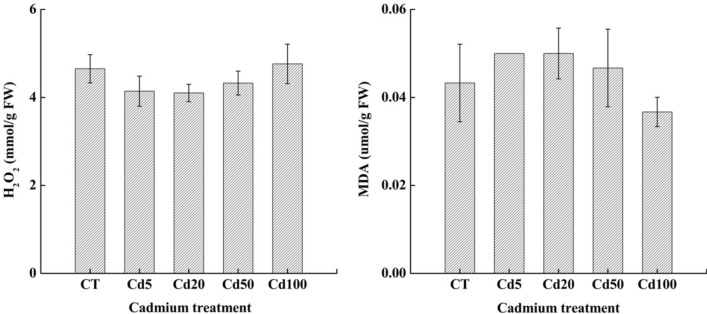
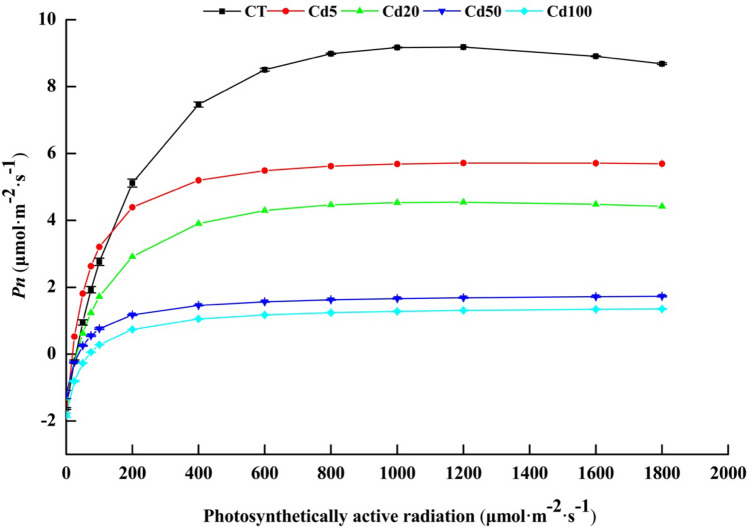
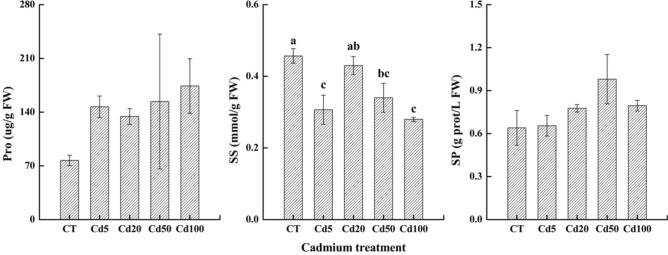
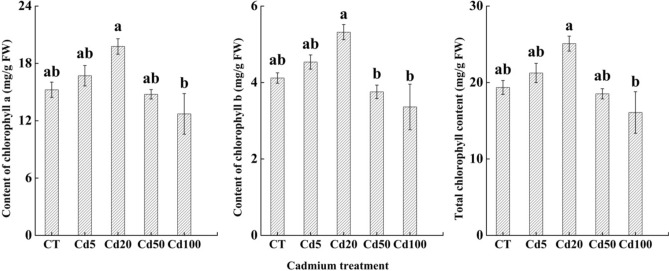
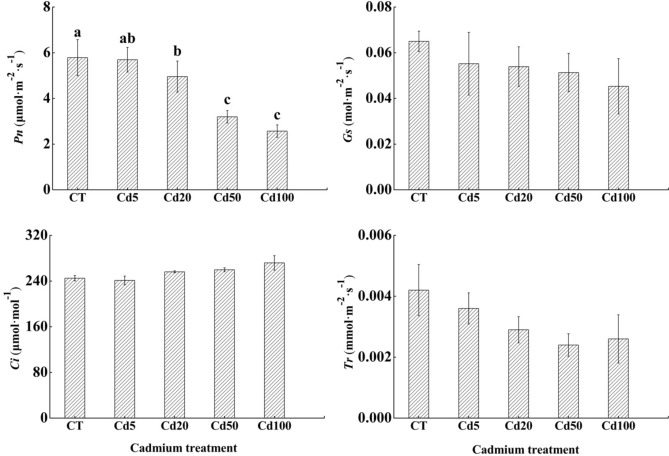
The effects of cadmium stress on the growth and physiological characteristics of Sassafras tzumu Hemsl. were studied in pot experiments. Five Cd levels were tested [CT(Control Treatment) : 0 mg/kg, Cd5: 5 mg/kg, Cd20: 20 mg/kg, Cd50: 50 mg/kg, and Cd100: 100 mg/kg]. The growth and physiological characteristics of the sassafras seedlings in each level were measured. The results showed that soil Cd had negative influences on sassafras growth and reduced the net growth of plant height and the biomass of leaf, branch and root. Significant reductions were recorded in root biomass by 18.18%(Cd5), 27.35%(Cd20), 27.57%(Cd50) and 28.95%(Cd100). The contents of hydrogen peroxide decreased first then increased while malondialdehyde showed the opposite trend with increasing cadmium concentration. Decreases were found in hydrogen peroxide contents by 10.96%(Cd5), 11.82%(Cd20) and 7.02%(Cd50); increases were found in malondialdehyde contents by 15.47%(Cd5), 16.07%(Cd20) and 7.85%(Cd50), indicating that cadmium stress had a certain effect on the peroxidation of the inner cell membranes in the seedlings that resulted in damage to the cell membrane structure. Superoxide dismutase activity decreased among treatments by 17.05%(Cd5), 10,68%(Cd20), 20.85%(Cd50) and 8.91%(Cd100), while peroxidase activity increased steadily with increasing cadmium concentration; these results suggest that peroxidase is likely the main protective enzyme involved in the reactive oxygen removal system in sassafras seedlings. Upward trends were observed in proline content by 90.76%(Cd5), 74.36%(Cd20), 99.73%(Cd50) and 126.01%(Cd100). The increase in proline content with increasing cadmium concentration indicated that cadmium stress induced proline synthesis to resist osmotic stress in the seedlings. Compared to that in CT, the soluble sugar content declined under the different treatments by 32.84%(Cd5), 5.85%(Cd20), 25.55%(Cd50) and 38.69%(Cd100). Increases were observed in the soluble protein content by 2.34%(Cd5), 21.36%(Cd20), 53.15%(Cd50) and 24.22%(Cd100). At different levels of cadmium stress, the chlorophyll content in the seedlings first increased and then decreased, and it was higher in the Cd5 and Cd20 treatments than that in the CT treatment. These results reflected that cadmium had photosynthesis-promoting effects at low concentrations and photosynthesis-suppressing effects at high concentrations. The photosynthetic gas exchange parameters and photosynthetic light-response parameters showed downward trends with increasing cadmium concentration compared with those in CT; these results reflected the negative effects of cadmium stress on photosynthesis in sassafras seedlings.
采用盆栽试验研究了镉胁迫对枫香生长和生理特性的影响。设置了 5 个镉水平[对照处理(CT):0mg/kg、Cd5:5mg/kg、Cd20:20mg/kg、Cd50:50mg/kg 和 Cd100:100mg/kg],测定了各水平下枫香幼苗的生长和生理特性。结果表明,土壤镉对枫香生长有抑制作用,降低了株高和叶片、枝条、根生物量的净生长。根生物量分别减少了 18.18%(Cd5)、27.35%(Cd20)、27.57%(Cd50)和 28.95%(Cd100)。过氧化氢含量先降后升,丙二醛含量则呈相反趋势,随镉浓度增加而增加。过氧化氢含量分别减少了 10.96%(Cd5)、11.82%(Cd20)和 7.02%(Cd50);丙二醛含量分别增加了 15.47%(Cd5)、16.07%(Cd20)和 7.85%(Cd50),表明镉胁迫对幼苗细胞内膜的过氧化作用有一定影响,导致细胞膜结构受损。超氧化物歧化酶活性分别降低了 17.05%(Cd5)、10.68%(Cd20)、20.85%(Cd50)和 8.91%(Cd100),而过氧化物酶活性则随镉浓度的增加而稳定增加;这些结果表明,过氧化物酶可能是枫香幼苗活性氧去除系统中主要的保护酶。脯氨酸含量分别增加了 90.76%(Cd5)、74.36%(Cd20)、99.73%(Cd50)和 126.01%(Cd100)。随着镉浓度的增加,脯氨酸含量的增加表明镉胁迫诱导了脯氨酸的合成,以抵抗幼苗的渗透胁迫。与 CT 相比,在不同处理下,可溶性糖含量分别下降了 32.84%(Cd5)、5.85%(Cd20)、25.55%(Cd50)和 38.69%(Cd100)。可溶性蛋白含量分别增加了 2.34%(Cd5)、21.36%(Cd20)、53.15%(Cd50)和 24.22%(Cd100)。在不同镉胁迫水平下,幼苗的叶绿素含量先增加后减少,Cd5 和 Cd20 处理的叶绿素含量高于 CT 处理。这反映了镉在低浓度下具有促进光合作用的作用,而在高浓度下具有抑制光合作用的作用。与 CT 相比,光合气体交换参数和光合光响应参数随镉浓度的增加呈下降趋势,这反映了镉胁迫对枫香幼苗光合作用的负面影响。